Segways slow to take hold

Originally published in the Montreal Gazette on October 4, 2014. Photo by Vincenzo D’Alto.

“Segways are zero-emission modes of transportation, they don’t take up much space, and different studies have concluded that they’re as safe as bicycles. So why didn’t they ever catch on?

The biggest hurdle is categorization, with transportation departments worldwide struggling to classify the Segway and regulate its use. Is it a motorcycle, a moped, or a kind of bicycle? Should it be allowed on sidewalks, bike paths, or roads? It’s so befuddling that three-quarters of Segway’s Wikipedia page is devoted to detailing several countries’ varying, and often strict, bylaws on the glider.”

Read more

What my cousin’s cancer taught me

Originally published in the Montreal Gazette on January 18, 2014.

“I’ve never seen anybody as sick as me,” my cousin Sammy once told me in one of the many hospital waiting rooms we would frequent together over the course of four very short months. “Neither have I,” I told her.

It might sound insensitive, but I promised myself I wouldn’t act like she wasn’t as ill as she was. Not that I went out of my way to remind her, but if she felt like talking about it, I would avoid platitudes. I’d never say things like, “It’ll be OK,” because I didn’t want to tell her things I didn’t know for sure. Besides, she knew first-hand how sick she was. It was condescending to sugar-coat it.

Before all this, Sammy and I weren’t especially close. We come from a large family, we hadn’t spent much time together as children since she lived in Témiscaming and I grew up in Moncton, and there was a nine-year age gap between us. At a family reunion in August 2012, I saw her for the first time in over 10 years and found out she lived in Trois-Rivières, not too far from Montreal. I invited her to call me, but never heard from her.

Exactly one year later, my mother told me Sammy had cancer, and after several phone calls, I found her hospital in Trois-Rivières and went to see her the next day.

Back in April 2013, Sammy learned she suffered from a very aggressive primary mediastinal B-Cell lymphoma (PMBCL), with the mass lodged behind her lungs and heart. She had just returned to school to get her GED and steer her life in a new direction. All that had to stop when she became sick.

By the time I saw her in August, radiotherapy and chemotherapy had already not been working for four months. I instantly decided to be one of the people by her side. I felt compelled to because I could, because I’m a freelance writer with a flexible schedule, and I live nearby.

It was a privilege to be part of her inner circle at a time when she was so vulnerable, but I admittedly got to know Sammy when she wasn’t her usual smiley, high-energy self. What frustrated her most about her condition was the way people, myself included, fidgeted around her. It was a reminder of the independence she’d lost. She missed exceedingly normal things like making herself a salad or tending her garden. When she started to grasp just how bad her disease was, she dreamed small: one more winter was as high as she aimed.

Sammy was only 29 years old, with an 8-year-old son. She couldn’t hold him tightly because the radiation therapy had wasted away her muscles. She once showed me her pendulous calves and swung them from side to side. It’s why she couldn’t walk for very long or go up a few steps without great effort.

Her voice was down to a whisper and consistently phlegmy. She couldn’t carry on conversations without becoming tired, getting short of breath, having a coughing fit, or all three.

When I first saw her like this, I didn’t feel sad or angry: just helpless. There wasn’t anything I could do to make her pain go away, or make her not sick, or make it so she was 92 instead of 29, with a nice long life to look back on. I couldn’t take her mind off cancer because it was in her body all the time.

Healthy people like to offer a lot of unsolicited advice. “She just has to keep a positive attitude, she has to *want* to get better,” they’d tell me. They wouldn’t have said such things if they had spent five minutes in her body. Nobody wanted to live more than Sammy did, but her disease called the shots. Just the same, when she wasn’t smiling, she was busy fighting.

That’s the first thing Sammy taught me about cancer: it’s a full-time job. The bulk of her duties involved indulging her illness’s every whim. Is cancer letting her eat? Is cancer going to make her nauseous? Will she get motion sickness while travelling to the hospital? Is she going to respond well to this latest drug? Did she sleep? Is this one of those days where she can walk? Does she have all the meds she needs? Meantime, the family and friends who could be there would drop everything to help her.

In September, we heard about a treatment that might work but wasn’t covered by Quebec’s health insurance plan, which meant she had to go the private route. At $15,000 per dose, it wasn’t feasible, so I started an Indiegogo fundraiser to buy the treatment. Raising that money became my full-time job.

Cancer was on my agenda every single day: Learning new jargon, speaking to the media about Sammy’s cancer, planning the day based on what the cancer would allow her to do, and making phone calls to update people.

“Tell me honestly, Olivia, is she going to die?” people would ask. And the honest answer was, I didn’t know.

The second thing Sammy taught me is that cancer forces you to conjugate every verb in the conditional. There are so many maybes and so few certainties.

If this expensive treatment works, she might live another few years. If her lymphoma doesn’t come back, she’ll live longer. If all the radiotherapy and chemotherapy don’t have terrible long-term side effects, she might even have a healthy life. If today’s a good day, she might be able to swallow food and pills without choking. If today’s a bad day, we might have to ask a nurse to drop off the meds we need because she won’t be able to leave the house, and we can’t leave her side. If she isn’t too tired, we might take her for a stroll outside. If she feels up to it, we might take visitors today. If she’s not too doped up, we might be able to draft her will.

The word “remission” is used instead of “cure” because being cancer-free is far from a promise — it’s a “for now.” If you’re lucky enough to get to remission, you might utter the word with caution rather than triumph.

Two people with exactly the same kind of cancer can receive the same treatment, and both may have completely different outcomes. If doctors give you five months, you might barely make it past three or plow through two years.

The one certainty is death, and even though it’s a fact that we all die, it’s different facing that inevitability as a very sick person.

The fundraising campaign was a success, but Sammy didn’t respond at all to the treatment. And just like that, every option had been exhausted. For the first time in many months, we knew something for sure.

The third thing I learned from Sammy’s illness was that if there’s one area where religious accommodation is completely reasonable, it’s in helping someone deal with death in the manner they choose. No one else is in a position to even suggest how they process it.

Back in August, Sammy said to me, “I don’t want to die.” A few weeks later, she was baptized in a Catholic Church. She’d always been spiritual; perhaps the baptism was pre-emptive, or maybe it was a ritual that gave her comfort. Truth is, I never asked because it was her business.

After the treatment proved ineffective, Sammy’s condition worsened. On Nov. 1, she was moved to a room in the palliative unit of the Jewish General Hospital. At that point, our full-time job was to keep her company and make sure nurses gave her more meds when she needed them. In the few moments she and I had alone, she often wanted to talk about death.

“Do you believe in an afterlife?” she once asked me.

“No, but that doesn’t mean I’m right,” I said.

She wasn’t letting go of her life, even if it meant prolonging her pain. I tried reassuring her, and told her she didn’t have to hang on, that if she was worried about her family, we’d be sad but we’d be OK. That her son has a wonderful father, and he’s such a healthy, balanced boy, so he’ll be sad but OK too.

She was hanging on because she was afraid to die. “So am I,” I had to admit. My agnostic stance felt clumsy and futile. The hospital’s priest offered prayers rather than counsel.

I struggled with how to adopt a more spiritual vocabulary without saying things I didn’t believe.

I sought help from my friend Omer and from another cousin, Shelly, both of whom are religious scholars. Omer suggested asking Sammy to tell me what she liked about life. “Have her tell you stories. And you have to either record them or write them down,” he suggested. “So, if you had to tell her story for your friend Omer in Chicago, what would she want Omer to know?”

This exercise, Omer said, would give her the impression of persistence and survival. Theologically, he advised, “for her relationship with the one who created her, have her ask him to accept her and forgive her. If you want, add one second thing: ask him to take care of the things she wishes she could take care of, for her.”

Shelly made similar recommendations, and added that I should ask Sammy what it was about death that scared her, because sometimes spelling it out for someone else helps you organize your thoughts around it.

The next time I visited Sammy, I was armed with these tips. It was Nov. 25, just 10 days after her 29th birthday. I had a notepad and pen in tow, ready to talk about death on terms that I hoped would be more suitable for her.

But it was too late. After she nearly suffered a heart attack that afternoon, doctors increased Sammy’s morphine and she was sleeping when I arrived, heaving heavily, looking more like an infant than a young woman. Barely 45 minutes later, she was gone.

It’s a shame I never got to share Omer and Shelly’s wisdom with Sammy, but the importance of the exercise was in trying to understand what she needed, and doing what I could to provide it for her.

Talking about death is never easy, and that applies to all beliefs. Most people are scared of dying. There’s no guarantee that anything I might have said to Sammy would have changed that. Still, in those last moments, I looked for the kind of answers she needed.

She’ll never know that I went to the trouble, but I do, and there’s nothing about this experience that I can un-learn.

Lighting design: Turn Up the House Lights

Originally published in the Montreal Gazette on July 26, 2014. Photo by Stéphane Racicot.

“If you can see your bulbs, you’re doing it wrong. Fixtures aren’t the main event; your space is. Bulbs should be hidden, either within details of a home’s architecture or because the fixture’s design conceals it. ‘Read the light; hide the source,’ says lighting designer Conor Sampson. ‘Our strategy is to make the lights disappear. The fixtures play a role, but they’re not what we want to emphasize. You want to emphasize the space, the furnishings and the general atmosphere.'”

Read more

Interior Design: Romancing the countertop stones

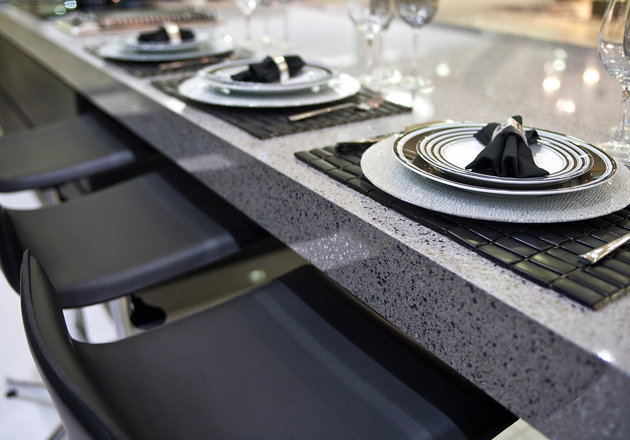
Originally published in the Montreal Gazette on August 23, 2014. Photo courtesy of Silestone.

“The Royal is a pale onyx that’s translucent in parts, so, with the right technology and some clever illumination, you could produce some nifty lighting effects. It’s mesmerizing and just plain gorgeous, which is why it’s my favourite so far. For Bégin, this is a good start. If I were a client, his job would now be to help me narrow it down. He’d follow up with one very important question: How do I plan to use the stone?”

Read more

Mass Shootings: There is never a simple explanation

Originally published in the Montreal Gazette on June 11, 2014. Photo by Andrew Vaughan, The Canadian Press.

“Here’s a difficult truth: there isn’t just one reason for this — there are many. It’s more than likely that these events are at least the result of a psychosis. If many people didn’t see it coming, it’s probably because a lot of behaviours are not worrisome until there’s a psychosis.”

Read more

Architecture: The Happy Place

Originally published in the Montreal Gazette on July 5, 2014. Photo by Steve Montpetit.

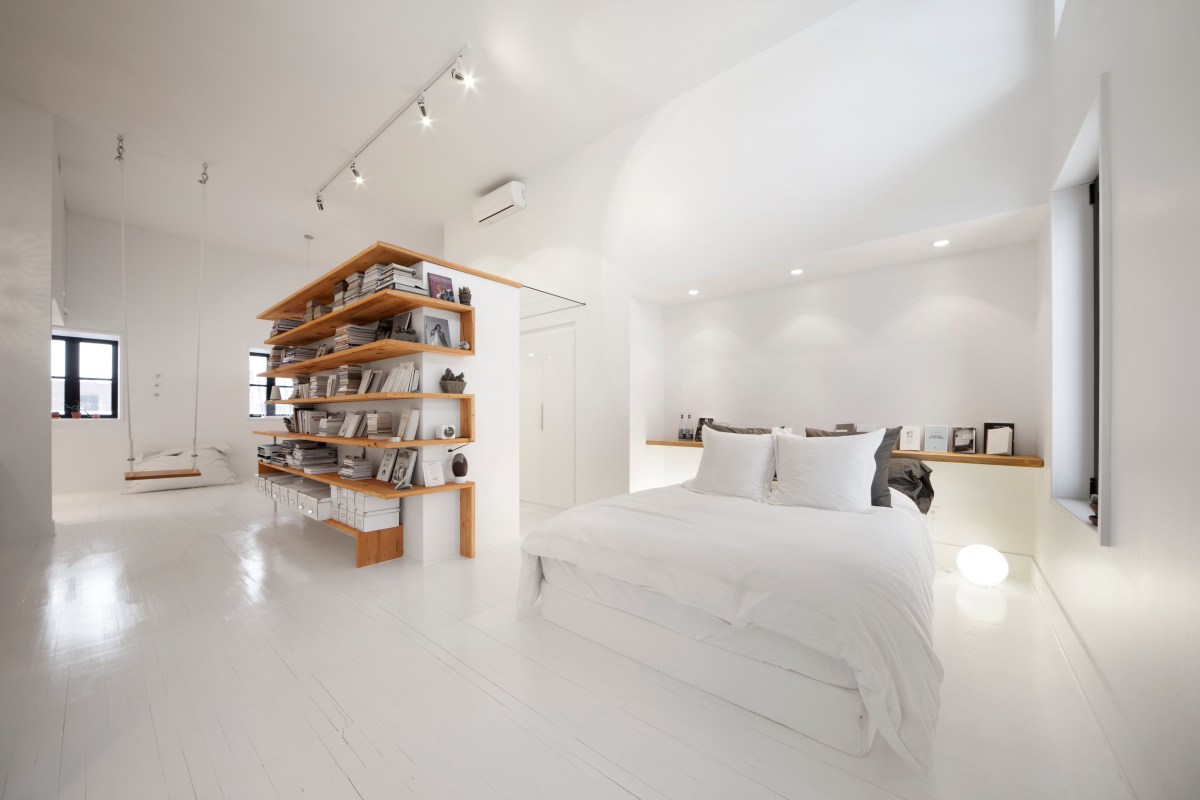
When I ask architect Laurent McComber to describe his pictured renovation project in a phrase, it gets us talking about how fascinating it is that some things just don’t translate.

In a phrase, he’d describe the project with the name it already has, “Juliette aux combles.” The word “comble” has two connotations — attic or happiness — both equally applicable. The wooden shelves at the centre of the space are built from the same wood that made up the small attic that was once here. Juliette, one of the owners, is quite happy about how it all turned out. But McComber and I agree that “Juliette in the attic” just doesn’t have the same panache.

The project is the third floor of a Plateau townhouse, originally built in 1885. The family of four had got the first two floors renovated previously, and called upon McComber to gut the attic and transform this space into something of a sanctuary for the parents.

Before these renovations, everything on the third floor was in terrible shape. The floors were damaged; the plaster was falling apart; the ceiling was poorly insulated and leaked when it rained; the attic, which was really more of a crawl space, was hardly used and took up way too much space, making the ceiling shorter.

The purpose of the project was to repair, restore and renovate the third floor so it could serve the multiple purposes of master bedroom, art studio, office, library and lounge.

“We wanted to put all those functions together on the third floor, so it would also give the parents their own private quarters,” McComber explains.

The concept centres on the stairway, which marks the entrance, and the central shelving, probably the most noticeable thing here, with its beige wood diverging from the ubiquitous whiteness. The stairs, railings and adjacent brick wall were restored and painted over to keep a hint of the house’s historic cachet.

The shelving wraps around three wall surfaces, providing storage for the many books and miscellany that had been crowding the second floor. One of the planks is also a little wider to create a work surface. All of the wood was sourced from the now-defunct attic, though McComber warns that working with reclaimed material has its challenges.

“There are often nails embedded into the planks, or even dust and sand, and that dulls saw blades, which are costly to replace,” he says. “Still, it makes for a nice story: we kept the existing wood and gave it a second life.”

The shelving unit cleverly conceals the linear walk-in closet that leads to the bathroom, an effect that’s better observed from the bordering master bedroom. The owners call this zone “the shell,” since the winding shelves, somewhat reminiscent of a conch’s shape, envelop a shiny and smooth interior (namely the marble mosaic tiles).

There is no door blocking the bathroom; it’s a straight path from the master bedroom. There are only the closet’s sliding doors, which, when closed, create a small hallway passage.

“When people build a walk-in closet,” McComber points out, “it’s usually closed up in its own space, so it’s darker. We tried not to do that.”

In general, this area, which is near the back of the house, benefits from new windows: two verticals and one panoramic. McComber also removed the balcony poles on which the large cantilevered roofing rested, blocking much of the sunlight; he replaced it with a smaller, pole-less version to keep that part of the house cool in the summer and warm during winter. The light bounces off the mostly white surfaces.

There’s a palpable flow to the third floor that wasn’t there before. Part of that was achieved by tearing down the walls that used to separate rooms, which opened everything up like a loft. Still, the owners didn’t want their space to look like a modern condo, so McComber worked to maintain some of its original elements. That meant preserving the flooring, which was repainted and evened out with self-levelling concrete.

It seems cliché to use the term “feng shui,” so we’ll use “circulation” instead, because that’s what Juliette aux combles ultimately achieves: unencumbered fluidity.

“Your perception of a room will change according to where you see it from,” McComber says. “We try to regroup those circulations, because if there are too many, it kills a room. You wouldn’t want the bed to be next to the staircase, for example.”

To that end, the shelving acts like a core, holding it all together. It’s the most obvious reference point from the stairway, it’s where most of the busy activities occur, and it lends privacy to the areas that need it.

It’s how an attic that was falling apart turned into a solid happy place.

+++

Tips from the architect:

• Renovating the top floor of a house can be challenging. Because we needed to open up the roof, there was a risk of flooding or other weather-related issues, so we were forced to work on only one half of the third floor at a time, and we had a drainage system set up.

• The moment you alter a load-bearing wall or the way the rooms are configured, it can have an impact on fire safety. So that’s the kind of thing that has to be carefully considered and intelligently designed around.

• With a historic house in a historic neighbourhood, expect to adhere to a coherent esthetic at street level. In this case, the new front windows we installed had to have central mullions, where we would rather have used uniform panels to get more light.

• Always think about where your door is going to land when you open it, especially in a small space. That’s why I used sliding doors or none at all in this project.

The 600-square-foot project was completed in 2013 with prefinished steel cladding for the facade. For the interiors, gypsum, brick, salvaged wood, marble mosaic and painted wood flooring were used. The woodworking was done by L’Arbre (larbre.ca), and the contractor was P.A. Construction, 514-951-1018.

Laurent McComber founded his firm L. McComber ltée (lmccomber.ca) in 2005, and eventually was joined by David Grenier and Olivier Lord. On top of several home renovations, L. McComber ltée is behind many residential designs, as well as commercial projects like the Crudessence restaurant and bar, Boulangerie Guillaume on St-Laurent Blvd. and the Via Capitale office on Mont-Royal Ave. and de la Roche St. L. McComber ltée received an award in 2009 from the Ordre des architectes du Québec for its Lignes aériennes project, and its work was presented at the 2007 Venice Biennale.


Architecture: The Lighthouse of Alexandra

Originally published in the Montreal Gazette on June 14, 2014. Photo by Adrien Williams.

We’ve come to equate the Mile-Ex/Marconi-Alexandra neighbourhood with architectural experimentation. A stroll in the area might lead to the assumption that anyone can waltz in there and do whatever they like, but it’s never that simple.

In many cases, it’s limitations that push architects to solve certain problems with cunning design.

Take the pictured Alexandra Residence.

Like many Montreal abodes, it was part of a row, so it had a house on each side. Any obvious opportunities for fenestration were from the front (south) and the back (north). So Stéphane Rasselet, architect and co-founder of _naturehumaine, created a five-foot-wide, 20-foot-long skylight that cuts through the house lengthwise, allowing daylight to stream in from above. It’s located over the entrance on the east side, between the first and second floors, creating a break in the roof.

“From there, all the light coming in from the south seeps in, lighting spaces that are at the centre of the house and on its second floor, like the bathroom and the bedrooms,” Rasselet points out. “The skylight also illuminates living spaces on the ground floor, like the dining room and kitchen.”

Most of the house benefits from the skylight, but it probably produces the most interesting effect on the upstairs bathroom, which is just next to and underneath it. Because this particular space is walled off with frosted glass, its discretion is secured while the bathroom reaps plenty of sunlight.

The homeowners are contractors who had collaborated with Rasselet before. They purchased the property in 2012 and decided to completely reconstruct it to better suit their needs. Maximum daylight may have been the leitmotif driving the design, but Rasselet also had dual functions to consider; the house was part family home and part office space.

To separate the entrance from the living spaces, a pivoting panel was installed near the kitchen, creating a more private vestibule. That said, when the owners want to take clients inside the house, the dining area and recessed living room are ideal for longer meetings.

Rasselet drew much inspiration from contemporary Japanese architecture.

“You’ll have closed spaces and open spaces,” he explains. “In Japan, neighbours can be very close, so certain zones require more intimacy, while others can be more communal.”

The more palpable Japanese influences are in the stark contrasts of the black and white surfaces, and the sleek lines. It’s meant to convey simplicity and cleanliness, even if there are many little details working together to make it look that way.

It’s in the ash cabinets in the kitchen and bathroom and occasional wood flooring, lending earth tones to interiors with a largely metallic palette. It’s the grey and white pattern created with the mosaic tiles in the bathroom, playing with a multitude of different textures. It’s the way the front windows don’t quite align with those of the neighbours. It’s the random bricks that were laid backward to display a lighter hue on the facade.

Then there’s the slightly protruding white box, floating as if it were its own entity. It’s this feature that truly defines the concept of the house. From the inside, it outlines the skylight and emphasizes the length of the house. It’s also where the master bedroom is located, with an office in the mezzanine just above it, leading to a rooftop patio that’s delineated by an asymmetrical balcony ledge.

“We went from the slot of the skylight, and it led to developing the white box,” Rasselet recalls, adding: “Compared to other neighbourhoods, Mile-Ex is eclectic, and the city knows it. It’s great for architects and clients who want to do something different.”

Originality is a good start, but what gives any residential project permanence is the way it interacts with its setting; what it takes and gives back.

“In an urban context,” Rasselet says, “you have to pay attention to the quality of light; you have to study the sun’s trajectory, and the impact of the volume of neighbouring houses. These things all have to be analyzed carefully before designing a project, because they’re often what will generate the concept of the home.”

Rasselet’s design acknowledges many intersecting realities. There’s life inside and outside this house. It’s a family home that’s distinctly urban, meshing effortlessly with Mile-Ex’s diverse built environment. It’s in and of the place.

+++

The house is 3,300 square feet, and was completed in 2013. Materials used for facade: brown brick; anodized aluminum panels (framing windows and awning at the entrance); galvanized industrial grate (balcony); black and white pre-painted AD-300 metal panels by Vicwest.

Materials used for interiors: large light grey tile flooring; ash flooring; ash cabinets (kitchen and bathroom); black steel plate steps (living room); white and grey mosaic tiles, Mano by Céragrès (bathroom)

Clients and contractors: Olivier Beaulieu & Gentiane Godin, Fob Construction, 514-829-9278, and Orbitat (orbitat.ca)

Tips from the architect:

• Never underestimate how much time a project will take, from the initial design to the last coat of paint.

• You also shouldn’t underestimate the surprises you’ll have along the way. In this case, we found out during the reconstruction that the foundation of one of the neighbouring houses was laid into the owners’ property. So, we had to change our plans around that.

• Before I even start working on a project, I like to invite clients to the office. It’s so important for clients and architects to click, and that first visit is when it happens.

_naturehumaine was founded in 2003 by Stéphane Rasselet and Marc-André Plasse, who has since moved to New York. Specializing in residential projects, _naturehumaine has created critically acclaimed homes. A multiplex it did on St-Zotique in Mile-Ex was awarded the “Prix d’excellence” by the Ordre des architectes du Québec in 2013. The company is working on multi-residential projects on Marquette and St-Ambroise Sts., a few renovations in Outremont, and lakeside homes in the Eastern Townships and the Laurentians. See some the firm’s projects at http://www.naturehumaine.com

Belle à mourir

Extrait d’un article paru dans Urbania le 22 mai 2014. Cliquez ici pour lire l’article.

“Le message, ce n’est pas que la beauté est un concept ridicule; c’est plutôt que la beauté peut exister partout même si elle n’est pas à la hauteur de la norme. Remarquez qu’il n’est pas question d’abolir la norme. On a beau dire qu’une femme peut être belle peu importe ce à quoi elle ressemble, n’empêche que la beauté demeure la mesure et la valeur qui compte, et là est le problème.”


Lighting design: The lantern of Ste-Catherine

Originally published in the Montreal Gazette on May 17, 2014. Photo by Lumenpulse.

The lighting scheme gives the St. James more than mere visibility; it also gives volume and perspective. You can tell how high the church is, you can make out some of the details in the stonework, and the illumination avoids two-dimensionality by wrapping the towers along the sides.”

Read more

Architecture: Where the living is easy

Originally published in the Montreal Gazette on May 10, 2014. Photo by Marc Cramer.

It isn’t always easy to build something new in the older parts of this city. Heritage laws, zoning restrictions and mindful citizens all work together to keep Montreal looking like Montreal, and that’s not a bad thing. So when a contemporary project manages to blend into its environment, it’s worth a closer look.

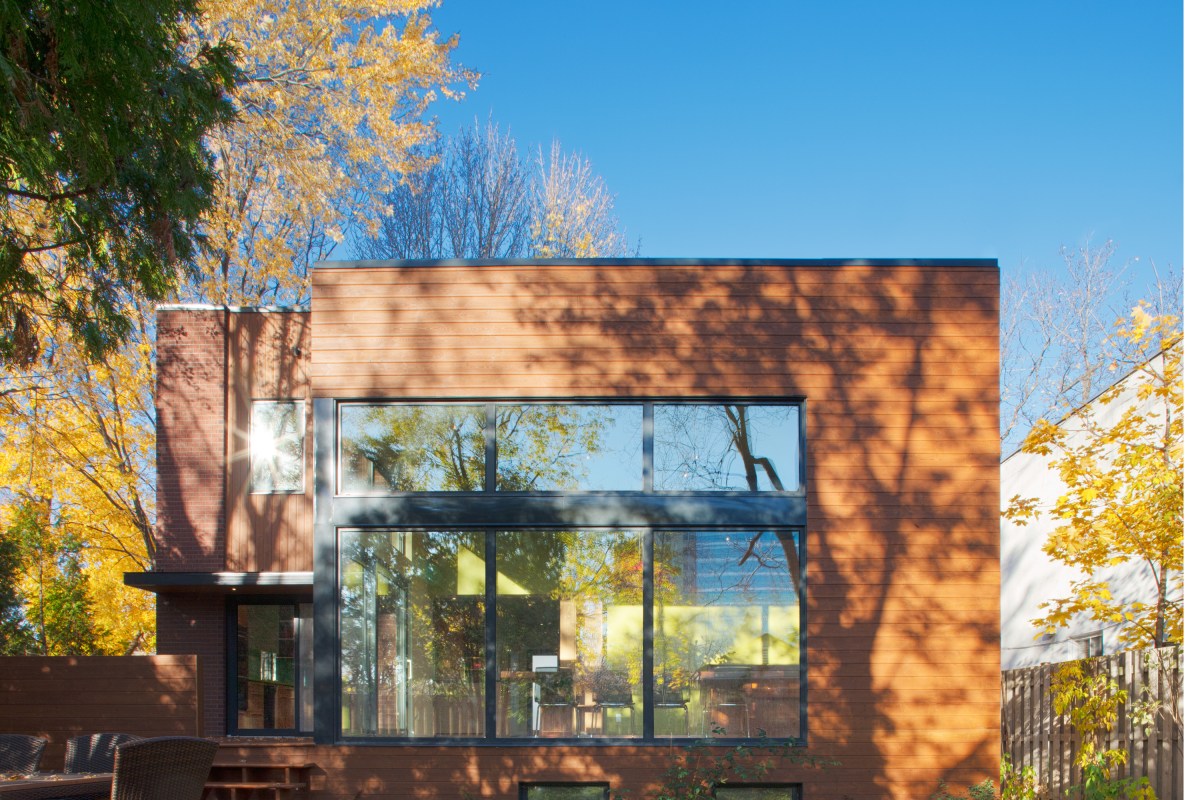
Box-shaped with a burgundy brick facade, the pictured Ahuntsic abode hardly clashes with its residential surroundings. If anything, it reflects the red-hued masonry that typifies so many of Montreal’s early-20th-century homes, partly because that’s exactly when this place was built.

It was initially used to house the Millen station master, who conducted the tramway line that transported hundreds of workers from Montreal North to the downtown core. By the 1970s, when the métro replaced most trams, the house became a regular home.

A family of five purchased it in 2001, and in 2009 they called upon architect Anik Péloquin to renovate and add an extension.

From the front, the only features suggesting newness are the vertical torrefied wood panels separating the windows and the perched entrance. It’s only when we get around to the rear that the house takes a more modern turn.

The expansive extension that juts out toward the yard has tall, nearly 13-foot windows wrapping its corner, meeting the patio and the original back of the house, which is now outfitted with sliding glass doors.

The owners host a lot, so they wanted a bigger kitchen and a large dining area. The extension gave them that, and it also connected their home to the neighbourhood park that outlines their entire backyard.

“I wanted to open up that space and create a very fluid kind of circulation,” Péloquin says, “and from every social space in the house, you have a view of the surrounding nature and greenery. It’s as if that wall doesn’t exist, and the space looks bigger because the windows almost reach the ceiling.”

The abundant natural light doesn’t just penetrate the social spaces; it also reaches the little office nook on the second floor that overlooks the dining area — which, like much of this part of the house, was previously smaller and a lot darker.

For a contemporary home, there’s more colour than we’re used to seeing. That was the owners’ wish, and Péloquin, who loves to play with colour, had no trouble pulling it off.

“Usually clients prefer neutral tones, but in this case, the owner had a passion for red,” she says. “If you use it everywhere, it can be too much, so you have to balance it out. To do that, I used many colours to control the doses and make the red an accent rather than redundant.”

In the kitchen, dining room and office, different shades of green recall the natural verdant scene on the other side of those huge windows. The woodworked furniture and kitchen add to the organic forest-like look of the place. It’s all a reminder and appreciation of the world outside.

Péloquin wanted the facade to be beautiful but sturdy. The borough’s bylaws required it to be redone in brick, but she didn’t mind. “I’m happy I found this particular brick because it’s textured, and it varies a lot with light,” she says. “It’s also a nice contrast to the contemporary lines.”

Besides the brick, she also wanted to mix it up with some wood. When it’s torrefied, the process cooks any harmful bugs or bacteria out so the wood can last up to 50 years.

“It lives a very long time and it doesn’t rot, like cedar,” says Péloquin. “Plus, with wood, if you get a mark or a stain, it doesn’t matter. But aluminum or vinyl siding ages badly, and you can’t really fix it if it gets damaged.”

The house was revamped around the habits of its inhabitants. It had to facilitate entertaining while also keeping in mind comfort, movement and the fact that three children call this place home.

When the renovations were completed in December 2010, the family reported back to Péloquin. “They told me the youngest one immediately went to the dining room and looked at the snow outside,” she recounts. “When windows are that tall, you can really appreciate a snowfall. That’s when I knew the family felt good in their home, and that they’d really enjoy it. It’s a pleasant place; it’s easy to live in.”

+++

Completed: 2010

Size: 2,225 square feet

Materials used for facade: Torrefied wood and brick, aluminum windows by Alumilex

Materials used for interiors: Gypsum, cherry hardwood floors, black slate tile flooring, bamboo kitchen cupboards, granite and quartz counters

Architect: Anik Péloquin Architecte, anikpeloquin.ca; woodworking: Claude Tourigny: 819-294-9840; contractor: Les entreprises G3F, 514-358-3585

Tips from the architect

  • It’s possible for a house to be both contemporary and warm.
  • A construction site is challenging even when everything is managed well, so it’s best to plan as much in advance as possible to make it comfortable for everyone involved.
  • Stay Zen. There will always be something that doesn’t quite work out as planned — in this case, the stone for the kitchen counter — so just work with it and move past it.
  • Find out about building and renovation restrictions at your borough office or city council before you even purchase the home.
  • For the whole thing to work, architects and homeowners have to completely trust one another. I’m proud to say that’s exactly how I’d describe this project.

About Anik Péloquin
Péloquin founded her eponymous architecture firm in 2000, after years of collaborating with Dupuis LeTourneux Architectes, Turcotte-Pilon and Cardinal Hardy. On top of many residential projects, Péloquin is behind the redesign of the Clinique Vétérinaire St-Denis, and her work on Les hauts et les bas boutique on Fabre St. earned her the top Commerce Design Montréal award.


Le look laïc

« J’ai donc sondé quelques amis en posant une question assez simple : qu’est-ce qu’une personne laïque se met sur le dos ? Parmi les réponses proposées, on a cité le normcore, ou, plus précisément, des jeans et t-shirts. Franchement, je m’y attendais. Qu’est-ce qui est plus homogène et inoffensif que des jeans et t-shirts ? Vous savez qui se promènent aussi en jeans et t-shirts ? Tous les membres du Westboro Baptist Church (WBC), même les femmes. »

Extrait d’un article paru dans le Huffington Post Québec le 17 avril 2014. Cliquez ici pour lire l’article.

Portrait démographique des circonscriptions non-francophones à Montréal

« Le profil démographique des gens qui viennent s’enregistrer à nos bureaux ne correspond pas à la démographie de la circonscription », a souligné un directeur de scrutin d’une circonscription montréalaise au journal Le Devoir. Pourtant, les résultats du dernier recensement de 2011, disponibles sur le site web du DGE, indiquent plutôt que ces trois circonscriptions sont transitoires, où on trouve beaucoup de jeunes, trois campus universitaires et presque 30 % de résidents issus de l’immigration.

Extrait d’un article paru dans le Huffington Post Québec le 25 mars 2014. Cliquez ici pour lire l’article.