An Aural Reading of “The Witch”

An essay on the music and sound of “The Witch” for Movie Mezzanine

“Even with the film’s many loud musical moments, The Witch is largely quiet. It’s part of how it so successfully invokes fear in its audience. The silence is constantly letting us know just how utterly secluded the family is—far from any known civilization, with no one around them having any interest in saving them. The family’s isolation is so palpable that when you hear something, it’s jarring.”

Read more

Danny Elfman Tells the Stories Behind 8 of His Classic Scores

Interview with Danny Elfman, originally published at Vulture/NY Mag on July 6, 2015. Photo: Fox, Twentieth Century Fox, Pee Wee Pictures, Touchstone Pictures

“The theme Elfman composed for Batman and Batman Returns is certainly memorable, so much so that it was even used for the ensuing animated series. The overall score evokes a path paved in tragedy for the hero and villains of Gotham. Batman’s world functions within a maze of moral gray zones, but your sympathies might never baffle you more than when the Penguin dies. He’s unquestionably sadistic and homicidal, but his death is painful and pathetic, and the weighty, funereal music takes us to a place where we can actually feel mercy for the merciless man.”

Read more

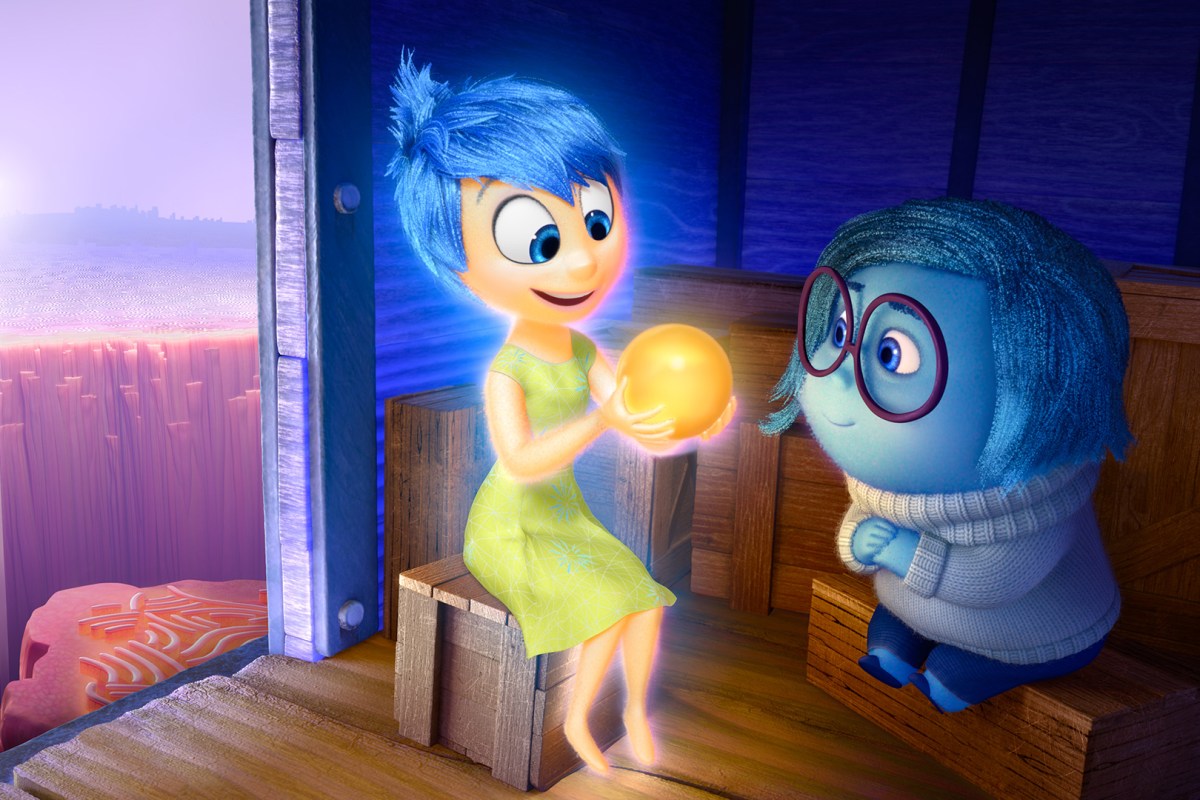
Why Can’t Sad Be Fat?

Originally published at RogerEbert.com on July 1, 2015. Photo courtesy of Disney/Pixar.

“If there’s a lot of backlash aimed at Joni Edelman’s article, it’s because much like Joy underestimated an emotion she didn’t even try to understand, Edelman misinterpreted a movie she hadn’t even seen, and ironically misconstrued the fat character as a result.”

Read more

Dr. Ryan Stone: An Atypical Female Character

“Dr. Stone is not a conventionally feminine or pretty character, and while Sandra Bullock is a stunner, the styling department went to a lot of trouble to tone her beauty down. She has non-descript short hair, no makeup, and her khaki-colored spandex wardrobe is appropriately practical. At no point is there even so much as a flashback to a more glam version of herself, and she never gets a makeover. I can’t recall such an unembellished cinematic sci-fi heroine since Sigourney Weaver in the first three “Alien” movies.”

This film essay for RogerEbert.com looks at how the character of Dr. Ryan Stone in Gravity breaks most female movie character stereotypes.

Read more

Roger Ebert: The Best Pen Pal Ever

Originally published in the Montreal Gazette on April 8, 2013.

The strangest part about Roger Ebert dying is the fact that I won’t be able to send him an email anymore. Much less get one of his responses, usually leading up to a punch line. We’re not always surprised when someone dies, but we’re certainly never prepared for them not being at the other end any more. And that’s what this is like.

I’ll miss writing to him. I’ll miss him writing to me. I’ll miss the writing because I never knew Roger when he had a voice to speak with. I only got to know him when the voice he had left were the words on a page.

It started with a simple tweet that I’d drummed up, not thinking anyone would read it, because, at the time, only 98 people might:

“Beyond the Valley of the Dolls is the only thing I can think of that doesn’t need more cowbell.”

When I woke up the next morning with 500 more Twitter followers due to one influential retweet, I realized what a sense of humour Roger had about himself.

“Cowbell?” he responded. “Why didn’t I think of that?” That’s when we became pen pals. Emails, Twitter, his blog, my blog, Facebook: anything worked so long as words could be typed. We’d exchange correspondence about all sorts of things, and he kept egging me on to read Willa Cather because of the French-Canadian connection.

At the time, I was staying in London, a city he truly loved, as evidenced in a book he co-authored, The Perfect London Walk, which he expanded into a blog post, “The London Perambulator.”

When I asked him where I could find 35mm film for my Lomo camera, he immediately recommended Tottenham. When I wondered where to spend a free afternoon, he suggested Sir John Soane’s museum. He didn’t mention the park in front of the building, probably because he was sure I’d notice. He trusted everyone to have the wherewithal to figure things out. He didn’t mind nudging you in a direction, but the delight of discovery was down to you.

Roger loved the Internet, and the Internet loved him back. He even had a creative way of dealing with trolls. Consider this exchange from the comments on one of his blog posts:

Mike Hunt: I am waiting for Roger to admit he messed up regarding the JPMorgan story.

Ebert: I am waiting for you to admit that is not your real name.

Disagreeing doesn’t have to end in war. That’s what Roger kept trying to say when he was asked about Gene Siskel. They didn’t always see eye-to-eye, but the word “love” came out in any sentence Roger had to string together around Gene.

I didn’t always agree with Roger either. I thought he was wrong when he said video games could never be art, and I told him so, and I wrote a whole blog post about it. And what did he do? He called it a “thoughtful rebuttal” and shared it with his hundreds of thousands of Twitter followers. Not that I swayed him. Nor did the many other folks whose counter-arguments he acknowledged in the same way. It wasn’t about changing his mind so much as creating a discourse that was greater than himself. And he proved, despite the Internet, that it could be civil.

In one memorable blog post called “Nil by Mouth,” Roger said what he missed most about eating wasn’t the food so much as the discussions that inevitably revolved around it. “Lunch and dinner are the two occasions when we most easily meet with friends and family,” he wrote. “They’re the first way we experience places far from home. Where we sit to regard the passing parade. How we learn indirectly of other cultures. When we feel good together. Meals are when we get a lot of our talking done – probably most of our recreational talking.”

He wanted to create a larger film conversation with the Far-Flung Correspondents (FFCs) and Demanders, an international community of film critics that he recruited, and that I was privileged to be a part of. Some of us were better known than others, some of us were pro critics, some of us critics in the making, but with Roger’s generous endorsement, we all got to share some of his readers.

We also became something of a family. Writing for the FFCs didn’t just mean sharing your thoughts about movies, it also led to group emails full of inside jokes. Eventually, I got to meet Roger and the other FFCs in person at Ebertfest, a festival he created purely for the love of cinema, which takes place in Roger’s hometown of Champaign-Urbana. The first year I went, my husband and I invited everyone to a local Karaoke club. Roger’s (sublime) wife Chaz even took the mic.

Afterwards, in a group email, Roger clowned:

“Ali was found the next morning grazing in a cow pasture outside of town. Grace and Olivia were partying up in the Altgeld Hall bell tower. Gerardo was slumbering in the lap of the Alma Mater statue–not easy, cuz she’s standing. The others ran up a $9,000 bill at Steak ‘n’ Shake and put it on my tab.”

The second time I attended Ebertfest, I decided to bring a bit of Montreal with me. To thank him for inviting my husband and I a second time, I presented Roger with Volume 1 of Rick Trembles’s Motion Picture Purgatory Anthology. I’d asked Rick to autograph the page that featured his illustrated review on Beyond the Valley of the Dolls, a film Rick enjoyed as much as I did. Roger put his hand on his heart, which was his way of saying “love” or “thank you.” Always with a joke at the tip of his tongue, he could still get deep sentiment across, and concisely at that!

The last FFC piece I wrote for Roger was on The Hobbit, a movie his readers kept waiting for him to review. Because his injury prevented him from being able to, I offered to do it in his stead.

The moment it was published, I went into the standard-issue panic that sets in when I put something out there. “Why do I always hurl myself into the fanboy pit?” I asked him. He reassured me, saying he always deleted the truly offensive ones, but that most comments showed that people were actually engaging in my review. “You’re getting good hits,” he said, in cheerleader mode, because he sincerely felt what we were doing, saying and writing mattered. Because it mattered to talk honestly about something you cared about. That was his day job.

Readers would also cheer him on, like when he’d write a damn good blog. His illness, death, religion and politics were popular topics. In one post, he addressed his Catholic upbringing and his struggles with the idea of God. Having had a similar experience, I responded:

Olivia Collette: Since becoming agnostic, I’ve often said that I preferred it when I believed in a god, because it meant believing in a magical afterlife…When I die, I probably still won’t believe in god, at least not with any certainty. But I will no doubt wish that I did.

Ebert: I was perfectly content before I was born, and have no doubt I will be the same after I die. Off topic: You have read Willa Cather’s Shadows on the Rock, have you not?

I’m on it, Roger.

Laurence Anyways, film review

“Going into Laurence Anyways, I hoped it wouldn’t be a laundry list of transgender issues. Not because we shouldn’t deal with them, but because we won’t until they’re sold to us as non-issues. I’m not giving anything away by saying Laurence Anyways is about a transgender woman. And though that element is central to the story, writer and director Xavier Dolan trusts us to assume that transwoman Laurence (Melvil Poupaud) will face discrimination. So rather than linger on inevitabilities, Laurence Anyways instead zeroes in on the impact of transgender on a relationship, and tries to understand what makes two people stay together or fall apart.”

This is a film review for RogerEbert.com

Read more

A Hijacking, film review

“This film is about the glacial pace of these types of negotiations. There’s no hero in A Hijacking. Nobody throws punches or tries to wrestle a weapon out of a pirate’s hands. Everyone is just forced to wait. If anything, the film exposes the deep moral callousness of those doing the dealing, and the desperation of the people they break.”

This is a film review published on RogerEbert.com

Read more

The kind of advertising I’d like to see at the movies

The husband unit and I haven’t had a date night in ages. It’s not neglect; it’s the result of a particularly eventful summer that had us moving to our new, decidedly grown-up digs. The final piece of furniture arrived in mid-September, followed by a non-stop whirlwind of fall festivities: Thanksgiving, a visit from Mum, my birthday, Halloween, not to mention a business trip to Orlando.

So it’s our first week with nothing much to do, and I suggest a date night. This usually means a movie at the Cineplex. Based on what I’ve written for Roger Ebert, you might think I’m all art-house, but AMC movies aren’t the husband unit’s cup of tea (and he’s British, so boy knows tea). We always manage to find a happy medium at the Cineplex anyhow, so best to just sit back and let Big Hollywood do all the work.

The movie we settled on? Contagion, which was playing – surprisingly – at the compound’s only IMAX theatre. And you know, I get it about the IMAX, but I still thought it was a strange option for a Soderbergh.

I’m often irked by the IMAX experience. I’m far-sighted and the screen, even in the last row, always seems too close, too bright. The dated IMAX intro is also tedious. But nothing irritates me more than those pointless pre-movie adverts, which are all the more grating when you’re forced to be exposed to them on an even bigger screen.

Maybe it’s because of the screen’s size that I was struck with how each of those ads was a missed opportunity. Here I am, stuck in the theatre – a captive audience – and each ad gives me an incentive to look away and keep reading Cineplex magazine. It’s not the random array of products being pushed that bugs me; it’s that these companies are trying to push them on me like I’m watching TV. But I’m not watching TV; I’m at the movies. I’m not watching a serial story that’ll continue next week at the same time; I’m about to take in a story that’ll engross me and wrap up in about 2 hours. And a bigger version of an ad intended for a domestic audience just doesn’t suit the cinema.

Like most people – even if few will admit it – I don’t mind being genuinely entertained by great advertising. But there’s more than one way to do it on a screen. Not so long ago, BMW launched a fantastic, web-only, short movie campaign starring Clive Owen. The most popular was probably the shorty featuring Madonna:

http://www.youtube.com/watch?v=7pZ61JZMeiI

But there was a worthy one with James Brown, as himself, trying to get his soul back from the Devil, played by Gary Oldman:

Recently, Philips hosted a short film contest where people had to interpret 5 lines of ambiguous dialogue any which way they pleased. In other words, Philips didn’t even make the winning movies, but they own them now, which gives them distribution rights. Of course, the fashion industry has been doing this sort of thing longer than we’ve been talking about it. All of this is branded content that’s actually enjoyable.

Our favourite pre-movie ads – those we look forward to and hate to miss – are movie trailers. So imagine if we filled some of that extra space with short films. If it helps Cineplex pay the bills, I’d like to see more companies take the time to produce something that’s designed for the experience I’m already paying to have. I also hope that space would be sold to advertisers at a reasonable rate.

We want movies at the movies. As an advertiser, I don’t expect you to know what I like. But I should hope you’ll always keep in mind where I am, what I’m doing there, and how to speak the language.

Good Gods…in TV and Movies

When I wrote about A Serious Man for Roger Ebert’s Far-Flung Correspondents, I got some flak for misrepresenting the Christian god, even though I was specifically writing about the Jewish god. Because I also cited a Gnostic myth, another commenter told me I didn’t understand Gnosticism.

Well, what are you going to do? I actually had done my research, but people on the Internet are mean. And the fact that it’s unlikely you’ll ever confront them in person makes it so much easier for them to hit and run. Still, I’m getting better at brushing off the kind of criticism you get from willingly writing on the Internet. So I summoned the courage to finally provide a response to a previous post on my favourite devils in cinema. Here, I rounded up some of my favourite gods in movies and TV. Before reading on, please note the following:

  1. I will not engage in a theological debate in the comments because…
  2. This entry is about interesting characterizations of god or gods. Think of it as a literary review, because after all…
  3. These characters are fictional.

So here they are, one blaspheme at a time.

Bender: Futurama

Perhaps because he’s science fiction’s most self-aware robot, Bender’s had two run-ins with godhood. The first occurs in A Pharaoh to Remember, where Bender contrives events to become the next pharaoh, forcing the Egyptian slaves to build his mile-high effigy. Like the Tower of Babylon, Bender’s shrine breaks records before completely breaking down. Only 3 episodes later in Godfellas, when Bender is sent hurtling into space, his godly ideals are challenged when he becomes a god to the tiny organisms that have formed on his body. They worship him unflinchingly, even if his demands ultimately harm them. Eventually, a war breaks out between the organisms and everyone is destroyed. Mournful, Bender continues to hover aimlessly through space where he encounters a galaxy that reveals itself to be the one that hears all of the Earthlings’ prayers. This makes for one of the most interesting conversations on godhood that I’ve heard.

Bender: You know, I was God once.

Galaxy: Yes, I saw. You were doing well until everyone died.

Bender: It was awful. I tried helping them. I tried not helping them.  But in the end, I couldn’t do them any good. Do you think what I did was wrong?

Galaxy: Right and wrong are just words. What matters is what you do.

Bender: Yeah, I know. That’s why I asked if what I did was…oh, forget it.

Galaxy: Bender, being God isn’t easy. If you do too much, people get dependent on you. If you do nothing, they lose hope. You have to use a light touch, like a safecracker or a pickpocket.

Bender: Or a guy who burns down a bar for the insurance money!

Galaxy: Yes, if you make it look like an electrical thing. When you do things right, people won’t be sure you’ve done anything at all.

God: Dogma

Though God’s appearance is short and sweet, it’s still impactful.  A lot of time is spent building up God, especially through two fallen angels played by Ben Affleck and Matt Damon. They question God’s authority and intentions, while wreaking havoc like little children to get her attention. Yep, turns out God’s a “she.” Which wasn’t as much of a twist as Kevin Smith’s playful treatment of her. In one minute, she’s blowing up an angel’s head with the sound of her voice; in another, she’s doing handstands against a tree. Her expression is solemn for a moment, then her head tilts and she flashes a quick smile. Still, she manages to answer the question, “what’s God playing at” by cleaning up a large mess that was left in her name (an all-too-common scenario). Light-hearted and funny? A trifle. Irresponsible and thoughtless? Never.

Sita Sings the Blues

What I love about this movie isn’t the way its deities are portrayed; it’s the multi-layered storytelling, which so aptly echoes the nature of such myths and sacred stories. There are four narrative levels in all. The first tells the story of Sita and Rama in the form of the Rajput paintings we often associate with Indian art. When narrators interject to debate certain story details, they appear as shadow puppets. At various points in the movie, different Annette Henshaw songs are used to illustrate events in Sita’s life, and these are choreographed in distinctive flash animation. Finally, as the story itself is a parallel between Sita and lead animator Nina Paley, the “real life” bits are animated in a less ornate, more primitive “squiggly” style. There are many ways of telling a story, and even more ways of looking at it. That’s Sita in a nutshell.

God: Joan of Arcadia

Though it was a short-lived series, what I liked about this show was its ambiguous portrayal of God. The writers seemed aware that so much was riding on this interpretation, and that it had to be fair and modern while also reflecting well known theological notions. There were even a set of commandments that writers had to follow when creating God. In one of the more powerful episodes, Joan deals with the sudden and cruel death of a friend. Her boyfriend Adam offers the first bit of wisdom when he tells Joan that her friend indirectly killed herself by constantly chasing dangerous situations. Just then, Joan spots God walking three dogs (allusion alert!), and she does what most people do when they have the opportunity to speak to God directly: she asks why. God doesn’t have an answer, perhaps because Adam already gave it. All he can do is show her how to cope: put your feelings in a box and juggle them so you only ever carry as much as you can.

God: Des nouvelles du bon dieu (Eng. “News from the Good Lord”)

In the only veritable on-screen existential crisis I’ve seen, a brother and sister figure their bad luck is down to them being characters in a novel. So they start spreading mayhem to get the author’s attention. They commit just about every crime: they rob a pharmacy; they shoot people; they kidnap a policewoman, who becomes their willing accessory (not to mention the brother’s lover). On the journey, they recruit a number of accomplices, including a priest and a suicidal woman, believing that each might bring them closer to God. Finally, they meet the big G, who’s busy throwing novels into the air and shooting them with a rifle. Is each novel a life that’s come to its merciless end? Perhaps, but that’s different: God has a plan. “You guys can’t just go around exacting chaos because you’re pissed at me,” he warns the brother and sister. But they don’t listen, and shortly after, the whole horde dies in a violent car crash. Maybe we’re all writers and God is the editor, who decides when it’s a good time to finish the story.

The Demiurge: Aeon Flux

You don’t have to know the story of the Demiurge to appreciate this episode. I like to focus on the main conflict. Aeon, who represents anarchy, wants to send the god-like Demiurge into space and rid the world of its presence. Trevor, who represents autocracy, wants to use it to enlighten the masses. The two argue back and forth about knowledge. Aeon wants the opportunity to acquire it for herself, to extract significance from her existence through her own means. Trevor sees the Demiurge as a chance to live in collective peace under the influence of one governing truth. Several characters are resurrected in this episode, each more powerful and virtuous than in their previous form. Trevor tells Aeon she wants to get rid of the Demiurge to avoid facing her sins. Conversely, Aeon calls Trevor on desiring the Demiurge’s salvation for the same reasons.

God: Mr. Deity

This isn’t on TV, but it should be. Until it finds a suitable, gutsy network, it’ll reside on its Youtube channel, where it gets the accolades (and occasional trolls) it deserves. Creator Brian Keith Dalton came from a Mormon family and eventually decided not to follow along. This guy knows his theology, which is what makes the satire so tight. The premise is that God plans to create a world and needs the help of his staff to make sure the whole thing works out. He isn’t particularly smart, he’s rather vain and parts of his plan don’t really hold together well (“We can fix it in post,” his staffer tells him when someone points out that you can’t create flowers without first creating the light they need to grow). The Larry David comparisons are understandable, but Mr. Deity is slightly more likable. Slightly.

Jesus: That Mitchell and Webb Look

As an agnostic, I don’t accept that Jesus is God. I do, however, accept that to many people, Jesus and God are the same person. So it’s worth noting this construct, which takes the Good Book at face value. Was Jesus a racist or wasn’t he? I suppose you’d have to ask a Samaritan.


A flock of Eberties, part 3: Jewison Superstar

During my last year of university, I wrote an essay on the visual theme of chess in Jesus Christ Superstar. Think I’m stretching it? Then let me direct your attention to Exhibit A: Hats.

This is the first clue that got me looking for other chess…stuff. It almost seemed like a perfect set-up: Caiaphas and his priestly gang are all dressed in black (a classic chess colour) and each wears a hat that, in some cases, could be likened to chess pieces. Caiaphas’s headwear is shaped like the top of a pawn piece, and his sidekick Annas’s conical hat is a bit reminiscent of the bishop. I would have left well enough alone if it weren’t for Exhibit B: Scaffolding.

I found it interesting that Caiaphas and his pals of the cloth discuss the outcome of other people’s lives on a structure not unlike a chess board. Okay, it’s not identical to a chess board, but the scaffolding is criss-crossed, and from various angles, the crossings are shaped like squares. This is where they strategize and discuss what their next move should be (“So like John before him/This Jesus must die”). Uncanny though this is, I knew I had to explore this idea further because of Exhibit C: White Jesus.

I’m not referring to Jesus’s ethnicity (although…). I’m referring to what he’s wearing: a white tunic. It’s not new to visually contrast opposing forces in a movie. But when you’re building a case for a visual theme of chess, and you consider that white is the other common chess colour, something like this can be seen as compelling evidence. It’s even more convincing when you see that an effort is made to block Jesus in such a way so as to emphasize the difference between him and the priesthood, like when he’s arrested (or literally check-mated, being “King of Jews” and all):

 White also distinguishes him from, well, everyone:

Nobody else in the movie gets to wear that particularly beaming shade of white . Some of his followers don beige or dark ivory, but only Jesus is as bright. That is, until Judas fulfills his duties as official betrayer, offs himself, and appears to Jesus in a post-mortem vision:


 Until he dies, Judas wears a hot pink outfit. And once he’s done what he was (presumably) preordained to do, he reaches the same level of heavenly holiness as Jesus. At least, that’s what the movie suggests. In some ways, it reminds me of reaching the eighth square, where you can turn a sacrificial pawn into a powerful queen.

This all fits in rather beautifully in a biblical narrative because, if you take it at face value, it seems God controls everything. Every move is calculated and predetermined by the Guy Upstairs, each event bearing proof of God’s omniscience. And in some form, isn’t that what chess attempts to mimic? Instead of one god, there are two, and each predicts the game based on a set of mathematical possibilities and tactical advantages. It only takes one move to impact the rest of the game.

Maybe I’m reading too much into it, but that’s inherent to critiquing movies. So when I found out that Norman Jewison would be at Ebertfest, I figured the time had come to stop guessing and ask the higher power behind Jesus Christ Superstar if the visual theme of chess was something he’d intended.

I thought I might have to go through a publicist or agent to get to ask Norman that question, but the only person he brought with him was his wife. This aptly demonstrates a sentiment that was repeated throughout Ebertfest: it’s not about the movie business; it’s for the love of movies.

I’d hoped for a proper sit-down interview, but in the frenzy of the festival, it never happened. Still, I was fortunate enough to get to ask him that very question during a discussion panel on choices filmmakers make. Here’s what he said:

“Every film that you make, you see the film in your mind’s eye. So that’s why the director can explain to actors and set designers and cameramen what they see, what film they’re making. Because it’s in your mind, in your imagination, it sometimes conjures up images that you get locked into. In Jesus Christ Superstar, I was making a rock opera. There’s only one line of dialogue in the film: ‘forgive them for they know not what they do.’ That’s the only line of dialogue, unlike everything else, which are songs and lyrics. So it’s about the good, the bad and the beautiful. It’s a rock opera. That’s all it is. It’s not a treatise that I was making. So, I was making this musical, and therefore, when it came to costuming and style and period, what period are you dealing with? Well, we’re dealing with today. That’s why I put tanks and planes and guns into the film. Because they’re contemporary. The work itself is contemporary, written by two young Englishmen. So, when it came to costuming, I was trying to do a mixture of biblical and contemporary. That’s the only thing I can say, because when the time came to make the film, I started to walk around the Holy Land, where the story originates, I guess that’s what affected me more than anything. And I was just listening to a walkman, singing to myself, and trying to visualize [it]. And I didn’t want to build big temples and places. I wanted to find them organically, because I felt this is what’s left of the Holy Land. These are the rocks and earth that people walked on. So I think that was it. I tried to give the Romans always a look, [with] the helmets. With the other characters, I tried to give them indications of period, but on top of that, it was all contemporary. It was a t-shirt and things. It was a mixture…it’s hard for me to describe it because it was many years ago, and I was much younger, and I was out in the desert in [inaudible] degrees. I was a little out of it, I guess…[laughing]..But yeah, it’s an interesting look. The picture does have an interesting look, and I like the look very much. I really think it works.”

Later, when the resplendent Chaz Ebert found out that I had not been scheduled to appear on a post-movie panel like other Far-Flung Correspondents, she asked if I had a preference. That’s how I got to co-interview Norman (with the lovely Anath White) on a panel after the showing of a film dear to his heart, Only You.

In retrospect, I wish I’d had more time to prepare questions. I’m good at ad-libbing jokes, but as a journalist, I like to blueprint my interviews. It didn’t matter much since Roger wanted us to ask him about specific things which, all told, made for great stories. That’s one thing I learned about Norman Jewison: the man sure knows how to tell a tale.

That’s why it’s difficult to pin him down to a style or genre. He cares more about the story than anything else, and he wants it to be told with as much compassion and humanity as possible.

One question I’m glad I asked him (and it was ad-libbed to boot) was about how he managed to get such iconic performances from actors. Case in point: Sidney Poitier, Steve McQueen, Cher and Ted Neeley, who’s still playing Jesus, if that’s any indication. In Norman’s response, which led some people to think he was flirting with me (I don’t see it), he said this:

“The relationship between a director and an actor is one of trust. That’s what it’s really about. It’s about the fact that the actor knows that the director trusts the actor, or the actor wouldn’t even be there. So you keep reminding the actor, ‘of all the people in the world, you are the one, you are the one to play this role, because I chose you.’…[Sidney] Poitier was always very concerned about Rod Steiger [while filming In the Heat of the Night]. He would say, ‘he can go over the top, you know. He can get too big.’ And I said, ‘I’ll watch him.’ When Rod Steiger won the Academy Award for his performance, I think it was recognized that he had given a performance in that picture from his heart that was very honest and deep and true. So I think it’s all about believability, isn’t it? And the end result is, do you believe that scene? Do you believe that person on the screen. That’s what the audience is asking themselves every moment they’re watching a picture.”

There are different types of directors out there. There’s the visual director, the actor’s director, and then there are those who, like Norman Jewison, are consistently mindful of the audience’s experience.

I’ve often said that art necessitates an audience. Without it, there is no art. There is no one for the art to matter to. And art has to matter to someone other than the artist to exist at all.

After I asked Norman my question on chess and Jesus Christ Superstar, a lady from the audience came up to me and said, “You know, I never looked at it that way before, but when I think back, you’re right! Those hats. The costumes. I’m going to have to watch it again now.”

I still think there’s a visual theme of chess in Jesus Christ Superstar, but Norman doesn’t see it. He doesn’t have to. I think it was Salvador Dali who said something along the lines of, the artist is not the best authority on their own work.


A flock of Eberties, Part 2: Negative space

“A line does not occupy space; it defines it.”

In the advertising world, there’s something the scares the crap out of clients: blank space.

“Can we put something in the top half? It looks a little empty,” they might say. “Shouldn’t we make the discount burst a little bigger?” Or even, “It’s great, but I think it could jump out a little more.” And that’s how a strong ad concept turns into an instruction manual.

Clients become terrified that customers will not interpret a message in a specific way, aiming all manner of doubt at their audience’s intelligence. Yet some of the most effective campaigns in advertising history were practically bare: The Economist, I’m a Mac, Nike’s “Just do it.” Incidentally, none of these companies bothered to offer discounts.

In art, negative space is the space around a subject. In certain exercises, students are taught to see that space as an artistic entity in itself. It adds weight to the subject. It defines its role on the canvas. It allows you to zero in on an idea.

There were two movies at Ebertfest that struck me with a penchant for riffing on that negative space, not to mention a palpable faith in their audience: Tiny Furniture and 45365. Neither of these felt the need to take you by the hand and guide you through their narratives, and these pictures were so tightly focused that it wouldn’t have been necessary anyhow.

It’s fitting that one of my fellow Far-Flung Correspondents described Tiny Furniture as a series of “white people problems.” Of course, he was right. The main character Aura, played by writer-director Lena Dunham, returns home to NYC after completing her Fine Arts degree at a college in Ohio. She’s also just been dumped by her hippy boyfriend, who’s going to work on a hippy project involving trees. Her mother is a famed artist, whose success managed to score the posh multi-level apartment Aura comes home to. Her life screams privilege and culture. All that’s missing is refinement, as evidenced by her bratty behaviour.

Aura is surrounded by blank space, literally. Her mother’s apartment is rife with white surfaces, from the walls to the floors and counters. It frames the characters and amplifies their proportions. It lets the dialogue’s constant subtext cameo its way to the surface. For instance, when Aura asks her mother where the scotch tape is, her mother tells her it’s in the white cupboard. What’s funny is that there are, of course, about 15 identical cupboards to choose from. What’s telling is that Aura knows exactly which one to open.

The white space also serves to highlight Aura’s isolation. It’s here that she works through her post-graduate confusion, disobeys her mother’s reasonable ground rules, and loses an existential turf war against her younger sister. In the same way, her romantic endeavours fail because of a her inability to assert herself, because she keeps using the words that exist outside the ones she should say.

The documentary 45365 comes from the vérité tradition, which has become a rarity in the past few years. Lately, it seems documentary funding falls mostly in favour of political exposés with talking heads, panning still images and little room for free association. There isn’t anything wrong with that – like most people, I enjoyed Supersize Me and what should be its companion, Food Inc. – but this trend looks less like cinema and more like a special report on the nightly news.

Directed by brothers Bill and Turner Ross, 45365 takes place in their hometown of Sidney, Ohio, bearer of the eponymous zip code. Having left that town years ago, presumably to pursue motion picture dreams, it would have been easy for the Ross brothers to portray Sidney with an air of condescension or to turn it into a message movie. Some of the perennial ingredients are even there: poverty, drug deals, an election. Instead, 45365 chooses to show us the intermingling realities of this small town. It follows certain people and their story arcs, it captures clips of non-contextualized conversations and it eavesdrops on intimate moments. There are no gimmicks or scandals, and it’s riveting. The Ross brothers are enchanted by their hometown, as are we.

In this film, negative space is everything we don’t know about these charming little vignettes. It’s everything we have to imagine or infer. Once we’ve gone through the exercise, we realize that what was in the final reel is all we really needed to understand the story. And not a drop more.

[vimeo 4069881]

Both Tiny Furniture and 45365 rely heavily on pitch-perfect cinematography to heighten the viewing experience. It may seem like a given, but when you consider that a stunning movie like Inception spent most of its time telling rather than showing, you have to wonder.

What I especially appreciate is how the directors of both films trusted us with their experiments in rustic storytelling. Do we need their help in grasping some of the finer points? Not really. And we got there anyway.

A flock of Eberties, Part 1: Screening calls

I know some people might expect a blow-by-blow Ebertfest diary. But that’s just not my way. There’s a chronology to the bit that’s in the present tense, but once it’s in the past, it all gets jumbled into an impressionist memory with blurred beginnings and ends. It’s left to interpretative liberties. It’s five minutes ago and five seconds right now and five weeks later all at once. My narrative bounces around to accommodate fluid living. I need to relate to something before I can tell the story properly.

Like when Omer Mozaffar asked those of us on the Far-Flung Correspondents panel how we prefer to screen movies. Most panelists said they preferred the large cinema screen. Others said they enjoy big-screen TVs. Some admitted that they don’t mind watching a movie on a computer (which warranted a small but perceptible gasp in the audience). When it came to me, I couldn’t give a straight answer. “It depends on what I’m doing,” I said. “I love seeing special effects on a big screen, but if I’m writing about a movie, I like to toggle between my Word document and media player on the laptop. It lets me pause the movie in specific places more easily.”

I was happy with that answer because it was the truth. But then it occurred to me that the night before, I had a very unique and privileged experience. I got to watch the latest version of Metropolis, and while I did, the Alloy Orchestra played the movie’s score in the pit.

I asked Roger about the Alloy Orchestra the next day, and he said he found them at Telluride. They only perform to silent movies, it seems. Their industrial vibe could have something to do with the fact that their guitarist/keyboardist Roger Miller was once in the post-punk band Mission of Burma.

I’m already a fan of Metropolis, and though a days’ worth of travel made it impossible for me to sit through more than an hour of the movie, I was mesmerized for the full 60 minutes.

A lot of it has to do with the Virginia Theater, where we were fortunate enough to watch all Ebertfest movie selections. Having been restored to its original 1920s resplendence, the Virginia Theater lends itself seamlessly to a silent movie viewing. The details on the gilded mouldings hurl the audience to an era when interiors were carved out of sweat and fancy. Most attendees observed that the ornate balcony had some of the best seats in the house.

I’d never given the cinema space much thought. I can certainly tell the difference between a smaller screen and a bigger one. I owned the Koyaanisqatsi DVD for ages and had watched it several times on a cheap 12-inch TV that was handed down to me by a friend. Like most people who take years to stop living like a college student, I never upgraded until I was in my 30s, when I inherited my friend’s 27-inch telly after he got himself a flat-screen. For the short time that I owned it, I never watched important movies. I was busy. And it seemed to stretch and round out the images. It looked strange. Shortly after, however, the soon-to-be husband unit moved in and upgraded our living arrangements to better suit the 21st century, and just like that, it was our turn to get a large flat-screen TV. So I immediately tested out Koyaanisqatsi.

It was a game-changer.

The movie became so much more than the lesson in non-fiction that had initially introduced me to it. The Philip Glass score started to feel a little less gratuitous and made more sense. The film took on a new rhythm. Ron Fricke’s imagery was graceful despite its weighted largess.

So yeah, a nice big screen makes a difference. It’s not that I didn’t know that; it’s just that it was a given that I’ve come to take for granted. But every now and then, it literally smacks me in the face.

My favourite scene in Metropolis is near the beginning, when the workers toil away at the heart machine. Their movements are choreographed to make it seem like they’re one with the mechanism, like organic extensions of the levers and wheels. The machine itself looks like a pyramid, built to sacrifice humans to nameless, faceless, fickle gods (and the movie will tell us just that a few moments later).

But upon watching it on the Virginia Theater’s massive screen, with the Alloy gentlemen pounding on bedpans and squeezing accordions, a few more things take prevalence. Details I’d noticed before but that are more voluptuous now: the grandiose cityscape that just kind of popped out of Fritz Lang’s head; how Brigitte Helm was possibly the first true film actress that ever was; the subtle prowess of Joh Fredersen, who can disarm subconscious defenses with a raised eyebrow; the flamboyant depths of depravity. And I think, “I can’t believe anyone in the 1920s had the wherewithal to conceive of all this.”

This is the most ideal way to watch Metropolis: at the Virginia Theater, to the beat of the Alloy’s drummers, surrounded by people who are sharing exactly what I’m going through.

Of course, none of this will make me a screen snob. If I can, I’m going to want to refer to a movie I’m critiquing immediately. I’ll want to go Word-AVI-Word at will. I like watching some movies alone in the comfort of my own home. That’ll never change. So really, my answer to Omer is still true. Only now, I’ll think twice before underestimating the benefit of a large screen. I’d seen Metropolis before, at home, on my wee little 12-incher. And now it’s clear just how much I was settling.