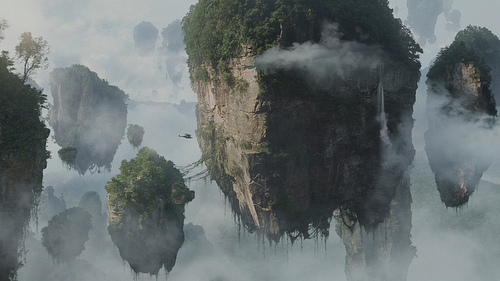
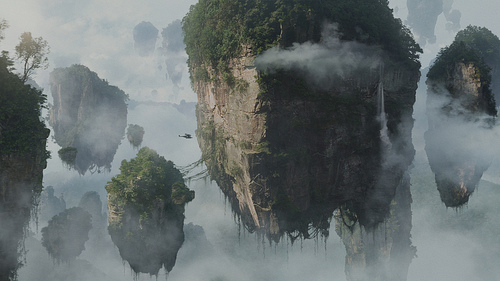
You know, I’ve heard a lot of Avatar-bashing in the past few days, and if anyone else was at the helm of this project, I have to wonder if it would be the same. Sure, James Cameron oozes a little too much self-worth, and given the stilted screenplay (and, as a friend justly pointed out, its poorly chosen font), it’s almost too easy to hurl the cheap shots. But I’ll say this about Avatar: its creators – from the writers to the person who designed every individual leaf on Big Momma Tree – know absolutely everything about the Avatar universe and how it works.
And this is something we can’t scoff at. It’s difficult to pull off, especially when the universe in question doesn’t actually exist, except in parallel analogies.
Every Pandoran beast has a function, a behaviour that’s unique to its species, and an intricate psychology to justify each motive. The Na’vi have a history that stretches beyond the borders of the tale we’re told. There’s also a whole ecosystem that wills the flora into fluorescence.
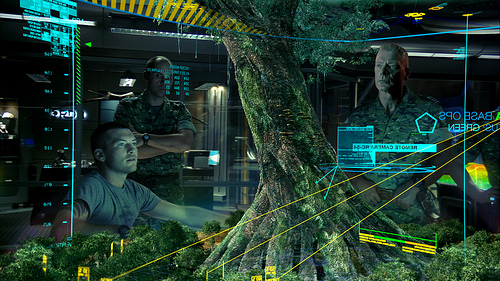
By Cameron’s own admission, it took years just to develop the world and its mythology before they even started working on the movie, and it shows. The story feels more like an intrusion on what’s otherwise a pretty routine lifestyle, even if it’s in that extravagant wilderness.
Though Avatar primarily belongs in the science fiction realm, what if we applied this meticulous exercise to all fiction? From chick lit to indie films and action flicks: all of it. What if creators always went to the same amount of trouble to get intimate with the cosmos outside the narrative, even if the action takes place in the modern-day “real” world?
Our storytelling relies so heavily on characters that we sometimes lose sight of the fact that they exist somewhere. That this place has its own personality, idiosyncrasies, danger and splendour. That it affects the characters’ choices, or sometimes makes those choices for them.
When artists, writers or designers ignore the circumstances of the worlds they create, audiences notice. Case in point: The Phantom Menace. When your fans understand your universe better than you do, it’s a sure-fire death knell.
None of this means I wasn’t rooting for The Hurt Locker. I was. It’s a fascinating story, with a tight focus and a flawlessly treated subject. It deserved its awards for the same reasons I’m praising Avatar.

 ‘re a writer, it’s hard.
 OLIVIA COLLETTE