An Aural Reading of “The Witch”

An essay on the music and sound of “The Witch” for Movie Mezzanine

“Even with the film’s many loud musical moments, The Witch is largely quiet. It’s part of how it so successfully invokes fear in its audience. The silence is constantly letting us know just how utterly secluded the family is—far from any known civilization, with no one around them having any interest in saving them. The family’s isolation is so palpable that when you hear something, it’s jarring.”

Read more

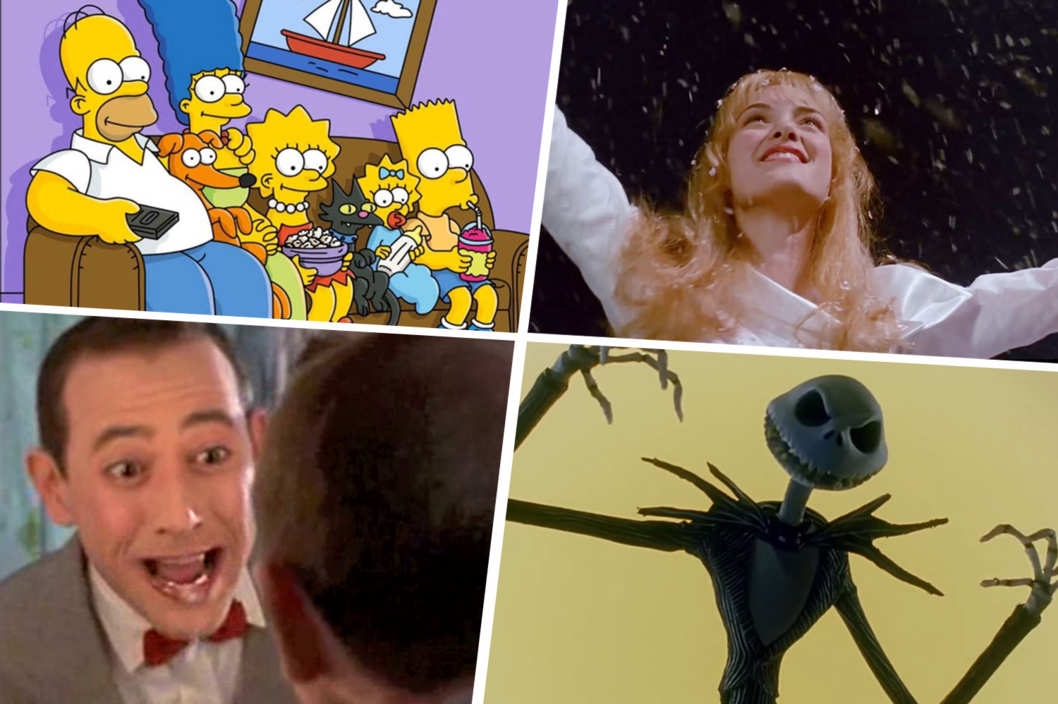
Danny Elfman Tells the Stories Behind 8 of His Classic Scores

Interview with Danny Elfman, originally published at Vulture/NY Mag on July 6, 2015. Photo: Fox, Twentieth Century Fox, Pee Wee Pictures, Touchstone Pictures

“The theme Elfman composed for Batman and Batman Returns is certainly memorable, so much so that it was even used for the ensuing animated series. The overall score evokes a path paved in tragedy for the hero and villains of Gotham. Batman’s world functions within a maze of moral gray zones, but your sympathies might never baffle you more than when the Penguin dies. He’s unquestionably sadistic and homicidal, but his death is painful and pathetic, and the weighty, funereal music takes us to a place where we can actually feel mercy for the merciless man.”

Read more

Karaoke: The Traveller’s Icebreaker

Originally published in the Montreal Gazette on October 19, 2013. 

It’s a balmy June day in Spain’s beachy Costa Blanca region. All anyone cares about are the 2010 World Cup matches playing on the big screen at Stallion’s pub, a popular watering hole in a mostly British suburb of Torrevieja called Dream Hills. Today is significant since England is up against the U.S. Being Canadian and married to a Brit, I deem it best not to root for my neighbours to the south.

Thankfully for everyone involved, the game ends in a tie. England didn’t perform particularly well, but at least they’re through to the next round. That’s enough for the British majority of patrons at Stallion’s to turn the party up to 11. The TV is muted and, at the egging on of the pub owners, my husband takes to the teeny stage to host a Karaoke celebration. He puts me up first, and as he does, our Swedish friends Tom and Monica walk in. Upon seeing them, I request a song change. Before it starts, I point to them and say, “This is for you!”

It’s the first time I’ve chosen “Gimme, Gimme, Gimme” by ABBA. Its cool riff and steady disco bops are right for the occasion: everyone’s in the mood to move. After my performance, Tom gives me a big hug and says, “I loved that, it was wonderful!” I chose the ditty as a shout-out to his homeland, but the real compliment to Sweden is that everyone knows ABBA.

That’s the thing about Karaoke. In so many places throughout the world, the songbook will reliably be filled with international, barrier-breaking hits. We may not speak the same language, but we all know “Hey Jude.”

Naturally there’ll be tunes in the language of the country of origin – Karaoke books in Montreal always have a French section – but most of the tome features songs of the moment (Lady Gaga, Katy Perry, Justin Bieber) and of the greats (Elvis, the Beatles, Madonna).

When my husband and I travel to a new city, we invariably find a Karaoke joint on the first night. It’s how a couple of strangers like us meet new people.

My husband’s signature song is Queen’s “Bohemian Rhapsody.” Because the number is usually performed by a group of drunken friends, most Karaoke hosts are pleasantly surprised when they realize my husband can actually sing. His rendition has even earned us a round of drinks in Victoria, BC, at Sopranos Bar & Grill on Caledonia Ave., a boxy, inconspicuous locale in a warehouse district. “Most people ruin that song,” the host told us, handing us some shots on the house. “Thanks for doing the opposite.”

“Bohemian” is a song that people can easily recognize, generally appreciate, and feel compelled to sing along to. It combines these qualities more seamlessly than most songs, so it’s a great conversation-starter. Usually, the conversations starts with, “hey man, that was great!” And from there, we have a friend for the night.

I have a different approach. I like to get people dancing, I have a few ‘80s anthems in my roster. I’m partial to Nena’s “99 Luftballons” (in English), Martha and the Muffins’ “Echo beach,” and because I’m also French Canadian, Marc Drouin et les Échalotes’ “Pied de poule.” If I can, I also like to acknowledge the place I’m in, so when I’m in Cancun, Mexico, expect me to take on “La Bamba.”

I’m not an especially good singer, but after 16 years of classical piano training, I can at least sing on key. A typical reaction to my song choice is, “I haven’t heard that in so long!” More common still is me getting off the stage and on the dance floor.

We’re not in pursuit of praise. My husband and I enjoy listening to everyone else, and we’re just as likely to chat them up.

At Planet Rose, a cramped Karaoke bar in New York’s East Village, we meet Rob, who kills it with U2’s “With or without you.” (Honestly, we’re impressed by anyone who can actually pull off Bono.) It turns out Rob’s a regular, so he introduces us to some of the people he knows. One of them is Andy, who manages to convince me to duet with him to Pat Benetar’s “We belong.”

We never wonder if it’s okay to approach Rob, and Andy took all of 5 minutes to ask me to be his harmony. The constant in Karaoke is that if you can go up there and sing – even if you’re a terrible singer – you’re probably not shy. The courageous act of getting on the stage at all implicitly says “Hello” to the whole audience, which, when you think about it, is how all exchanges begin.

Feeling insecure? Pick a song with plenty of sing-along-ability. I’m reminded of that Ally McBeal episode when tone-deaf Georgia takes the stage at the gang’s favourite piano bar and butchers Dusty Springfield’s “Son of a Preacher Man.” Vonda Shepard steps in, encouraging the audience to sing along to cover up Georgia’s dreadful voice. With Karaoke, it’s a given that not everyone’s a singer. But because all the songs in the book are well-known, and because the words are on the screen, anyone can sing along. In fact, knowing they’ve chosen a popular song might even give the apprehensive singer an ego-boost.

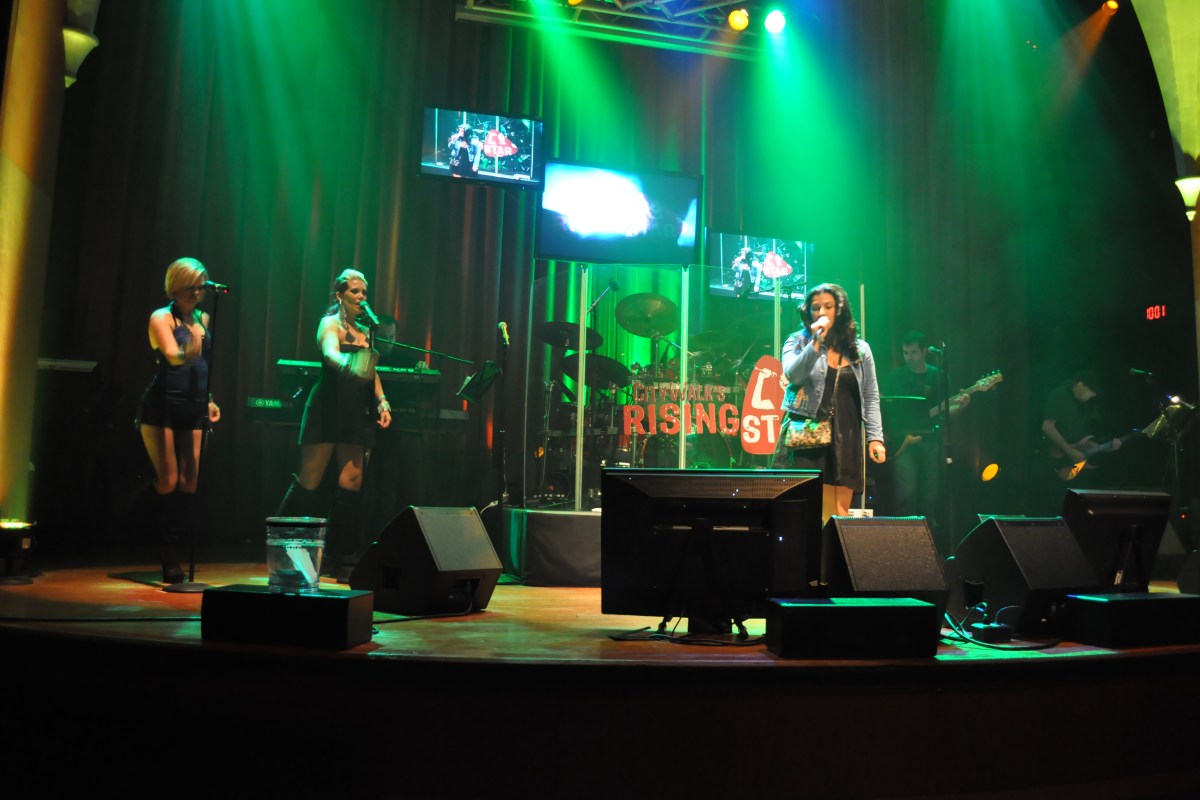
For a rush on a grander scale, head to the Rising Star club at Universal’s CityWalk in Orlando, Florida. Here, Karaoke is taken to the next level of completion. At only a few pages, the songbook is smaller than what we’re used to, but there’s a reason. Once you’re called up, a full band and back-up singers help you deliver the song like a star. And because this is America, the stage crew has memorized each of those tunes in the songbook and performs them to pitch. In fact, should you falter or sing off-key, the back-up singers’ mics get jacked up to make it sound like it’s still all you. There’s less singing along in a polished place like this, but for a little over three minutes, it’s all about you.

Over in Nashville, we find Lonnie’s Western Room, a Karaoke bar in Printer’s Alley, only a couple of blocks from the city’s honky-tonk central. Lonnie’s is everything I hoped a Nashville pub would be: tiny, cluttered, and teeming with people who aren’t necessarily vying for country superstardom. In fact, I hear more metal than bluegrass.

There’s just one problem: they won’t play “Bohemian Rhapsody.” When my husband asks why not, the bartender tells him the owner has a list of “do not play” songs, and that’s one of them. It turns out the list has been laminated. Among others are some Eminem tracks, Coolio’s “Gangster’s paradise” and – this one’s a head-scratcher – Billy Joel’s “Piano man.”

I can’t restrain him; my husband wants to leave. As we walk away, I remind him that there are other songs he could sing. “I know,” he says. “But I can’t support someone who would actually ban songs just because they annoy him.”

He has a point. My personal distaste for Britney Spears is automatically suspended the moment I enter the realm of Karaoke. Besides, if there’s anything that can bring a diverse, if mismatched group of people together, surely it’s a song they’ve all heard.

When my husband and I got married three years ago, our guest list read like a United Nations function. People hailed from both of Canada’s coasts, the U.S., England, France, Spain, Australia and Iraq. Many of them had never met before.

To break the ice, we worked Karaoke into the reception. “Weddingoke,” it was called. We hired a DJ in case we ran out of song requests, but in the end, Weddingoke rendered him redundant.

My husband started things off with “Bohemian Rhapsody.” It was the first time my parents heard him sing. “He’s really good,” my father told me. “You did well.” My mother agreed. “I didn’t know he could sing like that,” she said.

Some parents want their daughters to marry a doctor. Mine, who met in 1975 after joining the same band, were quite happy that I’d found a man who could transition through the song’s many changes like it was nothing at all.

It’s a talent my husband took with him when he backpacked through Australia and Thailand in the early 2000s. And since we started travelling together in the last few years, his “Bohemian” and my “99 Luftballons” have made us friends wherever we go.

In Lana Del Rey’s Defense…

“It’s late,” I tell the husband unit. “Tee’s drunk. You’re getting there. Let’s go.” We’re at the Gotha Lounge, and just as we shuffle out of our chairs, a lady approaches us. She recognizes the husband unit from over 6 years ago when she met him at a hostel on a whole other continent. They’d dated briefly, so he’s quick to introduce me as his wife. To make her at ease, I tell her how funny this whole situation is. She asks if we’d like to have a drink with her and her group, and given the unlikelihood of this run-in, we don’t feel we can say no. Tee grabs a cab and we join her posse.

While she and the husband unit catch up, I chat with some of her friends. We’re the only ones left in the place. The bartender changes the music to something that says “closing time.” It’s sluggish, with instrumentation that’s at times jazz-club-bare, at times faintly intricate. The singer’s voice seems lazy, but she shifts from a low alto to a high mezzo without any real effort. Then I hear a familiar intro with chiming bells and a harp. It’s Lana Del Rey.

Outside the context of her notorious SNL performance and the Twitter fury that followed, it turns out that her music—like a lot of music—has a time and a place. For us, it was in an empty lounge on the coldest night in January, surrounded by strangers and old flames. Lana’s sound paints that night. And even if it weren’t for that night, there’s nothing really wrong with her sound.

What we don’t like about Lana isn’t entirely Lana’s fault. There’s no rags-to-riches story with her. She went to boarding school in Connecticut. Her wealthy father financed her early work. And I’m not sure what she was doing in Miami, L.A. or NYC, where she claims to have drawn so much inspiration, but I doubt she was waiting tables. Her background conflicts with the working-class mystique that’s supposed to constitute modern celebrities. If your origins don’t include living in a car with your mother while you attend auditions, people won’t root for you. It’s the anti-aristocratic way of the New World.

Despite being drop-dead photogenic, Lana couldn’t parlay that beauty into tangible sex appeal. Instead, her live performances are hopelessly awkward. She sings well, but she’s fidgety. As my friend Kartina Richardson puts it, “she stopped playing the game and forced us to bear witness to her crippling fear.”

While this is hardly a sin, in the age of Gaga theatrics, it just won’t do.

Incidentally, there isn’t much to Lady Gaga’s songs. They’re dance club fodder, but musically, there’s nothing particularly earth-shattering about them. It’s pop. And pop doesn’t need to “pop” to be Pop. It just has to be pleasantly predictable.

On closer inspection, Lana’s lyrics are deeper than Gaga’s, not that it takes much. The rhythm and rhyme demonstrate a keen awareness that the words, at some point, have to be sung. Lana’s language is easy, unpretentious and sprightly. When her talent matures, what she’s after will be easier to grasp.

It’s a shame Lana hasn’t been able to shake the SNL fiasco. She rose to fame as an Internet star and couldn’t deliver past radio viability. Though that’s something, isn’t it? Her voice is fine. Her music has a quality of its own. Where most of today’s chart-toppers won’t sing without a robot handy, can’t we get behind the autotune-free vocalist?

Lana’s message is best conveyed in audio. She belongs on your iTunes or in your phone, so long as she’s in the background. We’ll just have to resist her pretty face until she graduates from the Lee Strasberg.

The most weird-ass music videos of the ‘80s

Mumzie at CFN-RFC, rocking a 'do she borrowed from the Thompson Twins.

When I was a kid, I was luckier than I imagined. For one, I lived in Germany’s mystical Black Forest. For most of the 10 years that we spent there, my mother worked at CFN-RFC, the TV and radio network for Canadian Forces families stationed in Lahr. Each day after school, I would take the bus to my mother’s office and spend the rest of her shift chatting up producers, directors and announcers. Thankfully, they were a tolerant bunch.

Then the ‘80s exploded. The cause? Music videos and their by-product, video shows. To name just a few, there was Good Rockin’ Tonite with the venerable Terry David Mulligan, Video Hits with Samantha Taylor, and Friday Night Videos. It was an exciting cultural phenomenon, which directly led to many high school girls mimicking Madonna’s “Like a virgin” look for the first half of 1985. Back at CFN-RFC, everyone played “who’s got the wackiest rock star haircut.” Whenever she could, my mother would tape videos on a VHS cassette and bring them home so we could watch them at our leisure. We thought of them as case studies.

Music videos weren’t novel. They’d been around for over 10 years. Only now, they were more stylized, going beyond concert footage and grey backdrops. Some videos told a story and felt more like short films. This period was so experimental, it’s a shame Andy Warhol didn’t live to see the ‘80s to the end. Then again, some of the work was so experimental, it might as well have been made in his Factory. Here are some of the more bizarre videos of the Michael Douglas decade.

Loverboy – Billy Ocean

Starting with an unidentified humanoid creature riding horseback along the Durdle Door coastline, it’s not hard to recognize this video’s absurdity. It’s got it all: a pointless floating pyramid, required “artist singing” scenes set on Mars, and ridiculous alien costumes that beg the question, why didn’t George Lucas sue? If anything really irks me about this piece, it’s that the protagonist – let’s call him Sheephead Guy – walks into a bar, eyes a female whatchamacallit from (presumably) another species, and promptly abducts her. The song justifies this by repeating, “I wanna be your loverboy.” Problem is, I’m not altogether convinced she feels the same. The lyrics don’t advocate barbaric behaviour, but the video seems to promote club-to-the-head courtship. I can appreciate an assertive man, but this is chest-banging, and not the Céline kind. Odd how during a decade that venerated progress and the future, this video romanticizes the Stone Age.

Self Control – Laura Branigan

Somewhat surprisingly (or maybe not), this video was directed by William Friedkin, who also directed The Exorcist. In all, I get the song’s broad strokes: Miz Branigan’s wilderness is unleashed at night, and it kind of scares her. What I don’t understand is how the video proposes to get there. It has a few too many symbolic levels, or at least, just enough to alienate even the cleverest of English majors (ahem). What’s with the masked dude, the city streets covered in flattened garbage bags and that frickin’ doll? The video isn’t exactly all over the place, but it also doesn’t really know where it is. It probably doesn’t help that the original cut was deemed too controversial, so parts were edited out for MTV. There’s a scene that’s clearly supposed to infer an orgy, and another bit where the masked dude looks like he’s about to perform cunninglingus. But none of that explains why dude is wearing a mask.

Gonna Get Close to You – Dalbello

I can’t tell which is stranger: the singer or her video. The song is about stalking, but the video makes me wonder, what for? No one will argue the androgyny of both main characters, yet I can’t help but feel that the lady is barking up the wrong tree. That the man can’t reciprocate Dalbello’s feelings has less to do with the fact that he wears a dress and more to do with the fact that he’s a little nutty. Then again, stalking isn’t a perfect science. If you can get past Lisa Dalbello’s zany hairstyle, the video is beautifully shot and the song is a piece of pop ingenuity. The whole production is peculiar and smart all at once. I’m not sure what the bag of red shoes stands for, but I like Dalbello’s “still life” pad with the grand piano on its side, and I almost wish there was more of the man’s 1950s housewife fantasy.

Big in Japan – Alphaville

I need to mention the awful lip-synching so we can get it out of the way. The lip-synching is just awful: there. Let’s move on to the singer’s incongruous facial expressions in relation to the lyrics: done. Next, short of actually filming in Japan, they lazily conjure up a cliché Japanese symbol: geishas. Then there’s the flag-holding ceremony. Yup: a ceremony. And they, like, hold flags and stuff. I would have included this muddled mess in a blog on the worst videos of the ‘80s, but “Big in Japan” is too outlandish to omit from this entry. Because the band is German I want to believe the video is influenced by early expressionist cinema, but that would be giving it too much credit. The thing was obviously filmed in some warehouse over a weekend, and quite possibly on a whim. That doesn’t make it a lesser piece, just dubiously improvised, a tad sloppy and utterly flaky.

The Wild Boys – Duran Duran

You can’t talk about ‘80s music videos without at least name-dropping Duran Duran. They really sexified the medium and pioneered the “costly production value” trend. Still, even Duran Duran weren’t immune to offbeat eccentricity, and at the time, nothing left people aghast quite like the “Wild Boys” video. We just didn’t know what to make of it. The video was directed by Russell Mulcahy, who also did Bonnie Tyler’s “Total Eclipse of the Heart,” a point that provides a bit of insight. Wikipedia does a decent job of getting into the video’s whys and wherefores, so I’ll just focus on its bonus “weird” points. #1: For primitive “wild” boys, they managed to develop rather sophisticated methods of torture. #2: If they’re so wild, why did they even bother with loincloths? #3: Is the robotic Patrick Stewart bust their leader? If so, there’s your answer. #4: As if it weren’t freakish enough, there’s also a waterborne worm-monster. Wild, huh? I’d bring up the video’s generally disjointed narrative, but given everything else, it’s a moot point.

Each morning only happens once

Me and Daddy-O on the big day.

There’s no way to dress it up: I didn’t meet my father until I was 16 years old. Circumstances, more than anything else, had a hand in it. For most of my short life at that time, my father lived on Canada’s west coast while I lived in Germany. When I returned to Canada – on the east coast, mind – I was still too young to travel on my own. So when I was 16, I finally made the cross-country trek.

Until then, I only really knew snippets about my father, mostly from my mother’s glowing reviews. He and I had also spoken on the phone a few times, but this was before phone cards, cheap long-distance plans and Skype. Otherwise, we’d gotten to know each other through correspondence.

My mother had pictures of him, but they all dated back to 1975, a little before I was born. He looked like Cat Stevens, especially with a guitar in his hands. It struck me because it provided a clue about my own musical inclination. Back then, we were all so sure that I’d turn my years of classical piano training into a career in music.

When my father and I finally met in person at the airport, he embraced me urgently, saying, “god, you look like me.” He was right. The rest of our 2-week vacation was largely spent pointing out our similarities and our uncanny body language (we seem to unwittingly cross our arms at the same time).

But it was still a little awkward for me. Being in a household with no female presence felt uncomfortable. My father was no longer a legend. He’d become a real person, with all the flaws that being human entails. He started to look less like Cat Stevens and more like himself. And in all the important ways, he was a stranger. My father picked up on it and told me it was okay for me to feel weirdness or even resentment. I couldn’t really classify any of the emotions, so I swallowed it and told him it was nothing. So he swallowed it too.

One thing I learned about him was that he loves jazz. He even had a show at the University of Victoria’s radio station. He called it Joe’s Garage (a playful cross between my father’s name and the Frank Zappa album). His show featured guitar jazz exclusively. Lots of Steve Vai, Chet Atkins, some Django Reinhardt and Béla Fleck. When I told him there were similarities between baroque music and jazz in that they’re both improvisational, my father turned it into a show, with me as the guest. I remember that he played Lenny Breau’s jazzy rendition of Bach’s Bourrée in E minor to draw the connection for listeners.

Right after the show, we stopped by UVic’s repertory theatre, which was in the same building. This was exciting for me. We didn’t have that sort of thing in Moncton yet. And when I saw that they were playing Tous les matins du monde, with Gérard Depardieu and his swoonworthy son Guillaume, I begged my father to humour me.

The next day, we attended the early show. I didn’t know much about the movie, but I’d heard about it, and Gérard Depardieu’s fame had somewhat trickled down to North America on the heels of Green Card and Cyrano de Bergerac. I knew it was a period piece, but I had no idea it would revolve around baroque music. The discovery delighted us both.

Marin Marais faces his inadequacies in the last few moments his life lets him have.

Tous les matins du monde is a fictional account of the lives of composers who actually existed. (Biopic filmmakers take note: themes are infinitely more engaging than “milestone moments.”) Gérard Depardieu plays Versailles court composer Marin Marais, and his son Guillaume plays the same character at a younger age.

The movie has an exquisite opening shot, with the action happening off-camera. Knowing that death is closing in, Marais confides in his orchestra. He admits he’s an imposter, and segues into the tale of his aloof and  temperamental music teacher, Monsieur de Sainte Colombe, played to pitch by Jean-Pierre Marielle.

Sainte Colombe outranks Marais in talent, awareness and proportion. Marais knows this and spends his life trying to understand what Sainte Colombe has that he doesn’t. The set-up is similar to Amadeus, but unlike Salieri, Marais is clueless about his inability, in part because he’s in a hurry to get famous. “You’ll wear lovely robes, you’ll dance for the king’s circus. It might impress some but it’ll never move them,” Sainte Colombe predicts. “You’ll make music, but you’ll never be a musician.” Sainte Colombe isn’t trying to condemn Marais, but he knows that ambition stunts growth.

If only Madeleine had listened to her father.

To complicate things, young Marais has an affair with Sainte Colombe’s daughter, Madeleine, only to leave her for a woman more fit for the court. Madeleine, who had taught Marais for months after her father dropped him in a violent fit, retreats into a resolute sombreness that eventually leads to her suicide.

Matins is also about mourning. Sainte Colombe owes much of his rage to unwavering grief over the death of his wife. It’s why he composes “Le Tombeau,” an opus of viol pieces. Himself a muted man, Sainte Colombe spends most of the movie trying to teach Marais that music replaces the words we can’t say, and says the things there are no words for. Of course, it isn’t until the end that Marais gathers all of his sorrows and weeps, with viol in hand, for his betrayal of Madeleine, for his decades-long ignorance, for the swanky court position he doesn’t deserve. He’s redeemed, just in time to die.

The film’s title comes from a line in Marais’s narration. “Tous les matins du monde sont sans retour.” It translates to, “all the mornings of the world never return,” which is as poetic in both languages, and possibly the most apt description of regret.

When the movie ended, there was a heavy silence in the theatre. I looked around and most people were teary, including my father. “I wasn’t expecting that,” he said. He and I spent the rest of the evening discussing the movie: its perfect soundtrack (mostly rendered by violist Jordi Savall), the way the cinematography mirrored baroque paintings, the fact that there really isn’t much dialogue, and the truth about music.

I thought of the movie’s relationships, most of them entrenched in disappointment. Is it so different from how a teenaged girl feels about her parents? As an adult, I’m going to be pleased to put all that behind me. I’ll want to have a friendship with my parents. But at 16, I’m not there yet, least of all with my father.

Later, I would learn that Guillaume and Gérard Depardieu had a tense father-son relationship, wrought with anger and envy, not unlike Marais and Sainte Colombe. When 37-year-old Guillaume Depardieu died of pneumonia in 2008, people disparaged Gérard for reading a passage from Le Petit Prince as his eulogy. They felt it was further proof of Poppa Depardieu’s rumoured heartlessness, without considering that it might have been too painful for him to speak frankly at his own son’s funeral. I suppose they would have preferred him to give the performance of his life.

Gérard never denied his difficult relationship with the troubled Guillaume, but any criticism always came with a sliver of admiration. “He’s a great man,” he once said of Guillaume, “and especially a great actor.” After Guillaume’s death, in an interview with Paris Match, Gérard said, “He had his excesses, and I had my foolishness, but there was no conflict between us. He didn’t have issues with drugs. His real problem was life.”

Family ties are complicated. Children go from needing their parents to wanting them overthrown, and that transition takes almost no time to occur. Naturally, it’s worse when children actually have a reason to begrudge their parents. It’s messy stuff, and I can’t imagine having to live it out in public.

I didn’t want my father and I to have a resentful subtext between us. So eventually, I came clean with emotions I couldn’t comprehend or name. He was my father, but we didn’t know each other yet, and it would take some time. There was bitterness and confusion and love all at once. He graciously understood. He didn’t ask questions. He didn’t try to explain his side of the story. He just made himself available for whatever I might need.

And I embraced it because I thought it would be a shame to root our relationship in regret. We had music in common. Isn’t that a good start?

Daddy-O and I singing Karaoke to "California Dreamin'" at the reception.

Ten ‘90s trends due for a comeback

Remember the ‘80s? Or rather, our once-collective hatred of the ‘80s? Then American Apparel came along and used that washed-out Polaroid aesthetic to sexify Flashdance shirts, and we bought it, along with some leggings and legwarmers. We thought, “okay, so long as mullets don’t come back.” Then the faux-hawk went emo and everything from the Ziggy Stardust to the Farrah got an asymmetrical, jagged-edged revamp. And we thought, “that’s alright, so long as big shoulder pads are gone for good.” Then Lady Gaga…well…Lady Gaga.

I’m not incensed by any of this. What I find odd is that since the ‘80s went retro, the ‘90s have taken a beating. Thing is, I liked the ‘90s. Possibly because that’s when I was a teenager and life seemed simpler, if disproportionately more dramatic. But I really did have fun then. The grunge scene. Mosh pits. Pop psychology. I miss that whole era, and I’d bet if any of you think long and hard on it, you’ll get a bit nostalgic. So before you go treating the ‘90s like your dweeby kid sister, I want to point out which parts of that decade are worthy of a revisit.

p.s. I’m going to follow this up with a list of things that should have stayed in the ‘90s, and things we mercifully kept.

1. The Sixties

The first thing to mark the ‘90s was a ‘60s revival. It started with the big fat headband, made popular by Lady Miss Kier, followed by flower-power t-shirts, babydoll dresses and chunky heels. Hippy trends eventually ensued, from the long hair to the surprising return of bellbottoms and peace signs, which somehow got intermingled with grunge. Still, I’ll romanticize the ‘60s any day, and if Amy Winehouse and Mad Men are any indication, we can look forward to one swinging déjà vu.

Lady Miss Kier, from Deee-Lite. Is groove in your heart?

2. Beige and burgundy lipstick

In the 2Ks, makeup went the way of the fallacious “let’s look like we’re not wearing any” trend. Not so in the ‘90s. I can even date a ‘90s flick based purely on the shade of lipstick. Back then, wearing makeup meant observing the rite with the dutiful application of noticeable colours. I’m not sure why nobody committed to all-out red, but burgundy was the shade you wore to work, to dinner, or to the club if you wanted your style to say, “I’m a lipstick kind of woman.” For a more “natural” look, women wore beige. A very thick, opaque, heavily lip-lined beige. Resist it if you will, but remember that we long thought blue eye shadow was reserved for theme parties and John Waters drag.


Before, when you knew where the lips were.
After, with invisible mouths.

3. Contrasting colours and geometry

When I think of ‘90s fashions, I’m in the early years, when guys tucked silk dress shirts into a pair of baggy Edwins. There were different patterns on the shirts, and I even remember a Mondrian-inspired trend. It was all about very bright colours against white and black. Bold, wacko type came with it too. Before the ‘90s got all grungy, they were really clean-cut. I’m not sure how this could work again, so I’m looking forward to seeing how designers pull it off. And they will, because the revised ‘80s are on the brink of exhaustion.

Yes, it's who you think it is. Before he became the punchline of every joke about the '90s, he had the swoon-factor.


It's funny. I don't remember there being less copy on the cover. But come to think of it, that's not a bad idea.

4. Supermodels who aren’t identical to one another

Gemma Ward isn’t modelling anymore, but who can tell? Today’s models look like porcelain dolls: long, strawberry blond hair with widely set-apart eyes, small, round lips and a heart-shaped face. That’s the mould, and the ‘90s would have had none of it. Supermodels had to have a distinct look that almost suggested a personality. They had real bodies, too, even if they were still impossible thinner than you or I will ever be. They were also asked to speak on occasion, which meant we could associate them with opinions and views (vacuous though they were). You even know who I mean when I refer to them using their nicknames: the Chameleon, the Body and the Heroin Addict. Today, people are still fretting about how skinny models are, but I’m more miffed that they all look the same.

Remember when we were on a first-name basis with these ladies? Also note the lipstick.

5. Susan Powter

Fad diets are still around, but where’s the entertainment? Where’s the housewife who starved herself to get into her wedding dress, ballooned to over 200 lbs after popping out a couple of kids, then shaved her head and went all nutty when her husband cheated on her. Many moguls tried to sell their new-fangled weightloss technologies on shopping channels and infomercials, but only Susan Powter thrust dieting into the theatrical realm; rants, raves and all. And if you’ve ever been on a diet, your body will confirm that that’s about right. Sue’s still kicking about, but she’s quieted down, and her vlogs are downright boring. Where’s the anger, Powter? The low-carb trend is insanity! Make it stop it.

6. The electric piano riff

You know the one. It was in “Freedom,” “I’m too sexy,” “Good Vibrations,” and even EMF’s “Unbelievable.” I don’t know why recording studios chose this instrument to compel us to dance, but there it is. I’d love for it to replace the god-forsaken vocoder that’s become the conceal-my-terrible-voice device of choice for will.i.am, Kanye and co. In the meantime, here’s a video that combines a few of my favourite ‘90s things.

7. Masculine dance moves

Before grunge, many guys got all preppy. They dressed well, were more or less groomed, and really dug rap and soul. This usually meant they had a few cool dance moves to show off. There was the Running Man, the Hammer Dance, and that thing Kid ‘n’ Play did where they’d kick each others’ feet. But then grunge came, and suddenly your shirt was tied around the waist, your jeans were (sometimes intentionally) ripped, and each sentence expressed some form of disdain. And the dancing? The idea was to sway your body incoherently back and forth, keep your head down, make sure your hair was long enough to cover your face, and whatever else made you look stoned, if you already weren’t. Guys dance now, but only if they wear skinny jeans. Otherwise, they’re a little awkward, and it’s not right! We need decent moves for non-ironic non-hipsters. Now.

8. Raves

In Montreal, every Sunday afternoon means the Tam-Tams. Here, a bunch of people bring their djembes to Mount Royal park and jam it out while Montrealers dance, lie on the grass, have a picnic and/or smoke pot. When I moved to the city in 1997, the tam-tams were split into two parts: the tribal drums, and the drum ‘n’ bass. They’d found a way to work techno into the thing, and it wasn’t altogether inappropriate. I knew a lot of ravers when I came to Montreal, but I didn’t join in the fun. Now I wish I had, at least once. Sure, I’ve been to afterhours clubs since then, but it’s not the same. Lots of raves were about bringing the party out of the club. The spirit of the thing is gone, and so are the cargo pants. But I’d still love for a group of people to decide on a secret location, find a couple of DJs who are willing to spin it out in some abandoned field on the South Shore, and dance until tomorrow afternoon.

Trippy.

9. Movie or TV shows about a bunch of friends just, y’know, hangin’ out, talkin’ and stuff

When Aaron Spelling created 90210, he actually wanted to create another Degrassi, minus the ugly, acne-covered kids, of course. But we liked our people unattractive and riddled with angst. Maybe that’s why we craved entertainment that reflected what we thought our lives were like. Gone was the comedy of errors à la Three’s Company, and in were conversational classics like Seinfeld, Friends and Reality Bites. Today, authenticity comes in the form of reality shows. And the only thing that’s real about them is the writers. A weird shift.

10. The unbranded coffee shop

Remember those smoky, wooden, disorganized cafés with mismatched furniture, vegetarian menus and bohemian staff? Yeah. Neither do I.

Inside the old Café Calactus in Moncton, NB. I love their new restaurant and menu (and especially its popularity), but I kinda miss the vibe of the old digs.

What I learned about John Lennon

It’s impossible to visit a place like Liverpool and completely avoid the Beatles. Not that any of them live there anymore, but the little world that begat them still does.

On the thoroughly enjoyable Beatles taxi tour, our knowledgeable guide Kevin sometimes seemed embarassed to admit some of the trouble John Lennon got into. For a person who preached peace in his latter years, he sure was a little crap-disturber during part one.

Here are some of John Lennon’s most notable trespasses.

  1. When he was 5 years old, he was kicked out of school for punching a boy who suggested young Lennon’s mother was a harlot.
  2. Apparently, the punch was more like a straw; the last one, in fact. The school’s headmistress had long been seeking a final strike on little John’s record to put an end to his brand of schoolyard terror. Among his offenses were pulling girls’ braids, pushing schoolmates, and generally disrupting class. Again: he was only 5.
  3. When he was a little older, John Lennon was kicked out of the church choir for stealing money from the parish.
  4. He flunked out of the Arts College in part because of poor grades, but mostly because he kept skipping class to smoke pot in the alley. Sometimes he even smoked pot in class. To be fair, George and Paul were usually with him.
  5. He and soon-to-be-wife Cynthia Powell did the nasty on the cathedral grounds.

Before the Beatles, John Lennon formed a band called The Quarrymen, an allusion to the nearby quarry. I asked Kevin if our blue-collar hero had ever worked at the quarry. With his head down, Kevin humbly replied, “Sadly, no. Mr. Lennon wasn’t too keen on…labour.”

Who am I kidding? He’s still my favourite.

Boo-Hoo Against the Machine

Look, I know this is a bit of a delayed reaction. In my defense, I’ve been seriously bogged down by things like packing as much of the life that I think I’m going to live in one year, in one and a half suitcases; followed by some serious vacationing in Florida with the in-laws and taking as much of this eternal sunshine in until circumstances take the husband unit and I to Europe for the next year.

This response has been brewing inside me all this time, and it hasn’t come out until now because I just haven’t had a moment to write it all down. Or at least, not to my liking.

I want to talk about an Internet campaign to beat that poor X-Factor kid in the charts by getting people to buy Rage Against the Machine’s “Killing in the name.” (To those who don’t know, you could say that X-Factor is the U.K. version of American Idol.) Much to my distaste, Tracy and Jon Morter, who started the campaign, were successful in their pursuit, and here’s why I think Rage are a bunch of phonies who duped the lot of you that helped them…

Here’s the thing, because there’s always a thing: no matter what your values may be – left-leaning or not – you can be sure that they’re for sale, somewhere, for a low price…maybe even at Wal-Mart in the music aisle (where, incidentally, you can purchase a censored copy of any Marilyn Manson album).  You can be an advocate of anything Al Gore, and you might even argue that his filmed PowerPoint presentation passes as cinema. The point is that no matter how righteous you believe your opinion may be, you probably have it because at some point, it was bought and sold somewhere, which invariably made it available to a larger audience, who could then propagate that view and bring it to various discussions.

I’m not saying any of this to discourage people from having beliefs or aligning themselves with particular movements. I’m only trying to illustrate that any opinion, even a good one, is not something you acquire because you’re an original (keeping in mind that I don’t exclude myself from this equation). Ideas are formulated in a constant traffic of incoming and outgoing information, and somewhere in there, your own narrative is formed. That part of it is yours, but the things that feed it are borrowed from a bunch of borrowers. As a result, someone like Kurt Cobain would never have existed without an ample amount of exposure to things that he both liked and disliked. More importantly, he wouldn’t have been successful (to the extent that he was) without the support of a record label.

When the “Killing in the name” campaign was launched to boot X-Factor winner Joe McElderry off the number 1 spot in the U.K. singles chart, the motive was to challenge the hold Simon Cowell and his ilk have on the machine that manufactures things like “charts.” I know what you’re going to say: “but Rage said proceeds would go to a charity; but Rage is going to play a free concert in the U.K.” I get it! I’m just saying let’s call this what it is: free press. And with the amount of money Rage already has, it’s a lot like Angelina Jolie donating a cool million to World Vision when she’s worth 100 times that, isn’t it?

We can’t lose sight of who’s ultimately benefitting from this: Rage Against the Machine. Not you music lovers. Not Joe McElderry. And certainly not today’s alternative musicians, who didn’t get to cash in on the “alternative” movement of the early ’90s the way Rage did. And today’s alternative musicians who are musically talented – but not politically inclined – have to gain their acclaim in a way that’s much more organic than how it was done in those glorious early ’90s. They actually have to play live shows as much as they can (regardless of the venue size), they have to update their own Myspace page, they have to produce as much merchandise as they can because every little bit adds up (and might even pay for gas to get to the next show), and they actually have to reach out to their fans by personally answering e-mails and maintaining blogs and websites. Unless they have the great fortune of being featured in an iPod commercial, today’s alternative musicians develop their fan base in a way that’s probably to their disadvantage, though it’s nevertheless fair: democratically. Most don’t benefit from the marketing mechanics that drive label-backed artists, so they just do it all themselves, amassing fans that like what they do despite a lack of radioplay and advertising. And if these musicians eventually get signed, they still have to keep at it. Case in point: Lady Gaga.

Enter 18-year old Joe McElderry, this year’s X-Factor winner. Would he have been discovered at all without the aid of a singing competition? My guess is that he wouldn’t have, even though he has a beautiful voice. Having won X-Factor, what’s next for him is a lame pop record that’s sure to please teens and their grandmothers. At worst,  he’ll be a one-hit wonder (a fate reserved for many singing competition winners). At best, he’s got 4 albums in him, followed by a stint on I’m a Celebrity, Get Me Out of Here

Between the two musical acts, I prefer Rage Against the Machine. But I also believe Joe McElderry needs his one-hit-wonder ride more than Rage needs to be on the charts. If anything, sentiments towards “the music industry” are misplaced, especially when Rage is brought into the discourse. In many ways, Rage are no different from Joe McElderry. Without a label, they would never have reached the level of fame that afforded them their fortune (thus allowing them to play free shows). While they don’t have to look like polished pop idols as do most X-Factor winners, you can bet they work just as hard at maintaining their fist-raising revolutionary image. And for alleged leftists, they sure didn’t mind profiting from Che Guevara’s effigy with their “Bombtrack” single (something that would have raised Guevara’s eyebrows). In fact, their leftist construct served them well enough to convince millions of people that a vote for them – a group of signed artists – was a vote against the music industry.

Ultimately, the campaign served Rage rather well. It’s a shame because Rage stole votes from a working-class boy who needed your help more than they do. It’s odd, considering what Rage writes about. You’d think they might have stood up for a working-class hero themselves.

More importantly, the exercise proved how easily it is to sway the public to do anything. I don’t care how this impacts the musical charts, but it’s sad to admit that this happens all too often in the political arena. In that light, I’d like to throw the following out there: instead of voting “against” the person we don’t want, why don’t we make an informed choice about the person we want to vote in? Don’t stand behind Joe McElderry or Rage Against the Machine. Support the person who hasn’t been signed yet.

How singing competitions are a lot like horror movies

Like many Montrealers, I take Halloween seriously. It’s not just an excuse to get dressed up; it’s an opportunity to express that latent part of your personality. Ah yes, and get sloshed with a few of your favourite friends. In due form, I spent one evening preparing my costume with my buddy G, who, incidentally, is a horror movie filmmaker. To entertain us as we worked on our Halloween creations, G asked me to pick something to watch from his extensive slasher collection. His eye lit up when I brought out Night of the Demons.

Before judging us, you have to appreciate that I selected it only because it’s so much worse than you think. From Linnea Quigley‘s b-movie training to that disembodied demon head, whose superimposed appearances are clearly being played on a loop. But then there are classic moments: the “lipstick-nipple,” Angela’s grotesque transformation from human to second-hand demon to lead monster, and the razorblade apple pie. True to the genre, those clueless teenagers get viciously massacred one by one, until nobody is left but the Vestian blonde. At least, that’s how I remembered it.

It wasn’t until I saw it again that I realized none of the characters actually die. Except for the two survivors, Angela and gang are merely turned into demons, whether by attempted murder or serious injury (one guy gets his arm chopped off; don’t know how that makes a demon, but that’s for another blog post). Naturally, one of the characters who gets away is poor, virginal, I-just-wanna-cuddle Helen, played by flaxen-haired Allison Barron. The brunettes, sexual deviants, and brown-haired sexual deviants all get it in the end, if not at first.

Today, there was some back-and-forth between Adam Lambert and Out magazine’s editorial staff over the singer’s “handlers” asking the publication to make sure their client didn’t appear too “gay” in their cover story about him. This all reminded me that big gay Glambert only ranked runner-up to squeaky-clean Kris Allen (so immaculate, in fact, that he married his junior high school sweetheart when he was just 23). Will Kris Allen sell more records than Adam Lambert? Of course not. His role will be that of American Idol victor, not successful recording artist. Don’t get me wrong, it’s not that I don’t like Krissypooh! But this is a publicity contest, and Adam Lambert doesn’t need a dull press release to make headlines.

In much the same vein, who did they bring back for the Night of the Demons sequels? That’s right: Angela.

It’s a bit like the Quebec referendum, isn’t it? Quebecers say they want something fresh and revolutionary, but when push comes to shove, the devil you know always wins. On a day-to-day basis, many francophone Quebecers still want that sexy, dirty, dreamy sovereignty, so long as they don’t have to vote for it.

What’s getting tiresome for me is the long, overdrawn process of attrition. In a slasher flick, this describes when (sexually active) characters drop like flies at the hands of a masked murderer/monster. In singing competitions like American Idol and X Factor, it describes those painful weekly eliminations that ultimately betray the audience’s hypocrisy.

Often, the chasm that divides who should have won and who actually won is wide and deep. Why don’t we just own up to our  desires and vote for the Adam Lamberts and Rhydian Robertses of the world? Who cares if they’re gay or worship David Caruso. Shouldn’t our loyalties lie with the people who interest us most? This isn’t like separating a country; it’s about performance! I don’t remember a single thing that Kris Allen sang, but I recall specific Glambert hairdos. And most people agree the latter was the better singer.

Do we really need more disappointing post-competition careers from our safe choices? Let’s have some fun! Let’s give ourselves what we want!

Does this mean that Jedward are growing on me? Goodness no! They’re really terrible. But like Angela, no matter what happens to them, they’ll come back. The good news is, they’re both blonde, and they’re very likely virgins.

Commercial appeal

Remember how reliably bad TV commercial music used to be? It’s hard to recall now because we’ve been blessed with years of iPod ads. The jingle would be a thing of the past if it weren’t an essential component of video-produced spots for local retailers (“Mel Farr to the rescue! Mel Farr to the re-e-es-cue”). This, of course, excludes the “lingle,” when an ad is punctuated by a choir singing the company’s logo and slogan. I don’t know if that thing will ever die.

Furniture depots and used car dealerships aside, ad music has mercifully evolved. I started to take note back in 2002, when one of my favourite bands, Ladytron, sold one of their little-noted instrumental tracks to a car commercial. Whether composed originally for the spot, or purchased from a musician, ad music just got better. I generally feel that the advent of the web gave way to a broader, more engaging musical landscape. It became easier for people to discover alternative bands and break away from the mainstream, especially with file sharing, iTunes, and eventually, Myspace. Right on cue, ad agencies picked up on the trend, and started to infuse their creative with what I can only assume were their own musical selections. The result is so effective that a query often found on Yahoo Answers is “what is that song in the new *** commercial?”

I think we really started to feel a shift with the iPod spots, like this one:

To me, it seems certain creatives had the sweetest job: scouring Myspace for the best background noise. It worked especially well when the music was incorporated into the concept.

Car commercials especially started to gain momentum. While people are still seeking power and performance, ads started to appeal to those of us who want a car to reflect style, dynamism, youth, and ourselves. In fact, a good friend of mine admitted that he bought his Volks as a result of this ad:

I think it’s especially effective when we’re taking about cars, of course, because that’s when we listen to music the most. You’ve got speed and mobility, set to the soundtrack of your life. And isn’t that what the idea of freedom really is? A selection of your preferences combined with movement.

I particularly like this recent spot. The build-up is executed flawlessly.

Right now, I’d like to give a shout-out to my buddy TS, who’s taken the time to read all of my blogs after noticing that he had 5 pages of catching up to do. TS admitted that he absolutely hates commercials. I think that’s a normal reaction to have. Truth be told, ad creatives also hate a lot of commercials. Thing is, agencies are often forced to comply with a client’s demands, which means that an entertaining concept quickly  turns into boring, indulgent guff. But every now and then, a client is willing to take a risk and allow creatives to have a bit of fun. The result is an ad you’ll likely remember for years and years. And yes, TS, even you have your favourites. Those entertaining ones have an impact on the choices we make, how we see ourselves, and how we perceive the world. Because it’s part of our daily routine, it’s actually quite inevitable.

And as much as we’d love to hate it, one company that allows agencies to take risks, a lot, is Coca-Cola. Based on this ad, the company is perfectly willing to sacrifice direct sales in favour of championing a particular lifestyle and demographic. Given its entertainment value, would you really switch to another channel, or would you wait until it was over? My guess is the latter.

Oh, and the song? Via the White Stripes.

***

On Selling Out

Shortly after seeing the Ladytron ad, I had the fortunate opportunity to interview Daniel Hunt, the band’s main songwriter. I asked him about selling “Mu-Tron” to the commercial, to which he aptly responded, “I think people would have be happier if we worked at Taco Bell and did music on the side. But the truth is, you’d have to be wealthy already to turn that down.”

There’s the rub. Ladytron, while they had a record contract, were still struggling. At the time, as now, they rely largely on shows as a source of revenue. To my understanding, they got a few thousand for the song, which they presumably shared between them, their manager, and whoever else. The investment was largely theirs, truth be told, and in its own way, the commercial became an ad for Ladytron.

Though we’d love to put artists in a category that’s holier than corporations, the fact is, they’ve got to eat too. Instruments are expensive, and with regular use, they require either replacement or maintenance. With file sharing and iTunes, a record contract just isn’t as viable as it once was. More than ever, musicians, even the really successful ones, go on tour and sell merchandise in the hopes of turning a profit, but mostly to generate an income. This is especially the case for alternative musicians, who, though they may be signed, aren’t benefitting from album sales in the same way as mainstream performers.

File sharing served a major blow to the music industry. While I’m certainly not expressing an opinion about file sharing specifically, I can support artists who agree to be part of an iPod ad. This is often the difference between insignificance and notoriety. And for an unsigned musician, that just makes business sense.

Although some of us got sick of hearing “1, 2, 3, 4” repeatedly during the 2007 holiday season, most of us are glad that Feist got the kudos she deserved.

The other nice outcome in all of this is that audiences seem aware of how much musicians have been struggling in recent years. So attendance at live performances is statistically higher, and people buy more merchandise in support of their favourite artist.

And isn’t that how it should work? Shouldn’t an artist’s success be measured by their audience, rather than the company that backs them?