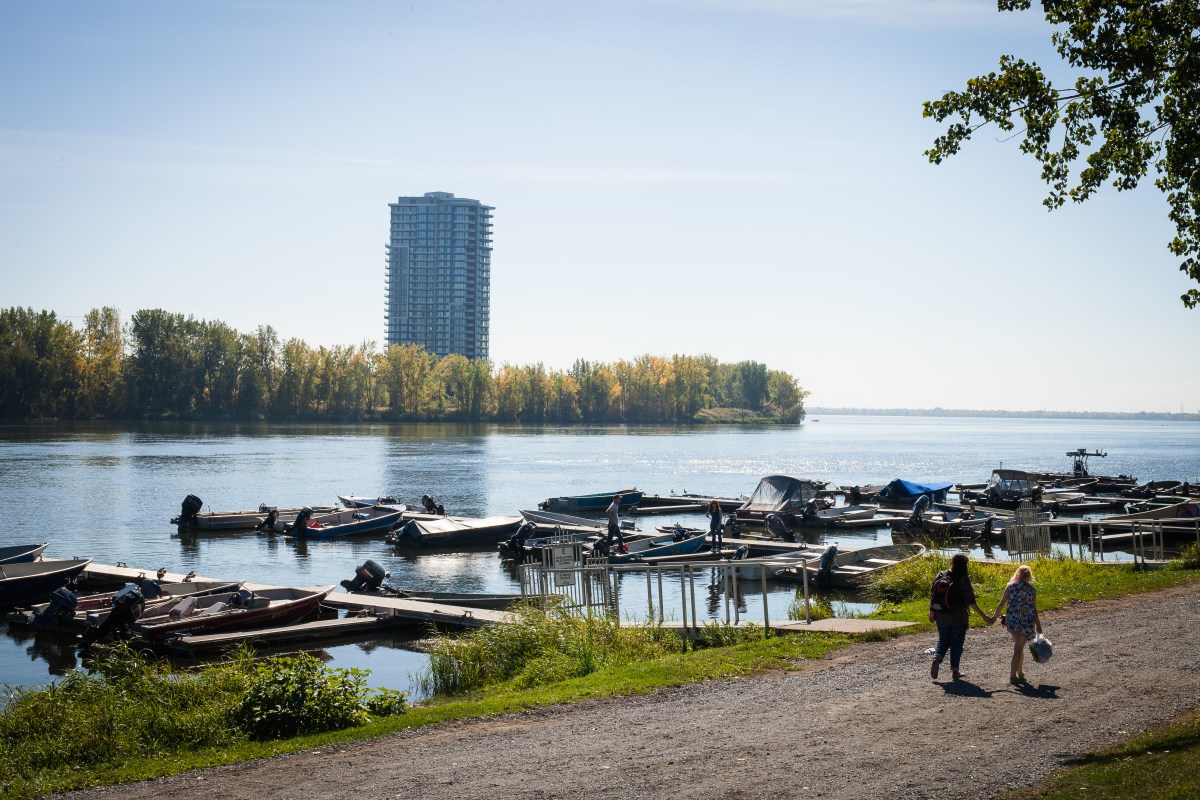
This native advertising series combines Concordia University‘s expertise and the Montreal Gazette‘s talent, and appeared as part of the newspaper’s special reports for “Montreal Reimagined.” Taking on urban development in Montreal, I was tasked with exploring the diversity of disciplines that could rebuild our great city. The series was published over 10 weeks, with pieces appearing in the print newspaper, on the web, and on iPad, complete with infographics and videos. Photo by La Portraitiste.
Climate Change, Renewable Energy and Infrastructures (published March 2, 2015)
“Can we confront climate change in a way that’s meaningful enough to make a difference? ‘The challenge is big,’ Prof. Damon Matthews said. ‘There’s no single solution, but there are lots of little solutions.’ That’s why the focus for a number of researchers in Montreal is developing solutions to reduce the impact of climate change.”
Read more
Solar Energy Powering Montreal’s Bright future (published March 6, 2015)
“Whether it’s in a commercial building or a single-family home, this intelligent technology goes further, making sure occupants stay comfortable — and even predicting the next day’s weather conditions to modify the building’s heat or cooling controls accordingly. Notably, these smart, solar-powered buildings can be designed to store energy.”
Read more
Paving the Way for Sustainable Housing Development (published March 16, 2015)
“Despite the city of Montreal’s moratorium on condo conversions in the early 1980s, a loophole has allowed a new condo category to emerge.What Rutland and his colleagues discovered was that in Petite-Patrie, more than half of the condo conversions since 1991 were “undivided” co-ownerships. Traditionally, undivided co-ownership has provided a way for people to own a part or share of an overall building. Since 1994, however, it has become possible for these shares to be linked to particular housing units within the building. The units of the building can then be bought, sold, and lived in very much like a divided co-ownership. Most significantly, the undivided condo category is not covered by the moratorium, making the protective policy increasingly irrelevant.”
Read more
Building a Social Economy: Sustainability from Within (published March 20, 2015)
“Take the story of Marmite, the concentrated yeast spread commonly used in the U.K. Love it or hate it, this byproduct of beer brewing combines corporate responsibility and waste reduction by turning something that would normally be a leftover into something that has value in its own right.”
Read more
From Lab to Market: Investing in Montreal’s Scientific Sectors (published March 30, 2015)
“Investing in research is crucial to making sure Canada remains one of the top five leading countries in aerospace. According to Aéro Montréal, most of Quebec’s 43,500 aerospace jobs are in Greater Montreal, making the city the second world capital in terms of aerospace job density.”
Read more
Montreal’s Makes the Most of Its Creative Resources (published April 3, 2015)
“It’s not surprising that Montreal was appointed to UNESCO City of Design in 2006. The city is teeming with creativity, starting with about 500 film and TV production and distribution companies, 70 ad agencies, 25 cinemas, at least 23 theatre venues, and 12 Maison de la culture establishments. Not to mention that Montreal hosts countless festivals, and is home to myriad architects, designers in all capacities, musicians, and artists. Montreal certainly has a creative drive, but what does this unique sector of our economy need to continue to thrive?”
Read more
The Impact of Public Transportation on Neighbourhood Development (published April 13, 2015)
“Public transportation exists to provide affordable mobility, connecting Montrealers not just to their city, but to friends and family, and, in many cases, their jobs. At the same time, recent research suggests Montreal’s métro may have contributed to the changing demographic composition of surrounding neighbourhoods; in other words, gentrification.”
Read more
The Wellington Tower’s Living Legacy (published April 17, 2015)
“If we’ve all but forgotten Griffintown’s St. Ann’s Church or its old fire station, it may be because the new residential highrises in the area leave little clue as to this tiny neighbourhood’s former industrial identity. Not everything’s gone, but in 2013, when the city announced its plans to redesign the Wellington Tower — that iconic, graffitied, minimalistic building hovering above the CN tracks bordering the Lachine Canal — a group of people decided it was time to start making memories.”
Read more
Creating Green Space Diversity and Connectivity (published April 27, 2015)
“It’s estimated that roughly 20 per cent of Canadians suffer from respiratory allergies. But according to biodiversity and bioenergy specialist Melanie McCavour, a PhD candidate and lecturer at Concordia, there’s an easy, inexpensive, and effective thing cities could do to both increase biodiversity and alleviate those allergy symptoms: Plant more female trees that produce fruit.”
Read more
Perfect Blue: Facing Montreal’s Waterways (published May 1, 2015)
“Central city dwellers know that they’re surrounded by water, but they often don’t have much of a relationship with it. Unlike cities like Paris, London, Berlin, and Prague, there’s no body of water cutting through Montreal’s urban core. The Lachine Canal is an offshoot of the St. Lawrence, but it’s still largely at the edge of the island, and as a public space, it doesn’t yet compare to the Seine or the Thames.”
Read more

 A couple of days ago, the boyfriend unit sent me
 OLIVIA COLLETTE