Video games *can so* be art, so gnah!

Concept art for American McGee’s Alice.

Roger Ebert published a rather fascinating piece arguing that video games cannot be art. Not surprisingly, there’s been a lot of backlash. Video gamers are a loyal bunch, but it’s not that they need to justify what they love by calling it art. They honestly feel that video game creators are artists. That’s why they let Blizzard take years to release any game, because like the developers, gamers want them to get it right. There’s an intricate creative process that goes into developing a video game (even a bad one). And it’s no different than spending a decade on a sculpture (even an ugly one).

Ebert was compelled to broach the topic when he saw a TED presentation by Kellee Santiago, a game designer and president of thatgamecompany. In it, she attempts to prove that video games are, in fact, an art form. I enjoyed Santiago’s spiel, but I felt she didn’t tackle the artistic elements of videogames. While she focused on engagement and emotional involvement, she didn’t deal with design or conception and how these create engagement in the first place. This seems like the most obvious argument for a game designer. She also kept bringing up critical acclaim as though it were synonymous with artistic street cred, which it isn’t. Taste doesn’t art make, as Ebert admits. Anyhow, I don’t feel she makes much of a case for the art of video games. So I’m going to try.

Medievalism: the root of most RPGs.

I want to preface this by mentioning that in the earlier part of my career, I was a journalist for a video game news website. Here, reviews are one of the major draws. Otherwise, what’s considered news is the announcement of a new game in development, and as many bits and pieces of that game as the studio behind it is willing to reveal. Those bits and pieces usually constitute concept art, in-game screenshots, and trailers. Why are these things important to gamers? Because it helps them assess what the gaming environment is going to be like, and that’s integral to their experience of the game. Sure, you could argue that most games have an objective; some sort of MacGuffin that has to be won or conquered. But to paraphrase Ebert: it’s not what the game is about, it’s how it is about it. The people responsible for the “how” of any game are the designers, the writers, and the many creators involved in taking you on a journey through the game. Really, the process of creating a game is no less artistic than what went into weaving the Bayeux Tapestry.

So what is art, then? Santiago cites the Wikipedia definition, which says that “Art is the process or product of deliberately arranging elements in a way to affect the senses or emotions.” Like Ebert, I’m not convinced this encompasses the totality or complexity of art; the description feels inadequate. But I find it touches on an important part of the experience of art. It’s about engagement, and video games engage people; that much is easily recognizable.

That’s one way to get people’s attention.

Do video games engage people in the same way as art? It depends on the medium we’re talking about. It’s only fair to compare video games to other media that lend themselves to similar experiences. Is playing a video game the same as looking at a sculpture? Not in the least. Is it a bit like reading a book? Certainly, if we’re talking about fiction. It requires the same process of suspending one’s disbelief to accept an alternate universe that’s different from the reality we know. The absorption of a book is similar to playing a video game in that it’s immersive, even if the adventure isn’t yours in the strictest sense. Otherwise, the visual dimension of video games can be compared to watching animation or a film: there’s a moving picture, and the construction of it is as deliberate as anything Stanley Kubrick might have done. I’m not comparing video game designers to Stanley Kubrick, but I’m sure many of them are inspired by his work and have used it to feed the vision of their output. And like Kubrick, game creators work hard to elicit a specific response from their audience. Which brings me to my next point.

Art requires an audience. Without an audience, there is no art. Art is one half of a relationship and a dialogue. It has to be presented to someone else as art, and, whether good or bad, it has to be acknowledged as such. Art doesn’t require taste, just one crucial social transaction.

While those who play World of Warcraft may or may not attend the next Picasso exhibit, they belong to an enormous demographic and are hugely devoted to the work of their favourite artists. This also means that they give video game creators jobs. And this addresses a strange cultural paradox: we seem to have a bone to pick with artists who make money. Game designers, much like art directors in an ad agency, are artists with jobs. They’re not struggling financially. They impact culture in an important way. They have a widespread audience, and it’s incredibly, immediately receptive to their work. Dissenters call it “selling out,” but video game creators prefer “raison d’être.”

Can any game be art? I’m not sure about that. People have brought up chess a lot, and my problem here is with the mathematics of the game. It’s functional and objective-driven. This doesn’t take away the enjoyment of it, but there’s no engagement with the imaginary, which is what’s so distinct about video games. There’s no “what if” fancy in chess. It doesn’t make it a lesser game, just an inappropriate comparison.
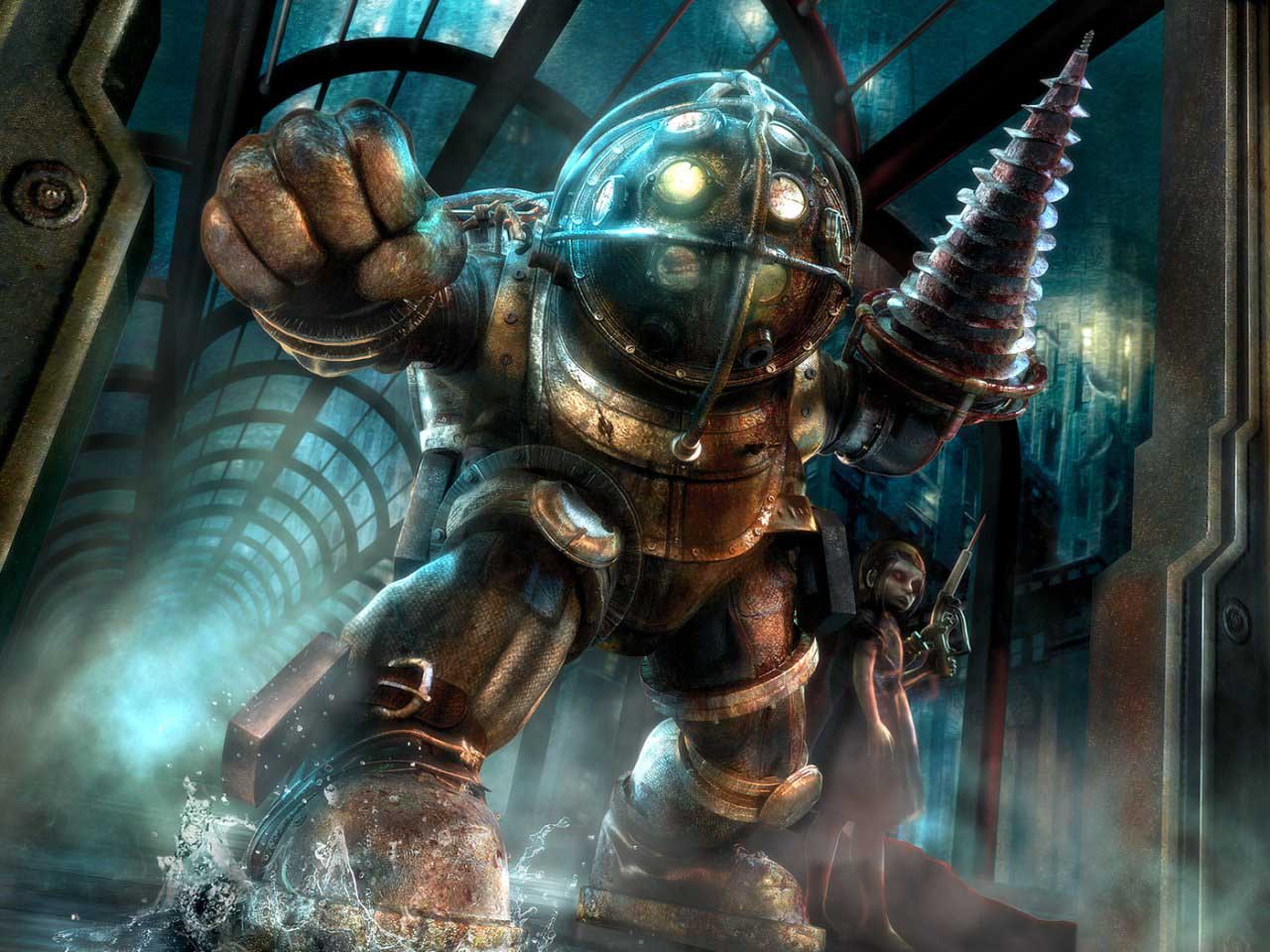
One of the terrifying BioShock bad dudes.

Art isn’t just a component of video games. It’s necessary to enhance the gameplay.  An example that’s commonly brought up to negate this is the first-person shooter (FPS). They’re often touted as mindless and one-dimensional, which is fair enough if you consider that the genre mostly involves one repeated action. But the “first-person” aspect is what gives the genre substance. Players need the art to believe the first-person gameplay. They also need a unique reason to choose one FPS over another (enter the Quake vs. Unreal debate). Games like BioShock demonstrate that it’s infinitely more interesting to shoot things in a setting that’s entirely alien, where surprise is just around corner. What impressed fans and critics about this game wasn’t just the graphics; it was also its Randian underwater environment and dystopian story.  This means a lot of effort when into conceiving this world, and that’s not the work of marketers or project managers. These are storytellers at play in an interactive digital medium.

One of the many Final Fantasy landscapes. Someone was hired just to design the trees in this forest.

Immersion is even more important in role-playing games, and it can’t happen without a bewildering universe. Just the other day, the husband unit finally bought his copy of Final Fantasy XIII.  I’ve never played games from this franchise myself (I prefer straightforward adventure games), but if you’ve followed the series, it’s perhaps the best testament to the genre’s evolution. When you consider its 8-bit beginnings, it’s all the more astonishing that the gameplay graphics are now on par with the in-game movie sequences. FFXIII also boasts a whole ecosystem that makes me wonder how the developers came up with their flora, fauna and technology. Their world is both plausible and impossible, at least for now. And isn’t that good science fiction?

Though it’s a little dated now, my favourite game is American McGee’s Alice. Most of its reviews were the same: awesome universe, great gameplay, but the end boss sucked. In other words, the journey was greater than the destination. Since the game’s release, American McGee and his work have garnered something of a cult following, starting with toy models from Alice, including the sickly Cheshire cat and the sadistic White Rabbit. McGee, for his part, knew the Wonderland and Looking Glass mythologies so intricately that his reconstruction was solid. And the characters? Flawlessly designed.

American McGee’s Alice merch, sold at a geek store near you.

Since Alice’s release in 2000, McGee relocated to Shanghai and set up a new studio, Spicy Horse. When asked to list the advantages of working overseas, he said the biggest bonus was a “blue sky mentality. Game development [in Shanghai] is a relatively new industry, and there’s less of a ‘history burden’ in terms of conceptualizing games, studio structure, and development process. People are more open to radical ideas.” Among other things, his answer alludes to the multidisciplinary nature of game development, which, in this respect, is not unlike moviemaking.

I’m also a fan of time-management games, and while these don’t make use of mind-boggling graphics, an art team is still involved. Sally’s Salon doesn’t look realistic, but it doesn’t have to, and that’s part of the fun. We accept that in animation, so surely we can make a concession for time-killers. There are also games that take no time whatsoever to go to market (the TV franchises, the board game simulators, etc.). But that exists in the movie industry as well. It’s the part of the business that’s just business, and that can’t be helped.

In terms of the craft itself, a meticulous creative process has often been directly linked to a game’s success. And why shouldn’t it? It takes time to create a world, especially one that works. I might argue that it takes more effort than penning the next Nic Cage action flick. But I don’t think this has to be about choosing film, poetry or painting over video games. I don’t think you can only prefer one if you discredit the other. Video game creators use different tools and speak to a different audience, but there’s room for that too in the art world. Or rather, there should be.

Is playing a game an art? No more and no less than watching a movie. But as long as we rely on art to enhance the gaming experience, we simply can’t separate the video game itself from the art that’s involved in making it. To deny the artistic process that goes into creating games is, I believe, short-sighted, if a little snooty.

***

My buddy Roger has gotten a lot of flak for his piece, and while it was to be expected, I think it’s undeserved. He hasn’t discouraged dissent, he’s taken the more scathing comments in stride, and he’s even linked to this Cracked article and this academic paper on the art of video games. It’s fine to disagree with someone, but it’s important to recognize when you get to do it in the context of a discussion. On that front, Ebert’s been a real good sport.


5 things we’ve kept from the ‘90s

Oh, how we loved poking fun at the ‘80s! But when the things we hated most about them were brought back by American Apparel and possibly Marc Jacobs, old was new again. So I’m convinced that we’ll come to a similar conclusion about the ‘90s because they really weren’t so bad, and, if we want to get all sentimental about it, they helped us build the new millennium. Plus, good or bad, we actually held on to some ‘90s stuff. Here’s proof.

1. The a-ha! ending

What do The Usual Suspects, Fight Club and The Sixth Sense have in common? An unexpected, what the?, second-viewing-required ending. If anything, these movies improved the suspense genre. Alfred Hitchcock was a strong enough storyteller to tell you who the killer was right away and make you itch in discomfort until they got caught. But replicating that experience has been a challenge. And then writers realized they just had to be more clever to build a better mystery. The best example is probably Memento, but the tradition carries on with pictures like The Machinist and Shutter Island.

"The greatest trick the devil ever pulled was convincing the world he didn't exist."

2. Here, queer & (getting) used to it

There’s nothing pretty about it: right up until the ’90s, gay and lesbian characters in movies or novels were often crazy, obsessed with the object of their affection, and/or just plain evil. AIDS gave people one more thing to blame on homosexuality, but when hetero women started contracting the disease, we couldn’t generalize these things any longer. That’s when we had to acknowledge the LGBT community, its budding voice and its rights. Then, on the heels of pop artist Keith Haring’s death, Madonna went into public service. She commented on religiously-backed bigotry and sexism in “Like a Prayer,” encouraged women to demand an orgasm in “Express Yourself,” celebrated/stole a gay club dance trend with “Vogue,” and hired mostly queer dancers for her Blond Ambition tour, as documented in Truth or Dare. That’s how the ‘90s started, and those sensibilities about the LGBT community remained in our consciousness. Though homophobia is still present and marring equality to the tune of Proposition 8, it didn’t quell Ellen’s eventual coming-out or the popularity of Will & Grace and The L Word. Today, we’ve replaced the term “lifestyle choice” with “orientation” (but we could still do better), and more people accept that sexuality, in all its forms, is biologically assigned. Maybe it’s because we dealt with so many LGBT issues in the ‘90s and part of the 2Ks that Lady Gaga’s butch-on-girl kiss in “Telephone” is a relative non-issue now.  Certainly compared to how people reacted to “Justify my Love” in 1991. There’s still a whole lot of progress to be made. But we’re lightyears away from 1989, thank goodness.

3. Political correctness

Having hoorayed for gays, it must be said that the ‘90s also introduced a whole slew of new terms to replace old words that were borne of racism, chauvinism and general power structures that no longer reflected our new equal & empowered reality. I’m not saying it was a bad thing, and I couldn’t because I’m a woman. I personally benefitted from these changes. Still, the double-edged sword of political correctness is that it essentially masks old views instead of replacing them. A word can alter your language about an issue, and that’s certainly important. But it takes conviction – not just vocabulary – to create a revolution. That’s why words like “tolerance” have always irked me. It means putting up with something you don’t like, when, especially in the case of discrimination, it’s the dislike that needs to change.

4. “I’ve never been to me”

This is probably one of my least favourite ‘90s hangers-on, but it’s so popular that I have to address it. From John Gray to Alanis Morissette, if there’s one thing the ‘90s taught us, it’s that people in the westernized world have the luxury of spending a lot of time on their own problems. Enter Self-Help, which has its own bookstore section, right in between “Psychology” and “Cooking.” It taught us phrases like “scarred for life” and “you can’t love others until you love yourself.” Since the ‘90s, this trend has gotten bigger and, I would argue, more dangerous. Case in point: The Secret is still riding high on Oprah’s endorsement, and it teaches little more than you will get rich just by sitting on your ass and thinking positive thoughts. Why? Because the universe owes you. Which is exactly like saying that children toiling in sweat shops could change their fate if only they thought of bunnies and flowers instead of, you know, eating.

5. The Internet

Okay, so the Internet, as a technology, has actually been around since the ‘60s, but it wasn’t used by the public until 1991, and it only became commercialized and widespread in the mid-‘90s. If Twitter’s taught us anything, it’s that the way people interact with your invention is often more important than the invention itself. Although the Internet has all but replaced the library, abbreviated your TV and usurped the Associated Press, its most considerable achievement, I believe, was to make Playboy kind of soft core.

Laugh if you will, but back in the day, this machine was the shizzle.

Coming up: things the ‘90s can bloody well keep to themselves!

Useful advertising. No, really.

Why doesn't anyone click on these? The answer: what's in it for them?

It’s happening. Slowly, but eventually, it’ll be widespread. Online editions of some of our favourite newspapers are going behind a paywall. It makes sense: they have to break even, and it’s getting harder. So the New York Times, which has enjoyed a considerable online readership but a significant dip in print subscriptions, is soon only going to be available to those who are willing to pay for the privilege. In a way, it’s how it should be, though I can’t help but feel that they missed the mark when it came to online advertising.

Let’s backtrack a little.

When I worked as a copywriter with a major travel agency, the sharpest thorn in my side was no doubt wielded by our media buyer. She and I rarely worked together directly, but her reckless media bookings often put me in a position where I had to create an ad for an audience that simply wouldn’t be at its most receptive. Once, I even had to combine Asia and South America, as general destinations, in one ad. “What’s the problem?” she said. “You’re the writer. Just do it!”

And I did. Awkwardly, but I did. Then it dawned on me that we had it backwards. She shouldn’t be telling me what to create; I should be telling her what space to buy, and where, and when. In advertising, creatives don’t just put the ads together. We take cues from the audience, the potential medium and the medium’s potential to stage a strategic dialogue. So really, creatives are in an ideal position to tell sales departments what to sell and how to sell it.

This isn’t news. You can see that this is the kind of conversation sales departments are having with advertisers right now, simply because some ads are clearly so mindful of where they are and who they’re talking to. It’s why a designer ad in American Vogue will mimic the fantasy of a Grace Coddington spread, but won’t in the U.K. edition that same month.

Yet when it comes to advertising on the web, it’s shocking how the whole team – creatives, sales and advertisers – can’t seem to apply the same principles. Advertising is most effective when it’s part of the experience people are already having with a medium. If we use Vogue as an example again, a majority of the ads look like they could have been produced by the magazine’s art team. In Wired, you’ll often find ads that simulate the quirky, interactive design of their front-of-book pieces. So when you’re flipping through the pages, you might be fully aware that you’re reading an ad, but at least it’s speaking your language.


A Wired ad that looks like editorial.

On the web, creatives and advertisers both seem to draw a blank. More often than not, they opt for a banner ad that nobody’s going to click on, which is something I’ve seen even on the New York Times website. Thing is, nobody was clicking on banner ads and pop-ups in the early days of the dot.com boom, so it’s surprising that it’s still being used today. Yet it’s not an easy equation to figure out, because the answer isn’t the same for everybody, and the answer changes depending on the website you advertise on.

Where print and outdoor advertising are ideal for a more subtle approach, the web is perfect for straightforward messaging. The immediate nature of the medium means you should get to the point, and quickly. Do it right, and you’ll have people clicking directly to your site. Do it effectively, and it’ll lead directly to sales (something that’s always been difficult to track in traditional advertising).

Deals found when you search hotels in Athens.

It’s a simple matter of figuring out where and when people are already looking for your product. Trip Advisor does this well. As a user, you’re only going there for one reason: to find a hotel that’s gotten decent “peer” reviews. Once you’re on the site, Trip Advisor generates ads that vary from specials to suggestions, and are wholly relevant to your search entry. Using Trip Advisor’s templates, the ads are integrated into your interaction with the website and are actually quite useful to you during your experience. I think it’s also notable that Trip Advisor spent a lot of time and money developing such a smart search engine.

Gossip or ad? Perez readers know the difference, and don't mind being entertained.

None of this means that good creative has to be tossed aside. There’s a place for it too, so long as there’s a sound strategy behind it. I’ve seen this on Perez Hilton a few times, and here, we’re looking at decent examples of awareness campaigns.  Though Dirty Sexy Money became an unfortunate casualty of the Writers’ Strike, marketers for the program were brave enough to experiment with new territory. They inserted ads on Perez Hilton that looked like the blogger’s own gossip entries. Though the DSM posts were differentiated with a yellow background and the word “advertisement” on the bottom right corner, the periodic entries treated the fictional Darling family as one that garnered as many scandalous headlines as Lindsay Lohan. In some cases, the ads even featured Perez Hilton’s distinctive MS Paint scrawlings.

Perez Hilton’s site background is also up for grabs. Though the results vary, when Mariah Carey’s marketers used it to plaster her new album cover, Perez looked like a sell-out and the singer seemed like a good sport. What made this effective, I think, was that people going to Perez Hilton already had a relationship with Mariah based on the blogger’s constant remarks about her oddball behaviour or questionable sobriety. So here, we have editorial content weaving its way into the ad campaign, if in a tongue-in-cheek manner. And this is the sort of thing that media buyers aren’t always aware of, but that creatives tend to look for.

A sponsor link on Wired.com advertising jobs that readers might be looking for anyway.

Not that I believe news sites should rely on the advertising model to rake in revenue. But if online subscriptions don’t pan out, these sites may find themselves re-evaluating more efficient advertising campaigns. I don’t think the answer is to embed marketing messages in editorial content (at least, not more than they already are). Instead, news sites, or even blogs, should seriously consider what it is that their readers are already looking for, and find companies that can enhance the experience for the reader. When readers click, it signals relevance. When they don’t, it’s because they’re being advertised to. People ignore most ads on TV, in print, and on a highway. Why would it be any different online?

Fuzzy wuzzy boo

Over the last few weeks, I’ve lost several IQ points to this video:

To be fair, I think there’s a lot to learn from the fuzzybum we know as Ninja Cat. I’ve even narrowed it down to 5 crucial lessons.

  1. Not moving = invisibility.
  2. Surprise is the best defense.
  3. Wiggling your bum can improve the overall execution of your anticipated attack (think about it, ladies).
  4. Cats maintain their cuteness well into adulthood (think about it, boys).
  5. Cats are always up for a game of “hide and surprise”…also well into adulthood.

Speaking of martial arts, the fake (or is it?) script for Ninja Jesus is still kicking around. If you haven’t read it yet, it’s about time you did. It’s been around since 1.0, for Kung Fu’s sake.

Hello, my little niches

A couple of weeks ago, I came across this nifty video, which I feel compelled to share.

In this panic-stricken economy, many companies are looking to new media for a solution to their branding problems. Some people found it: Twitter. I’ll admit that I have a Twitter account, and I’m not nay-saying the tool. However, like the above video argues, I’m reticent to latch on to this platform while it’s still in its “escalation” phase. This means that the buzz is greater than the quality of the content, and use of the platform is still largely experimental.

Still, certain marketing luminaries believe this is the answer, and I haven’t experienced many discussions about where Twitter, in particular, is headed. To wit, when I asked Scott Monty, head of Social Media at Ford, to share insights about how he feels Twitter will evolve once the buzz has passed, he had this to say: “No one knew how the telephone or email would grow, but look at them now.” When as I asked him if he could be more specific, trying to come across as not a skeptic, but rather an interested party (in his defense, probably inadequately, since this back-and-forth was via Twitter), he replied: “As I implied – akin to the phone & email. It’ll be a part of daily life.” [ed. note: Scott Monty has since personally responded to this blog entry and provided helpful feedback to the discussion. Please take the time to read below.]

Meanwhile, marketing speaker David Meerman Scott feels that social media is the best way for brands to merit their customers’ loyalty. In one of his blogs, he argues that you can “buy” attention through advertising, “beg” for it through PR, “buy” it with sales, and “earn” it with social media. While he’s not explicitly saying that conventional marketing methods should disappear, his rhetoric appears to be in favour of social media. [ed. note: David Meerman Scott has clarified his stance on marketing methods in a comment below. Please take the time to read it, and by all means, visit his blog. We might not agree on all things, but he’s pretty gosh-darned brilliant.]

Maybe I’m too cautious, which is why I’m reluctant to experiment with something that’s still, in my opinion, an infant.  Though some might think me a scoffer, I’m actually looking forward to seeing how Twitter will grow, and especially what it’ll mean to use it intelligently. For now, I feel that David Meerman Scott’s theory seems to apply rather suitably to individuals (e.g. celebrities), but to what extent does it help products and services (e.g. cars)? There’s also something desperate about a beach ball manufacturer creating a Twitter account to tell anyone who’s listening what’s playing on their iPod, in an attempt to humanize themselves. During a recent speaking engagement for airline companies, Satisfly CEO and founder Sergio Mello questioned the effectiveness of social media when a company or brand has over 500,000 followers. How do you keep that many people on message? How do you maintain an intimate connection with them?

And really, how do you keep customers satisfied and engaged in your brand? It used to be about uniqueness, quality. Now, it seems to be more about consistency. Delivering on the promise, rather than promising to deliver. While I’m still unconvinced about Twitter, I can’t deny that customers’ proximity to a company has largely increased, and that really informs one’s experience of a brand. Personally, I’m all about the Mom ‘n’ Pop shops because they know who I am and can customize their services accordingly. Isn’t Twitter just providing a macrocosm of the very same idea?

So all this got me thinking about a company with a marketing and business model I’ve long admired: Lomography.

Why Lomography rocks

There are many things that I love about Lomography. First, and most importantly, they’re talking to a very specific market: lo-fi photography lovers (amateurs and pros alike). They know who they are, they know who their market is, and they don’t try to please the masses. They’re quite content to deliver a quality product and service to their niche.
Long before Myspace, Facebook, and now Twitter, Lomography’s website existed primarily to support the Lomo community. When you get any Lomo product, you’re encouraged to create a personal profile on lomography.com for free and upload photos regularly, sharing them with like-minded folk who can add you as friends and become part of your international, photographic network. In fact, the website served this purpose even back in 2002, ages before we’d even started to identify “community-building” as a 2.0 activity (which, incidentally, was more like a 1.0 idea).

What’s on the homepage? Though it’s undergone a recent redesign, the basic principles are still there. New and exciting products (which, as a Lomographer, you’ll be excited about; it’s a simple preacher-choir equation), photos taken by fellow Lomographers, a Lomo profile of the day (inciting visits to someone you might like to include in your network), and the latest “magazine” (which is really a blog) article. What I like about this set-up, so far, is that Lomography doesn’t waste any time with boring introductions. You’re just thrown into the fire, with no precursor, and they figure you have the wherewithal to know how to find what you’re looking for. If you’re not a newbie to the Lomo world, you know exactly what’s in front of you, and you’re already salivating.

But there are more functions of the site that are interesting. Besides being able to create profiles, Lomography also has a series of incentives for its community. For one, there are many ways for any person to win prizes, including monthly “missions” (basically photo contests), having your profile highlighted as “home of the day,” and submitting useful tips for handling certain cameras. Rewards usually entail either Lomo products (usually cameras) or Lomo piggie points (coupons you can use to get rebates at the Lomo online shop). What’s notable is that the incentives are rather minimal, when you think about it, and yet, participation is quite sizeable. Plus, each incentive-based activity actually promotes the community. A “home of the day” generates thousands of views to your profile, and interest in your photos. Contest winners are always interviewed, again generating views to the victor’s page. It seems less about winning and more about seeing new photos and meeting the person who took them.

But what I really love are the microsites. Lomography manufactures and distributes many lo-fi cameras, and for most of these, there’s a microsite that reflects the camera’s “personality,” complete with a nifty photo gallery displaying the given camera’s range. When you consider how many cameras Lomography distributes, it’s actually a tall order. But there you have it: Lomography is as devoted to their cause as their customers. If you need further convincing, check out the microsites for the Supersampler, the Lomolitos, and the Minox. What’s more, each of these microsites is constantly being redesigned to include new photos, usually submitted by the community.

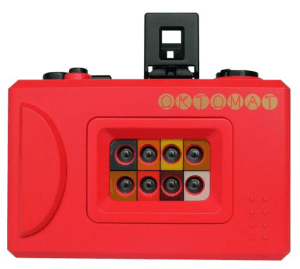
And then there’s the fun part: buying a Lomo camera. Why is it fun? It starts with the packaging. Every Lomo camera comes in a unique package that, once again, mirrors the camera’s idiosyncrasies. Plus, there are special editions to some of the more popular models, which means you’ll again find neat new “containers” for the content. As the proud owner of 6 Lomographic cameras, I distinctly recall the package each came in (to the point where I had trouble getting rid of them). My Holga came in a lovely box, with yellow and white rays, right out of 1940s communist propaganda posters, and a gorilla planted square in the middle. Why a gorilla? Because once you open the box, a leaflet explained that the Holga is a big, clumsy piece of plastic that somehow takes some of the most beautiful pictures imaginable. My Colorsplash came in a translucent, multicoloured plastic box. And my Diana came in an action-figure style container, with the camera wrapped in moulded plastic, surrounded by designed cardboard.
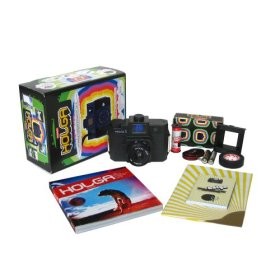
Then there’s what’s inside the package. Each camera I’ve had the pleasure to purchase comes with the usual warranty and instruction manual, with an important difference. The “how-to” is written by a bonafide copywriter, who really underscores what makes the product fun,  rendering the whole thing accessible. In one funny (and honest) example, the Holga instructions warned that the little wire that controls the “automatic vs. bulb” switch usually breaks after one year, but that this adds to the camera’s excitement. However, what really makes me want to buy Lomo cameras are the little picture books inside each box. These neat little books show off some lovely photos taken with the camera you just bought, providing enchantment, inspiration, and insight. I particularly like the photo book that comes with the Holga starter kit; it boasts eye-popping visuals while explaining the techniques behind them.

Recently, I got a Diana F+, which came with a little photo book, as well as a thicker, hardcover book, containing short stories and more pictures. In this hardcover book, Lomography states that the content will be ever-changing to include new stories and photos by fellow Lomographers. What a delightful way to engage the community…again!

Lessons from Lomography

  1. Don’t try to be everything to everybody: Know your audience, and embrace it.
  2. Spend time making your product rock: Urban Outfitters first started to distribute Lomo cameras because they tend to like all things retro, but Lomo’s success at Urban Outfitters is largely due to the cool and fetching packaging, and the repeat consumerism is due to satisfaction.
  3. Make your product the incentive: If your product is great, you won’t need to lower your price or host a contest. Apple/Mac provides the best example.
  4. If you host a contest, you don’t need to give everything away: People like to participate in contests for the chance to win, and regardless of whether or not they’ll win.
  5. Redesign and refresh to reflect the evolution of your community: And I’m not talking Facebook’s fear of Twitter, and changing its homepage to look more like it. I mean ways of making it easier for your community to find what it’s looking for.
  6. Never assume that your product is perfect: Be open to improving it as necessary. It tells your community that you’re listening.
  7. Be honest: While you can strive for perfection in your product, most things aren’t built that way. Rather than skirt the issue, why not admit to the flaws (like the Holga shutter wire), and remind people of the complementary benefits. There are many folks out there running around with non-automatic Holgas, and they don’t seem to mind. Barack Obama’s transparency also comes to mind.
  8. Reflect your product’s personality: That’s essentially what a brand is supposed to be. If your brand were a person, what would it say? How would it act? Lomography products are fun, and so is the brand. If your product isn’t fun, no biggie. That doesn’t mean it can’t be interesting, and it most certainly doesn’t mean it doesn’t have its own unique story.
  9. Don’t try to control your community: Just give it the proper means to propagate itself, and it’ll find a way to take care of the rest. Any interference on your part will be ill-received, not to mention futile.
  10. Build your community in a way that makes sense for that market: A photographic product should allow users to create their own photo galleries and view other people’s pictures easily. It’s not rocket science.
  11. Market your product in a way that makes sense for that product: Twitter isn’t the answer for everyone or everything. It’s a tool, like many other tools. Incidentally, Lomography doesn’t advertise anywhere, but it’s built such a solid word-of-mouth machine that it doesn’t need to. Still, we can’t forget that because its community thrives in and revolves around photo galleries, beefing up the website to support this function made sense for this product. This doesn’t work for every product, especially those that don’t have much to offer in terms of an online experience.

Parting thoughts

Traditional marketing methods still work like magic for certain products. TV advertising, for example, are still an effective way to get a message across about cars, since you can see the car in action, which, due to its mobile nature, makes sense. The fact is, each brand or product requires a customized solution. Each is different, and each is valuable. So to nay-say conventional marketing activities, at this point, is somewhat heretic.

Woo-Ha! I wuz refrenst

My buddy (and contemporary) quoted me in his blog. He referred to something I said here only a few days ago. You rock, Deniger!

Naturally, I’m flattered. But more importantly, I’m glad we’ve started a dialogue about memes and viral marketing. There isn’t a magic, colour-by-numbers formula to these things, and it’s time people noticed.

Exhibit A: A couple of years ago, a client of mine developed a Digg-like website. The format was nearly identical, only their model was available in, like, 10 different languages. A more-of-same kind of web initiative that we saw so often in the late ’90s. They no longer exist now, of course.

Exhibit B: Recently, a friend of mine told me he’d been approached by an ad agency for a campaign that would turn bloggers into brand ambassadors. I don’t know anything about the context, so I can’t say what this campaign is really about or how strong the concept is. But I am fascinated at the ballsy move to exploit a highly democratized environment. So far, this hasn’t worked very well. On the web, more than any other medium, people know when they’re being advertised to, and when they find it off-putting, the ad gets panned publicly, and immediately. On Digg, if a user is suspected of prioritizing a corporation’s interests, they quickly get “buried,” seriously decreasing the value (and validity) of their contributions.

So really, it’s not enough to submit an article to Digg. You also have to be part of a community and contribute to it in a significant way…and even then…

It’s not enough to put your ad on YouTube. People have to find it interesting, relevant, funny, or all three…and even then…

It’s not enough to have a viral medium at your disposal. It has to be useful to the right  audience, who can engage with it in a flexible manner…and even then…

It’s surprising that we’re still getting the “let’s go viral” requests when it’s clearly so difficult to control and predict a campaign’s viral trajectory. If it weren’t, everyone would have done it successfully by now. And unfortunately, focusing on a campaign’s viral value takes focus away from creating a sucessful campaign.

Quoth my buddy:

“First and foremost, anything we do needs to serve the client and their goals first, and resonate enough with the target market that they follow through on the calls to action given to them. Anything beyond that, as far as mass-appeal popularity goes, is a lucky cherry on top.”

+++

Complimentary P.S. Here’s an ad I first spotted on College Humor. Millions saw it. Why did an ad about toilet technology do so well? You tell me. Does the same approach work just as well for a loofah sponge or Hamburger Helper? Probably not.

When will I be referenced?

I don’t want to be famous. I don’t want to be adored and/or revered. I just want to be referenced. I want to be URLd, copied and pasted into a blog, Facebook status or tweet, and gosh darned referenced.

And I want to earn that nod for doing something as brilliant as this.

The Short & Simple Story of the Credit Crisis

Bless you, Kevin Rose.

The French do it better

Those who’ve done even an ounce of translation in their lives know that there’s really only one thing that can’t be translated. Unfortunately, it’s practically the spirit of a language.
Humour.

What’s funny in one language is seldom, if ever, funny in exactly the same way in another. In translation, your best bet is to try to be funny in some other way.

Being half-francophone (the other half being Italo-canadian), I’m so grateful to be able to understand humour in more than one language. Humour has more personalities than Truddi Chase, and as many varieties as wine.

There’s British dry, American slapstick, French lightening, Quebec caustic, German irony, and so forth. Some people marvel at the fact that we’ve been able to adapt different cultures to so many religions. Me, I’m just impressed that we found so many different ways to laugh, and for different reasons.

On that topic, I’ve decided to share some of the things that have made me laugh the most. They’re all in French, but that’s just an accident. Enjoy.

The Revolution of the Crabs

3 hommes et un couffin (the original French version of Three Men and a Baby)

Anne Roumanoff on Infidelity

Viral marketing in Darwinian terms

A few days ago, I theorized that viral marketing is a result that’s always hoped for, but seldom within the advertiser’s control. I used the phenomenon of the “25 things” chain letter on Facebook to illustrate my point.

It turns out that only a day earlier, Slate Magazine’s Chris Wilson had similar thoughts. After conducting a survey on how the chain letter began and how it grew, he came to the following conclusion:

“Viral marketers might take note of the patterns that “25 Random Things About Me” obeyed. The best hope for someone looking to start a grass-roots craze is to introduce a wide variety of schemes into the wild and pray like hell that one of them evolves into a virulent meme. If evolution is any guide, however, there’s no predicting what succeeds and what doesn’t. Just look at the platypus.”

Couldn’t have put it better myself (unfortunately). Here is the full article.