This blog has been around for about a year, and I’ve been trying to refresh it. First I chose another design. I like it, but so many other bloggers seem to have chosen the same one. I’m considering trying another background, but I know what I really need is a content refresh.
This isn’t exactly new. I’ve been thinking about this for a while: what is my blog about?
At first, it started as a writing exercise, since I’d found myself back in journalism after spending a few years in advertising. I wanted to get used to writing long copy again. And like many people who begin blogs, I just wrote whatever went through my head.
Thanks in part to Roger Ebert, I’ve recently discovered a few new blogs that I’ve really enjoyed reading, especially Miss Banchee’s. Her brilliant blog tackles lots of personal stuff while laying on the funny. I’ve loved getting to know her and the skillful way she fictionalizes her own life, or anamorphosizes her cats or her common sense to flesh out hilarious inner dialogues.
I think I had to read her to come to terms with what I can’t do, which is shine a light on my personal life. Not because I think it’s deplorable, but because it’s just not what I gravitate towards. Sure, it weaves its way into the blog, but the strokes are broad.
Then I read through some of my previous posts, and I noticed that I really love dissecting pop culture. Art, entertainment, advertising and everything in between. So that’s what I’m going to stick to.
Don’t worry, it’ll still be anecdotal. I mean, that’s just how I relate to things.
Though I absolutely fell in love with the Niagara region, it has the unfortunate plight of being attached to Niagara Falls, which is, from every angle, a one-trick pony. It’s not a bad thing. I think the town knows it and does its best to help you see what you came to see from every angle, and at a very reasonable price.
In a way, it makes me wish certain companies were more comfortable with the fact that one of their given products doesn’t do it all, and won’t satisfy every need or every demographic.
Take Grumly, the teddy bear that only has one distinguishing quality: squeeze its tummy and it lets out a slightly sustained grumbling sound. Otherwise, it doesn’t look like much. But you have to love how the ads zero in all the things Grumly is not. It kinda makes you feel for the guy. My French friends will have to tell me whether or not Grumly became as popular as these ads should have made him.
Remember how reliably bad TV commercial music used to be? It’s hard to recall now because we’ve been blessed with years of iPod ads. The jingle would be a thing of the past if it weren’t an essential component of video-produced spots for local retailers (“Mel Farr to the rescue! Mel Farr to the re-e-es-cue”). This, of course, excludes the “lingle,” when an ad is punctuated by a choir singing the company’s logo and slogan. I don’t know if that thing will ever die.
Furniture depots and used car dealerships aside, ad music has mercifully evolved. I started to take note back in 2002, when one of my favourite bands, Ladytron, sold one of their little-noted instrumental tracks to a car commercial. Whether composed originally for the spot, or purchased from a musician, ad music just got better. I generally feel that the advent of the web gave way to a broader, more engaging musical landscape. It became easier for people to discover alternative bands and break away from the mainstream, especially with file sharing, iTunes, and eventually, Myspace. Right on cue, ad agencies picked up on the trend, and started to infuse their creative with what I can only assume were their own musical selections. The result is so effective that a query often found on Yahoo Answers is “what is that song in the new *** commercial?”
I think we really started to feel a shift with the iPod spots, like this one:
To me, it seems certain creatives had the sweetest job: scouring Myspace for the best background noise. It worked especially well when the music was incorporated into the concept.
Car commercials especially started to gain momentum. While people are still seeking power and performance, ads started to appeal to those of us who want a car to reflect style, dynamism, youth, and ourselves. In fact, a good friend of mine admitted that he bought his Volks as a result of this ad:
I think it’s especially effective when we’re taking about cars, of course, because that’s when we listen to music the most. You’ve got speed and mobility, set to the soundtrack of your life. And isn’t that what the idea of freedom really is? A selection of your preferences combined with movement.
I particularly like this recent spot. The build-up is executed flawlessly.
Right now, I’d like to give a shout-out to my buddy TS, who’s taken the time to read all of my blogs after noticing that he had 5 pages of catching up to do. TS admitted that he absolutely hates commercials. I think that’s a normal reaction to have. Truth be told, ad creatives also hate a lot of commercials. Thing is, agencies are often forced to comply with a client’s demands, which means that an entertaining concept quickly turns into boring, indulgent guff. But every now and then, a client is willing to take a risk and allow creatives to have a bit of fun. The result is an ad you’ll likely remember for years and years. And yes, TS, even you have your favourites. Those entertaining ones have an impact on the choices we make, how we see ourselves, and how we perceive the world. Because it’s part of our daily routine, it’s actually quite inevitable.
And as much as we’d love to hate it, one company that allows agencies to take risks, a lot, is Coca-Cola. Based on this ad, the company is perfectly willing to sacrifice direct sales in favour of championing a particular lifestyle and demographic. Given its entertainment value, would you really switch to another channel, or would you wait until it was over? My guess is the latter.
Oh, and the song? Via the White Stripes.
***
On Selling Out
Shortly after seeing the Ladytron ad, I had the fortunate opportunity to interview Daniel Hunt, the band’s main songwriter. I asked him about selling “Mu-Tron” to the commercial, to which he aptly responded, “I think people would have be happier if we worked at Taco Bell and did music on the side. But the truth is, you’d have to be wealthy already to turn that down.”
There’s the rub. Ladytron, while they had a record contract, were still struggling. At the time, as now, they rely largely on shows as a source of revenue. To my understanding, they got a few thousand for the song, which they presumably shared between them, their manager, and whoever else. The investment was largely theirs, truth be told, and in its own way, the commercial became an ad for Ladytron.
Though we’d love to put artists in a category that’s holier than corporations, the fact is, they’ve got to eat too. Instruments are expensive, and with regular use, they require either replacement or maintenance. With file sharing and iTunes, a record contract just isn’t as viable as it once was. More than ever, musicians, even the really successful ones, go on tour and sell merchandise in the hopes of turning a profit, but mostly to generate an income. This is especially the case for alternative musicians, who, though they may be signed, aren’t benefitting from album sales in the same way as mainstream performers.
File sharing served a major blow to the music industry. While I’m certainly not expressing an opinion about file sharing specifically, I can support artists who agree to be part of an iPod ad. This is often the difference between insignificance and notoriety. And for an unsigned musician, that just makes business sense.
Although some of us got sick of hearing “1, 2, 3, 4” repeatedly during the 2007 holiday season, most of us are glad that Feist got the kudos she deserved.
The other nice outcome in all of this is that audiences seem aware of how much musicians have been struggling in recent years. So attendance at live performances is statistically higher, and people buy more merchandise in support of their favourite artist.
And isn’t that how it should work? Shouldn’t an artist’s success be measured by their audience, rather than the company that backs them?
A few months ago, I started a new job and people have often asked me how it’s going. Here’s the answer.
It’s the hardest thing I’ve ever done. The learning curve is huge. I took a break from journalism for three years, struggled in advertising, and now I’m struggling with something I wanted to do to begin with. It’s anything but easy, and part of the reason is that for the first time – ever – I’m surrounded by a bunch of people who are really good at what they do. Actually, that’s a lie. I was surrounded by the same kind of people at Cossette, but once I got there, I realized I didn’t really want to work in advertising, so it didn’t seem to count. It really should have. These are not the kinds of things we should only realize in retrospect.
Anyhow, despite the difficulty, I’ve decided that only arrogance would prevent me from giving this my bestest shot. So I’m just swallowing it, learning, working harder than I ever have, and turning the other cheek to all manner of criticism. After all, this is exactly what studying music is like: laborious, unforgiving, but so satisfying when you nail that crazy-ass cadenza.
Along the way, I’ve made mental notes on how to maintain stability. Here’s how I’m keeping afloat.
It’s incredibly important to remember what you’re good at. Find as many opportunities as you can to make it surface. It’s a wonderful exercise to do something confidently.
If someone else notices your strength and praises you for it, that’s gravy, but don’t seek praise and don’t dwell on it. Focus on the work.
It’s incredibly important to know what you’re not so good at. If you don’t know and someone else tells you, and you trust the source, take it seriously. The truth is, there are only a handful of people who revel in putting others down. The rest are actually trying to help.
Get better at everything. Get better at what you’re good at and what you’re not. Being great doesn’t last. You always have to do one better.
Practice, practice, practice. If you can, spend more time practicing than you do working. Practicing will inform your work, and it’ll show.
Give yourself a day or two to not worry about any of this. During that time, be lazy. Relish in recupe time.
Don’t take your frustrations out on other people. If you have to criticize someone else’s work while yours is going through the ringer, remember the awesome responsibility of helping them grow. It’s so easy to be driven by bitterness, but it’s much more effective when you’re not. Also, people can always smell bitterness, and it’ll cut your credibility in half if you don’t stow it somewhere where it can’t emerge.
When things get tough, find a figure who seems to have it together, and ask yourself what they would do. For me, it’s Scarlett O’Hara. I’m not sure Scarlett would do any of the things I’ve asked her to do so far, but projection is a good exercise. It takes you out of yourself for a moment and makes the difficulty seem feasible.
There’s no way to medicate the problem. Like physio, it’s hard, it’s rough, it’s painful, but it’s the only way to get well. So savour the small victories.
Remember, jockeys are about a quarter of the size of the horse, but ultimately it’s the rider that wins the race.
Maybe it sounds like I’m not happy, but it’s actually quite the contrary. This has been the most satisfying period of my life. Then again, I love a challenge.
Ever notice that when a brand does well, it’s advertising’s fault? It isn’t long before the same ad gets deconstructed in the academic world and chewed apart in laymenese by Naomi Klein. Sure, we’ll point fingers at the company behind the ad, but the agency gets a lot of flak too. And I have to wonder why.
When I was in university, we spent a whole week during one of my courses on advertising, and, to paraphrase, how evil it was. What made it evil? The fact that it summons specific imagery to speak to an elite market, or the fact that fashion photography favours a particular type of woman, and more importantly, how effectively advertising techniques work to sell a product or represent a brand.
Later, when life became about paying off the education debt (while I tried to see how my education payed off), it became clear that there was a divide among communications graduates. There were those writers who starved as journalists, and those who didn’t in advertising. As someone who’s been to both sides, I’ve observed that journalists tend to hate copywriters more. “Sell-out” is the usual accusation, and it’s a fairly easy one to throw around.
But here’s my problem with it. Never mind that the creative teams behind some of the ads we like most are genuinely nice people who often vote NDP. The question really should be, why does advertising work?
In my experience, many of the creatives I’ve worked with also have a hobby: art. I’m not saying this is the case for everyone, but they really are sensitive to this sort of thing because they put the same kind of energy into their work. Sure, they have to analyze a brief from a corporate angle, but the output is basically borne of an artistic process. And many of the art directors I’ve been paired with are more or less artists with jobs (and a bigger audience). As for the copywriters I’ve known: you should see what happens when they’re allowed to lock themselves up in a room and write a radio spot. Granted, clients rarely let these creatives express themselves the way they want to, but when they’re allowed to, you get “I’m a Mac.”
That aside, when we like an ad, we respond to it, and that’s what I’m getting at. It takes a certain kind of craft and skill to make us respond to it in the way that we do.
We all know that when we’re being advertised to by a company, with a laundry list of product benefits, we hate it. But when a company isn’t afraid to let creatives do their work in peace, you get something as timeless The Economist campaign.
Are ad creatives artists? It would be unfair to generalize, but kind of. And we’d never criticize artists, would we? Of course not! Art is sacred. Ads are business.
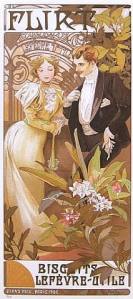
But you know what? Even the Mona Lisa was commissioned by a patron. Alphonse Mucha’s work involved a lot of packaging, and many Art Nouveau relics are posters, magazine illustrations and ads. Whether or not it’s hanging in a museum now should be irrelevant. I like to marvel at the idea that it takes an artistic process to really reach out to the masses and impact culture.
Is all advertising art? Absolutely not. I’m really talking about the process of creating ads. Not everything turns to gold, especially if the client has anything to do with it (and they always do). But even those crappy Bell beavers came from the blood and sweat of many a creative who tried to make the frickin’ concept work (I know; I was one of them).
So it seems silly and short-sighted to belittle advertising without taking into account what goes into creating spots, and how effective they can be because we, the audience, aren’t indifferent. It’s worth mentioning, as well, that for every GM account, there are at least 5 non-profit organizations or disease research funds. Remember “this is your brain on drugs?” Yup. An ad agency was behind that one. And while it became dorm-room poster material, there was still a public service behind it.
Taking the critique to a more constructive level might involve looking at a system that allows corporations to use advertising to persuade the masses. But that’s not as easy to do, is it? Because that same system also makes room for thousands of clone magazines on newsstands, and narrowing the selection down is what we like to call censorship. It’s a shame that it’s almost as easy to throw around as “sell-out.” We really should only use “censorship” for special occasions.
Anyway, as an exercise, I’d like us to consider Naomi Klein’s point about Gap pioneering the branding movement, and to keep in mind that when the creatives worked on the Khakis series, it’s quite possible they were just having a little too much fun.
My buddy (and contemporary) quoted me in his blog. He referred to something I said here only a few days ago. You rock, Deniger!
Naturally, I’m flattered. But more importantly, I’m glad we’ve started a dialogue about memes and viral marketing. There isn’t a magic, colour-by-numbers formula to these things, and it’s time people noticed.
Exhibit A: A couple of years ago, a client of mine developed a Digg-like website. The format was nearly identical, only their model was available in, like, 10 different languages. A more-of-same kind of web initiative that we saw so often in the late ’90s. They no longer exist now, of course.
Exhibit B: Recently, a friend of mine told me he’d been approached by an ad agency for a campaign that would turn bloggers into brand ambassadors. I don’t know anything about the context, so I can’t say what this campaign is really about or how strong the concept is. But I am fascinated at the ballsy move to exploit a highly democratized environment. So far, this hasn’t worked very well. On the web, more than any other medium, people know when they’re being advertised to, and when they find it off-putting, the ad gets panned publicly, and immediately. On Digg, if a user is suspected of prioritizing a corporation’s interests, they quickly get “buried,” seriously decreasing the value (and validity) of their contributions.
So really, it’s not enough to submit an article to Digg. You also have to be part of a community and contribute to it in a significant way…and even then…
It’s not enough to put your ad on YouTube. People have to find it interesting, relevant, funny, or all three…and even then…
It’s not enough to have a viral medium at your disposal. It has to be useful to the right audience, who can engage with it in a flexible manner…and even then…
It’s surprising that we’re still getting the “let’s go viral” requests when it’s clearly so difficult to control and predict a campaign’s viral trajectory. If it weren’t, everyone would have done it successfully by now. And unfortunately, focusing on a campaign’s viral value takes focus away from creating a sucessful campaign.
“First and foremost, anything we do needs to serve the client and their goals first, and resonate enough with the target market that they follow through on the calls to action given to them. Anything beyond that, as far as mass-appeal popularity goes, is a lucky cherry on top.”
+++
Complimentary P.S.Here’s an ad I first spotted on College Humor. Millions saw it. Why did an ad about toilet technology do so well? You tell me. Does the same approach work just as well for a loofah sponge or Hamburger Helper? Probably not.
The odd thing about the “jack of all trades, master of none” clause is that it only works for certain professions. Supermodels, for example, are encouraged to “diversify,” because they won’t be in demand forever. Makes sense, and many, like Christy Turlington and Cindy Crawford, have been quite successful. But what if you diversify first, then try to specialize. If you‘re a writer, it’s hard.
I’ve always said that I was lucky to have had jobs that involved writing in one capacity or another. The problem is there have been so many capacities. I’ve written articles, captions, headlines, brochures, flyers, press releases, ad heads, ad sub-heads, body copy, web sites, concepts, short stories, Q&As, scripts, poems and so forth. For a while, I preferred journalism, but advertising paid more, so I went into it through a series of fortunate encounters. Then, last May, the big-ass agency where I worked as a junior copywriter lost their biggest clients, and I was one of the casualties. When it happened, I figured it was time to make a move back to journalism after a 3-year hiatus.
I got lucky. A job opened up at this prestigious magazine and it seemed to be a right fit. Plus, I’d get to work at a prestigious magazine to boot. Granted, I’d be working for the web site, but the magazine’s name is still attached to everything I do, and it feels great!
But the thing is, not only have I not been writing articles for three years, I also haven’t been corrupted by the magazine’s style.
Today, I handed in a piece to the magazine’s editor-in-chief, just to get her feedback. She told me there were some cute bits, but mostly I was “too PR.”
“You try to hard to get it right,” she says. “Don’t write right. Write like you. Write what you like.”
I don’t think I’ve ever done that, and it’s bloody hard! I don’t always know what I write like. I just write, and I’ve never asked if I was in there.
Still, what an exciting challenge. Maybe I haven’t been me in my texts before, at least, not when describing a hotel or restaurant. But I’m sure I’m in there somewhere.

 This blog has been around for about a year, and I’ve been trying to refresh it. First I chose another design. I like it, but so many other bloggers seem to have chosen the same one. I’m considering trying another background, but I know what I really need is a content refresh.


 A few months ago, I started a new job and people have often asked me how it’s going. Here’s the answer.
 Ever notice that when a brand does well, it’s advertising’s fault? It isn’t long before the same ad gets deconstructed in the academic world and chewed apart in laymenese by Naomi Klein. Sure, we’ll point fingers at the company behind the ad, but the agency gets a lot of flak too. And I have to wonder why.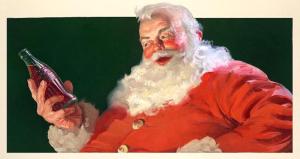

 My buddy (and contemporary) quoted me in his
 ‘re a writer, it’s hard.
 OLIVIA COLLETTE