Video games *can so* be art, so gnah!

Concept art for American McGee’s Alice.

Roger Ebert published a rather fascinating piece arguing that video games cannot be art. Not surprisingly, there’s been a lot of backlash. Video gamers are a loyal bunch, but it’s not that they need to justify what they love by calling it art. They honestly feel that video game creators are artists. That’s why they let Blizzard take years to release any game, because like the developers, gamers want them to get it right. There’s an intricate creative process that goes into developing a video game (even a bad one). And it’s no different than spending a decade on a sculpture (even an ugly one).

Ebert was compelled to broach the topic when he saw a TED presentation by Kellee Santiago, a game designer and president of thatgamecompany. In it, she attempts to prove that video games are, in fact, an art form. I enjoyed Santiago’s spiel, but I felt she didn’t tackle the artistic elements of videogames. While she focused on engagement and emotional involvement, she didn’t deal with design or conception and how these create engagement in the first place. This seems like the most obvious argument for a game designer. She also kept bringing up critical acclaim as though it were synonymous with artistic street cred, which it isn’t. Taste doesn’t art make, as Ebert admits. Anyhow, I don’t feel she makes much of a case for the art of video games. So I’m going to try.
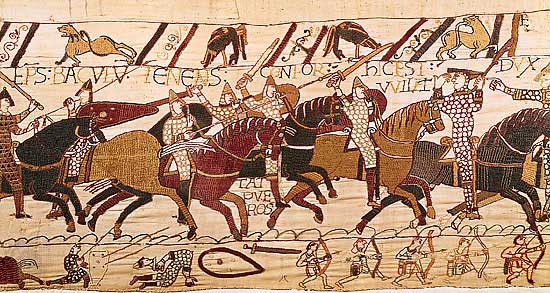
Medievalism: the root of most RPGs.

I want to preface this by mentioning that in the earlier part of my career, I was a journalist for a video game news website. Here, reviews are one of the major draws. Otherwise, what’s considered news is the announcement of a new game in development, and as many bits and pieces of that game as the studio behind it is willing to reveal. Those bits and pieces usually constitute concept art, in-game screenshots, and trailers. Why are these things important to gamers? Because it helps them assess what the gaming environment is going to be like, and that’s integral to their experience of the game. Sure, you could argue that most games have an objective; some sort of MacGuffin that has to be won or conquered. But to paraphrase Ebert: it’s not what the game is about, it’s how it is about it. The people responsible for the “how” of any game are the designers, the writers, and the many creators involved in taking you on a journey through the game. Really, the process of creating a game is no less artistic than what went into weaving the Bayeux Tapestry.

So what is art, then? Santiago cites the Wikipedia definition, which says that “Art is the process or product of deliberately arranging elements in a way to affect the senses or emotions.” Like Ebert, I’m not convinced this encompasses the totality or complexity of art; the description feels inadequate. But I find it touches on an important part of the experience of art. It’s about engagement, and video games engage people; that much is easily recognizable.

That’s one way to get people’s attention.

Do video games engage people in the same way as art? It depends on the medium we’re talking about. It’s only fair to compare video games to other media that lend themselves to similar experiences. Is playing a video game the same as looking at a sculpture? Not in the least. Is it a bit like reading a book? Certainly, if we’re talking about fiction. It requires the same process of suspending one’s disbelief to accept an alternate universe that’s different from the reality we know. The absorption of a book is similar to playing a video game in that it’s immersive, even if the adventure isn’t yours in the strictest sense. Otherwise, the visual dimension of video games can be compared to watching animation or a film: there’s a moving picture, and the construction of it is as deliberate as anything Stanley Kubrick might have done. I’m not comparing video game designers to Stanley Kubrick, but I’m sure many of them are inspired by his work and have used it to feed the vision of their output. And like Kubrick, game creators work hard to elicit a specific response from their audience. Which brings me to my next point.

Art requires an audience. Without an audience, there is no art. Art is one half of a relationship and a dialogue. It has to be presented to someone else as art, and, whether good or bad, it has to be acknowledged as such. Art doesn’t require taste, just one crucial social transaction.

While those who play World of Warcraft may or may not attend the next Picasso exhibit, they belong to an enormous demographic and are hugely devoted to the work of their favourite artists. This also means that they give video game creators jobs. And this addresses a strange cultural paradox: we seem to have a bone to pick with artists who make money. Game designers, much like art directors in an ad agency, are artists with jobs. They’re not struggling financially. They impact culture in an important way. They have a widespread audience, and it’s incredibly, immediately receptive to their work. Dissenters call it “selling out,” but video game creators prefer “raison d’être.”

Can any game be art? I’m not sure about that. People have brought up chess a lot, and my problem here is with the mathematics of the game. It’s functional and objective-driven. This doesn’t take away the enjoyment of it, but there’s no engagement with the imaginary, which is what’s so distinct about video games. There’s no “what if” fancy in chess. It doesn’t make it a lesser game, just an inappropriate comparison.
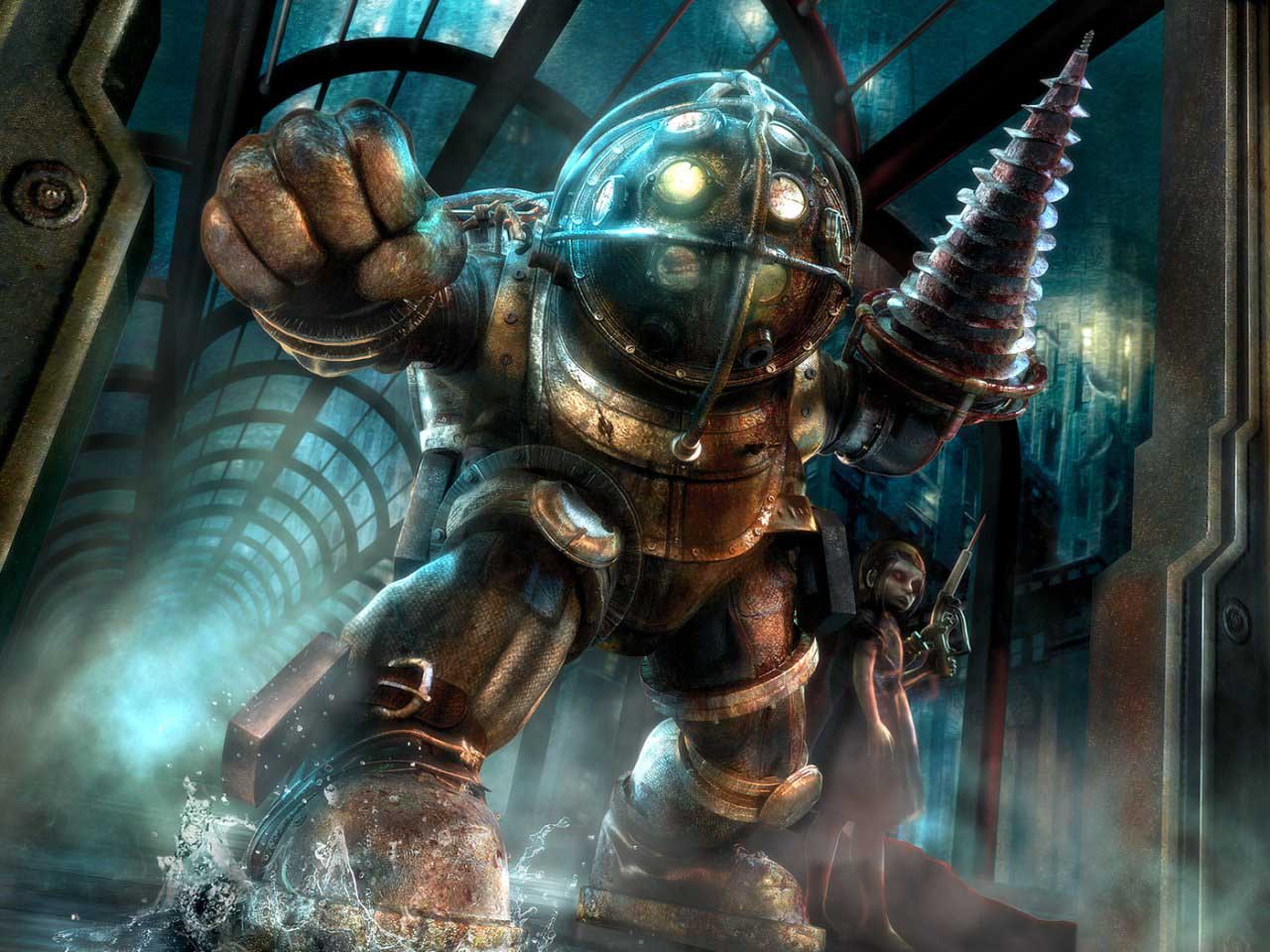
One of the terrifying BioShock bad dudes.

Art isn’t just a component of video games. It’s necessary to enhance the gameplay.  An example that’s commonly brought up to negate this is the first-person shooter (FPS). They’re often touted as mindless and one-dimensional, which is fair enough if you consider that the genre mostly involves one repeated action. But the “first-person” aspect is what gives the genre substance. Players need the art to believe the first-person gameplay. They also need a unique reason to choose one FPS over another (enter the Quake vs. Unreal debate). Games like BioShock demonstrate that it’s infinitely more interesting to shoot things in a setting that’s entirely alien, where surprise is just around corner. What impressed fans and critics about this game wasn’t just the graphics; it was also its Randian underwater environment and dystopian story.  This means a lot of effort when into conceiving this world, and that’s not the work of marketers or project managers. These are storytellers at play in an interactive digital medium.

One of the many Final Fantasy landscapes. Someone was hired just to design the trees in this forest.

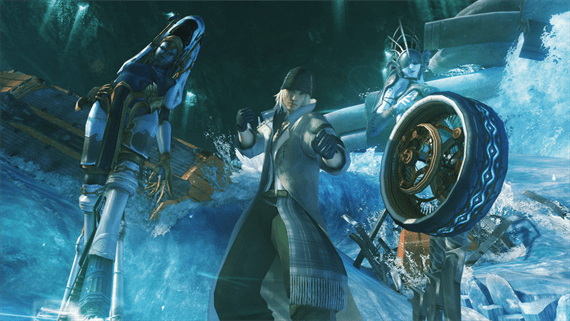
Immersion is even more important in role-playing games, and it can’t happen without a bewildering universe. Just the other day, the husband unit finally bought his copy of Final Fantasy XIII.  I’ve never played games from this franchise myself (I prefer straightforward adventure games), but if you’ve followed the series, it’s perhaps the best testament to the genre’s evolution. When you consider its 8-bit beginnings, it’s all the more astonishing that the gameplay graphics are now on par with the in-game movie sequences. FFXIII also boasts a whole ecosystem that makes me wonder how the developers came up with their flora, fauna and technology. Their world is both plausible and impossible, at least for now. And isn’t that good science fiction?

Though it’s a little dated now, my favourite game is American McGee’s Alice. Most of its reviews were the same: awesome universe, great gameplay, but the end boss sucked. In other words, the journey was greater than the destination. Since the game’s release, American McGee and his work have garnered something of a cult following, starting with toy models from Alice, including the sickly Cheshire cat and the sadistic White Rabbit. McGee, for his part, knew the Wonderland and Looking Glass mythologies so intricately that his reconstruction was solid. And the characters? Flawlessly designed.

American McGee’s Alice merch, sold at a geek store near you.

Since Alice’s release in 2000, McGee relocated to Shanghai and set up a new studio, Spicy Horse. When asked to list the advantages of working overseas, he said the biggest bonus was a “blue sky mentality. Game development [in Shanghai] is a relatively new industry, and there’s less of a ‘history burden’ in terms of conceptualizing games, studio structure, and development process. People are more open to radical ideas.” Among other things, his answer alludes to the multidisciplinary nature of game development, which, in this respect, is not unlike moviemaking.

I’m also a fan of time-management games, and while these don’t make use of mind-boggling graphics, an art team is still involved. Sally’s Salon doesn’t look realistic, but it doesn’t have to, and that’s part of the fun. We accept that in animation, so surely we can make a concession for time-killers. There are also games that take no time whatsoever to go to market (the TV franchises, the board game simulators, etc.). But that exists in the movie industry as well. It’s the part of the business that’s just business, and that can’t be helped.

In terms of the craft itself, a meticulous creative process has often been directly linked to a game’s success. And why shouldn’t it? It takes time to create a world, especially one that works. I might argue that it takes more effort than penning the next Nic Cage action flick. But I don’t think this has to be about choosing film, poetry or painting over video games. I don’t think you can only prefer one if you discredit the other. Video game creators use different tools and speak to a different audience, but there’s room for that too in the art world. Or rather, there should be.

Is playing a game an art? No more and no less than watching a movie. But as long as we rely on art to enhance the gaming experience, we simply can’t separate the video game itself from the art that’s involved in making it. To deny the artistic process that goes into creating games is, I believe, short-sighted, if a little snooty.

***

My buddy Roger has gotten a lot of flak for his piece, and while it was to be expected, I think it’s undeserved. He hasn’t discouraged dissent, he’s taken the more scathing comments in stride, and he’s even linked to this Cracked article and this academic paper on the art of video games. It’s fine to disagree with someone, but it’s important to recognize when you get to do it in the context of a discussion. On that front, Ebert’s been a real good sport.



Where Livvyjams been at

More flowers

Okay, I admit it. I’ve been bad. Real bad.

I haven’t posted a blog in almost a month and  a half, and to be honest, I’ve missed it. I’m actually a little embarrassed that there are no archives for July. But here’s why: I’ve been real busy, like. Trust me, this isn’t a brush-off. You know I’m committed to this thing we have going on, you and me. It’s just that for the first time ever, I’m actually seeing one of my personal projects through, and that means there’s less time for blogging. I thought I could manage both, but it turns out that one needs to outperform the other, and it’s apparently best if the distraction doesn’t win this round.

Saying that, I hope I’m not jinxing it by talking about something that’s not finished yet. But we’re far enough along that it’s unlikely to be abandoned, so I think I’m allowed to be excited.

The project? It’s a series of webisodes. The scripts are written, which took forever. We’ve had auditions. We’re almost completely cast. And in September, if all goes well, shooting begins. Naturally, I have to use this blog to talk about this project as it progresses. It would be stupid not to. So stay tuned…

Otherwise, many other things have been keeping me busy. I’m a bit reluctant to share extremely private information here, but then, most of those who read me are friends (by the way: thanks), so I suppose it’s okay to talk about it.

I’m getting hitched. Very soon. In less than a month. And planning a wedding, even a small one, is something only crazy people would undertake willingly if they actually knew, in advance, what it entails. Maybe you’ve thought about it your whole life, which is fair enough. But I can guarantee you’re not prepared for the wedding vortex, which is made up of a plausible infinity of details you thought you were too cool to care about…until you realize you’re just as vain as everyone else. All I know is I thought I was the “hip” bride who just wanted things simple and clean, but once flowers were introduced to the equation, I suddenly became very concerned with how it would all come together. And before you know it, I’m going through 3 florists just to get it right.

In all this, I’m still freelancing when wedding plans and webisodes aren’t conquering my schedule. I wouldn’t call the state I’m in auto-pilot. It’s more like “constant-pilot,” and I fuel up at some gas station in the sky.

Despite the serious time shortage, I’ve been able to take in a few noteworthy things. And they’re as follows.

  1. The ceremony is not sacred.
  2. The marriage is.
  3. Marrying someone is like inheriting a new family, and that’s exciting. The married couple also becomes a new family onto themselves, and it’s great to share that little bubble with someone. I won’t lie.
  4. You don’t need to be get married to experience “the bubble.” In fact, people should recognize it out of wedlock more often.
  5. There are a good many things that go into a wedding, and almost none of them really mean that your partner loves you. Not the ring, not the venue, not the limo, not the boutonnière, and definitely not the cake. The only real thing is what you know you and your partner share. The rest is just a party.

Bixi

In completely unrelated news, I’ve posted a second blog on the new Lomography site, and it prompted me to experiment with my new Diana camera. It doesn’t give the same sort of results as my beloved Holga, but it’s interesting just the same. The above picture is from my first roll. It may not be the best photo I’ve ever taken, but I can’t wait to keep experimenting. I have more fun trying than perfecting. Is that wrong?

Lomographied!

In an earlier blog post, I talked about Lomography’s awesome business model. I shared it with some Lomo folks, who then asked me to contribute to their magazine. Naturally, I was honoured and ecstatic. The fact is, anyone can contribute to the Lomo Magazine, but I can’t say for sure how they go about selecting what gets published or not. Which means I bypassed the big  filters and went straight to the editor-in-chief: a rare privilege, as any journalist will tell you.

Granted, because they’re all about promoting their community, it wouldn’t surprise me that the Lomo peeps don’t censor themselves or their contributors too much. They encourage people to share their thoughts and experiences at almost every turn, which is something many companies should get in the habit of doing.

So fast-forward to a few weeks later and I finally submitted my first blog post. It took a few days to process because there’s a lot of hullabaloo over the LC-A’s 25th anniversary, but today, I was published. I won’t copy and paste the article here because I’m not sure what the rights are on the thing, so I encourage you to go to the site and read it.

If you don’t have the time now or want to read it later, here’s the Reader’s Digest version: because the viewfinders on Lomo cameras are virtually pointless, it’s difficult to know exactly how any of your pictures will turn out. Still, I’ve managed to get some pretty amazing results, even if they are mistakes.

Enjoy!

I’m a Lomographer, for realz!

Thanks to a recent blog entry about their rockin’ business model, some folks at Lomography got in touch with me and asked if I’d like to contribute to their magazine. Naturally, I’m totally flattered. Only now, I’m trying to think of what topic to broach first.

I’d love to turn it into more of a column, so I can leave the pro-Lomography stuff to the other writers. Question is, what’s my column going to be about? What’ll make it different?

Truth be told, I’m relishing the opportunity to start something new, and to talk about something I’m so passionate about. What a great way to mix business and pleasure! When my first article is published, I’ll be sure to post it here.

Stay tuned…

Commitment is the hardest part

In the spirit of full disclosure, as I write this, I’m supposed to be at the gym.
Ever had that dream where you’re scared by something and you try to scream but can’t? If anything, it’s a very literal manifestation of the paralytic nature of fear. It stops you dead in your tracks. You were about to go somewhere or do something, and fear stopped you. Well, let’s be fair: you stopped you. And I’m not excluding myself from this scenario.

In my circle, I’m definitely the reliable friend. I come through on things like organizing a potluck, remembering to bring that thing someone wants to borrow, or forwarding a buddy’s CV to the right HR department. However, when it comes to my own projects, I lose some of that dependability.

For years, I’ve been working on different scripts. It sometimes takes months for me to wrap up a photo project. And I’m still fine-tuning that Beethoven sonata; any day now.

And why? The first excuse is always the day job. But you know, that’s not completely unfair. It takes time and commitment to do the day job well. While I do have artistic aspirations, I also have a gi-normous student loan to repay, and even if I sold every painting I’d ever made at an equitable price, I’d still have about $10K to figure out. So it’s in my better interest to invest in the day job.

The second reason is fear. What am I afraid of? All sorts of things. To name a few: failing to please anyone with my work; succeeding, but not being able to repeat the stroke of brilliance (apparently Yann Martel felt the same way before publishing Life of Pi); not making enough money (see above comment on student loan); etc.

This also applies to relationships (fears include getting good and close and getting hurt anyway; missing out on other “opportunities” with other people; realizing that real love won’t fulfill your romantic ideals), weight loss (fears include going to the gym; never eating some of your favourite foods again; failing to lose weight), and career (fears include not wanting to make the hard decisions one has to make when they reach top-level jobs; schmoozing; always being “on”; never being able to relax; getting fired for doing poorly; getting fired because you’re scaring your competition).

This doesn’t always work, but when I can see that I’m experiencing fear-related paralysis, I do the following:

  1. Promise myself an incentive if I plow through my own irrationality (e.g. shoes, chocolate, lots of magazines)
  2. Challenge myself to commit, since I can’t resist a challenge (it’s true; I sometimes respond well to a certain level of martial harshness)
  3. Remind myself that fear is stoopid
  4. Admit to someone else that I’m being stoopid because I’m afraid (sometimes it helps to verbalize it; it’s the best way I know to rationalize anything)
  5. Accept the possibility of failure, the biggest monster of all, by giving it a maybe-makeover (e.g. maybe people will like it; maybe it’ll work; maybe I’m not that bad)

Right now, I’ve made a commitment to develop webisodes with a friend, and to work on an art exhibit with another friend. I fully intend to come through on both, but I’m scared witless. Still, knowing that I’m involved in a partnership in both cases makes me not want to let anyone down, which could be a good exercise. To be honest, both partners are kind of partnering with me for similar reasons.

Maybe this time…

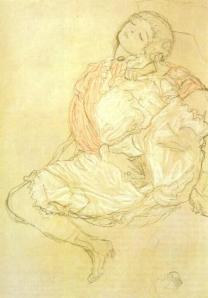
#16. Seated woman with open legs.

When grunge first emerged, a war broke out between two bleach-blond gals. At around the same time, Madonna didn’t seem so trashy anymore.

So yeah. A war. In short, frenemies Courtney Love (Hole) and Kat Bjelland (Babes in Toyland) both claimed to have pioneered the “kinderwhore” look. But take the ripped up baby-doll dress out of the equation, and both bitches borrowed from Nancy Spungen!

She was the original sin. Knock her if you will—and many have—but she’s a legend, and in her living day, she also happened to be a whore. People have compared her to Yoko Ono, mostly because she seemed to snatch Sid Vicious from his crew. But other than John Lennon’s poor assessment of his second wife’s musical talent, I don’t see the similarity. Yoko Ono is an accomplished artist (so long as she sticks to sculpture), where Nancy Spungen was a professional groupie.

I don’t hold that against her, though. Like so many whores before her, Nancy Spungen became Sid’s muse and maker, albeit to his demise (and hers). Still, this all reminds me of these Picasso and Klimt exhibits I saw a few years ago. While both displayed many exclusive paintings, much of both exhibits featured sketch upon sketch of naked woman upon naked woman. Then came the “horizontal” series, with these surprising labels that betray such a frigid side of the artworld. Most read “Reclining nude,” when what they really meant was, “whore showing off her cootch.” The most hilarious label read, “Reclining nude, with leg raised,” shyly describing a masturbation scene.

And what did every “reclining nude” have in common? Each was a prostitute. Now she’s art. A lot like this iconic photo:

The lesson here? Whores don’t judge, just in case…

Coulda, Shoulda

Let’s not kid ourselves: most of us aren’t exactly where we thought we’d be. It doesn’t mean we’re riddled with regret. It just means getting to do what you want is a privilege that you’ll earn if you’re willing to invest a lot of yourself (possibly more). Sure, some people get a lucky break, but I haven’t met anyone like that yet. As for me, I feel pretty fortunate that Plan B worked out, though that’s mostly because I worked it.
What was Plan A? What wasn’t. Maybe that’s why Plan B was a success.

So here’s a list of my Plan A shortlisters.

1. Music.

Throughout high school, the plan was always to graduate and study music in university. I followed through, but only for a year. The program was difficult and truly designed to weed out the ne’er-do-wells…in-music! Here’s the thing: at that level of music (or possibly any level), your options are quite limited. You can either be a performer, or you can teach. Not that I wasn’t a talented pianist, but I was one among many, and I’m not being modest in saying I wasn’t the best. Had I been a flutist, I might have had a better chance, and even then…So the other option was teaching, and that’s actually what I wanted to do when I went into the program to begin with. But once I got there, and maybe it’s that I was 18 years old and not ready to commit to any one career decision, I guess being a music prof didn’t feel right anymore.

What I miss about music is locking myself up in a room and practicing the piano 3 or 4 hours a day. I loved learning about music. I excelled at theory. I had some budding music history theories that I probably would have parleyed into PhD dissertations. I didn’t dislike the program, and I was actually an A student. I just felt limited by the career prospects.

If I could go back, I’d learn more instruments. More specifically: percussion, bass, and the cello. I wouldn’t mind learning a brass, like trumpet or trombone. But I probably wouldn’t remain in the music program.

Today, I wish I had more time to practice the piano. I also hang on to the dream of being in an all-girl punk band, where I will be the main songwriter, sometimes vocalist, and Farfisa organist. Our songs will be about why it’s so good to be bad girls.

2. Filmmaking

After quitting the music program, I took a 2-year break. When I returned to school, I chose a program called “Film & Communications” in McGill’s English department. I was accepted and when I arrived, the program had changed. It became Cultural Studies, which is as ambiguous as it sounds. All the important filmmaking courses were gone. I did partake  in one workshop course that allowed me to make a movie, but I won’t let anyone watch it now (I won’t even watch it myself).

The process was laborious, intense, and I nearly unravelled. But nothing is more gratifying, for me, than to edit a movie.

If I could go back, I’d try to transfer to Concordia and make the cut into their filmmaking program (which is hard to get into; I tried many years after graduating). And I’d do it while I was still in my 20s, because that’s when you can afford to do foolish, impulsive things.

Today, I’m a sometimes member of Mainfilm, I own a Super 8 camera, a video camera, loads of different other cameras, and I have a few scripts on the go. I might not seem to be able to commit to any of these projects, but I hang on to the belief that I’ll be actively involved in filmmaking some day.

3. Dancing

Okay, this isn’t really much of a Plan A since it never really made the list. My point is simply that when I was about 4 years old, I was enrolled in ballet classes. Apparently I wasn’t any good and I didn’t enjoy it much, so Mum pulled me out. Unfortunately, that sentiment didn’t last. From age 10 on, I’ve wanted to be a dancer. I still do. In fact, I keep trying to find a contemporary dance class for adults. I will do it, I tells ya! I will. I’d rather be a dancer than anything else, even knowing that my career would end in my late 30s and I’d be doomed to live my life as an instructor after that.

4. Art

Again, this wasn’t really a contender for Plan A, but it is something I’d like to devote more of my time to. When I can, I love to take photos, paint, and do this collage-painting thing that I’ve coined “cross-comicking.” My art teacher Mr. Glenen encouraged me to at least try to get into a fine arts program in university. He even hung my self-portrait (the only profile anyone had ever done at that school, at the time; very challenging, as well, it took two mirrors to pull off) in the hallway for a year. I still love art. In fact, it’s probably “the one” more than any one person could ever be. It’s weird, really. We’re taught to exploit our talents and turn them into a career. But I can’t do that with art. I can’t explain it in a rational way: it’s something I do purely for me. In a way, music has become that as well. No one with a brain would refuse the opportunity to do any art for even just a bit of money, let alone a lot. But when I’m doing any art at all, a career is so far from my mind. Maybe that’s why I love it.

5. Fashion Designer

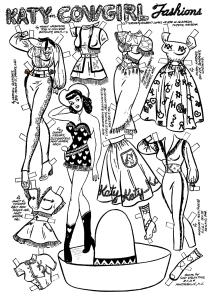
Granted, this was a childhood dream, so I’m not sure it should count. Still, I thought I should mention it because I still love fashion, even if I can’t sew for shit. I used to really enjoy playing Barbies (as many girls did). Oddly enough, I didn’t make mine get married and have kids. I made mine get jobs and share apartments with their friends. And my character, no matter if I picked a blond or the elusive (light) brunette, was invariably a fashion designer. I’d always find a Barbie-sized sash and wrap it around in an artful way to create a dress for my character. I also used to collect Katy Keene comics and I would always cut out her Paper Doll page. I think I even sent some designs to Archie Comics once for consideration (Ms. Keene’s schtick was that she wore clothes designed by the readers). In grade 6, I walked into Betty Rubin, a “designer” store in Moncton’s Champlain Mall. I told the saleslady that I wanted to be a fashion designer and how I’d love to be like Betty Rubin some day. So the saleslady immediately arranged a meeting with Betty herself, and her husband, who turns out to be the real designer of the pair. Both were very nice about it. Betty even asked me to return to the store and show her some of my designs. I did. I never heard back, but damn, what a lovely couple. So willing to humour a child, and to do it with such grace.

6. Doing a Master’s

I really did enjoy university. I love learning. I’m a smarty-pants and proud of it. Earning my degree in English, and the process of doing it, is something I remember fondly. But I’ll be honest. I’ve had the chance to return and do my Master’s about 3 times, and each time, I quit on the very day school is about to start. I just can’t go through with it. I don’t know why just yet. Maybe if I figure it out, it’ll pave the way towards going back. But I figure if I’m not chasing it that badly, maybe I don’t really want it.

+++

Do I have any regrets about not going through with Plan A? I would if I could keep up. Which is why I think Plan A was Plan C all along. And Plan B, writing, is probably more Plan A than any of the above shortlisters. It’s the only thing I’ve ever done seriously, whether as a career or creatively. It’s the constant. It’s also the thing I want to commit to the most. Come to think of it, that’s probably what a Plan A should be.