My favouritest movie devils

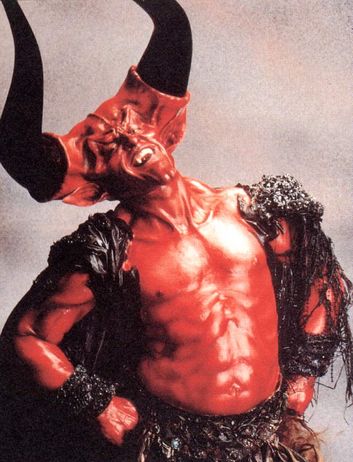
This guy isn’t one of my faves, but I’m going to give him a nod on account of Tim Curry played him.

Ask any actor what roles are the most fun, and they’ll inevitably tell you they like to play the villain. As someone who once portrayed the Wicked Witch of the West in our high school production of The Wizard of Oz, I admit that I auditioned for that role specifically. I had my reasons. Among them was the fact that the part of Dorothy was almost guaranteed to the girl who reminded us all of a young Judy Garland (big voice, sweet face and all). I also wanted a chance to be intimidating, volatile and powerful. In other words, a whole lot of things that I’m not on a daily basis.

So imagine what happens when an agent tells their actor, “Hey, the Wachowski brothers want you to play the Devil!” It’s the artist’s ka-ching, is what.

Since writing has replaced acting for me, I get my kicks watching how these cinematic Satans are characterized. There are so many different interpretations out there. There’s the malevolent, sociopathic, purely evil Lucifer. There’s the Miltonian rebel. And then there’s the Devil that’s a composite of all these moving mythologies.

For your entertainment, I’ve narrowed it down to my top 3, if for no other reason than a good Devil is hard to find. Before I go on, I want to apologize to those who expected to see Al Pacino on the list. I like The Devil’s Advocate as much as the next guy, but if I’m honest, Pacino’s John Milton (real subtle) is too…conventional. He’s exactly the Devil you’ve always heard about. And I’ll be the first to agree that it works in the context of the movie. But me, I’m looking for compelling characterization. So here’s the countdown.

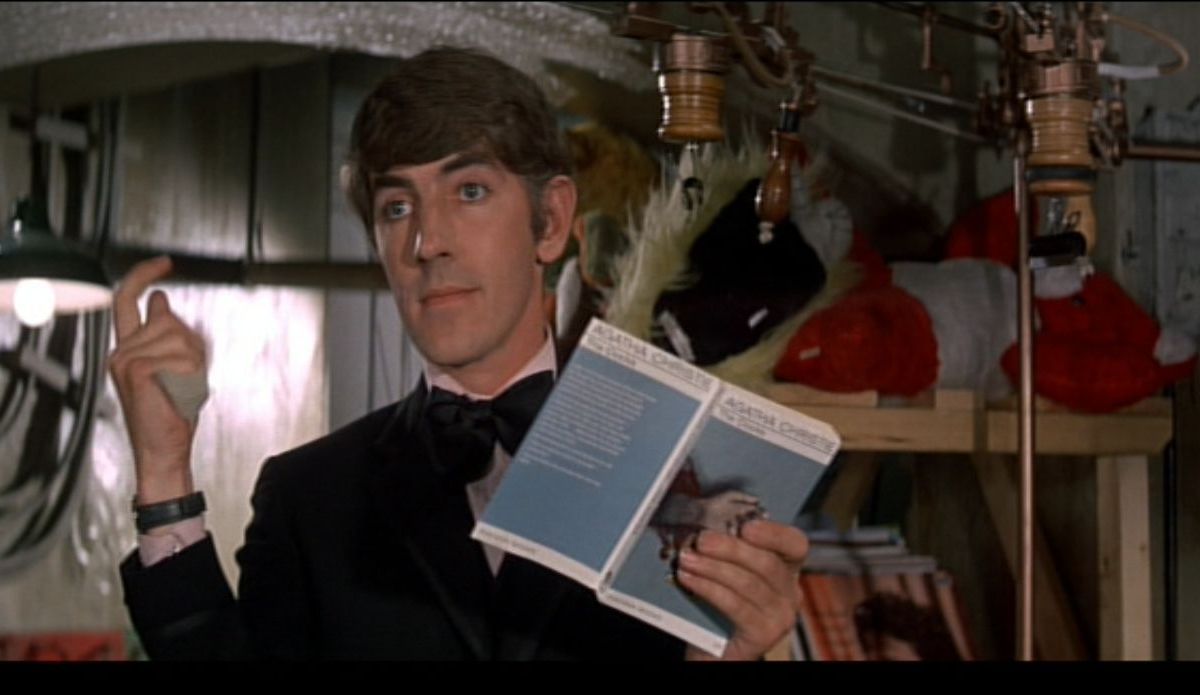
#3. Bedazzled – Peter Cook as “George Spiggott/The Devil”

What’s not to like about old George? He’s cool-headed, not judgemental in the least, and gives you exactly what you want, exactly how you asked for it. He’s handsome, has a great sense of humour, and enjoys long walks along London streets doling out generous quantities of daily mischief. He may be a fallen angel, but he has a good reason: he got tired of his glorification duties. As punishment, he’s now the world’s greatest trickster. But don’t blame him. As he judiciously points out, he’s just doing his job; aka, God’s will.

#2. Angel Heart – Robert De Niro as “Louis Cyphre/Lucifer”

I’m a little ashamed that I didn’t pick up on the name clue at first. I guess I got distracted by the detective story and the voodoo subplot. What I like most about Louis Cyphre is best summed up by my friend, who said, “I love a Devil who plays by the rules.” And how does he do that? For one, he never actually tells Harry Angel that he’s the one they’re looking for. Instead, Louis leads the private investigator down a path that will make him draw that conclusion himself. Kind of passive-aggressive, you’ll say, but them’s the rules in the Job story, right? You can’t beat him up directly, but you can destroy everything that has meaning in his life. In Angel Heart, Louis Cyphre strips Harry Angel of his perceived identity, and helps him remember that he’s actually Johnny Favorite, a ruthless murderer who made a deal with the Devil. And now the Devil’s collecting. Interestingly enough, this Devil doesn’t do any evil. None, in fact. The best part, though, is how deliciously creepy Robert De Niro is in this role.

#1. Faraway, So Close! – Willem Dafoe as “Emit Flesti/Time Itself”

There’s some debate about whether or not this guy is actually the Devil. But in the trailer, that’s how they ID him. So I’m going to go with that simply because he is the best, most complex representation of this character that I’ve seen. Besides the fact that Willem Dafoe was most righteously cast in this role, there’s also everything that the character is about. His name, spelled backwards, is “Time Itself.” And that’s what he does: he controls time. What’s evil about that? Nothing, except that it’s just another one of those pesky, limiting human inventions. And like all devils, Emit Flesti uses human weakness – an ingredient found in the silly things we dream up – to mix his brew. Does he do any evil? You might say so. He tempts the angel-turned-human Cassiel with gambling and alcohol, but only because these are things the latter was so drawn to anyhow. If anything, Emit seems to lead Cassiel straight to his destiny, which is to sacrifice himself for those he loves. Without Emit’s intervention, these things can’t happen. And because Emit is time, it’s his job to get you to your destination. Perhaps what’s most devil-like about him is the reign he seems to have over all things not-heaven, or rather, all things earth. But none of this makes him a bad guy, just a little liminal. Right at the edge of heaven, since he doesn’t like to hang out with the other angels. And just on the periphery of human existence, where he mostly goes unnoticed. But really, isn’t limbo just another word for “hell?”

Honourable mention: Beat the Devil – Gary Oldman as “The Devil”

Most people remember the short BMW movie directed by Guy Ritchie and starring Madonna. Beat the Devil was another instalment in that series. Also starring Clive Owen as the driver, the story follows James Brown as he tries to renegotiate his contract with the Devil, who gave him fame and fortune in exchange for his soul. Gary Oldman’s turn as the Prince of Darkness is part Jean-Baptiste Emanuel Zorg, part Ziggy Stardust, and pure Oldman. The movie’s a bit jerky but the style is flawless.


How well do you know your universe?

There's a reason why this works, and the creators of Avatar know what it is.

You know, I’ve heard a lot of Avatar-bashing in the past few days, and if anyone else was at the helm of this project, I have to wonder if it would be the same. Sure, James Cameron oozes a little too much self-worth, and given the stilted screenplay (and, as a friend justly pointed out, its poorly chosen font), it’s almost too easy to hurl the cheap shots. But I’ll say this about Avatar: its creators – from the writers to the person who designed every individual leaf on Big Momma Tree – know absolutely everything about the Avatar universe and how it works.

And this is something we can’t scoff at. It’s difficult to pull off, especially when the universe in question doesn’t actually exist, except in parallel analogies.

Every Pandoran beast has a function, a behaviour that’s unique to its species, and an intricate psychology to justify each motive. The Na’vi have a history that stretches beyond the borders of the tale we’re told. There’s also a whole ecosystem that wills the flora into fluorescence.


Even Big Momma Tree has a past.

By Cameron’s own admission, it took years just to develop the world and its mythology before they even started working on the movie, and it shows. The story feels more like an intrusion on what’s otherwise a pretty routine lifestyle, even if it’s in that extravagant wilderness.

Though Avatar primarily belongs in the science fiction realm, what if we applied this meticulous exercise to all fiction? From chick lit to indie films and action flicks: all of it. What if creators always went to the same amount of trouble to get intimate with the cosmos outside the narrative, even if the action takes place in the modern-day “real” world?

Our storytelling relies so heavily on characters that we sometimes lose sight of the fact that they exist somewhere. That this place has its own personality, idiosyncrasies, danger and splendour. That it affects the characters’ choices, or sometimes makes those choices for them.

When artists, writers or designers ignore the circumstances of the worlds they create, audiences notice. Case in point: The Phantom Menace. When your fans understand your universe better than you do, it’s a sure-fire death knell.

None of this means I wasn’t rooting for The Hurt Locker. I was. It’s a fascinating story, with a tight focus and a flawlessly treated subject. It deserved its awards for the same reasons I’m praising Avatar.

Time to spruce up the place

This blog has been around for about a year, and I’ve been trying to refresh it. First I chose another design.  I like it, but so many other bloggers seem to have chosen the same one. I’m considering trying another background, but I know what I really need is a content refresh.

This isn’t exactly new. I’ve been thinking about this for a while: what is my blog about?

At first, it started as a writing exercise, since I’d found myself back in journalism after spending a few years in advertising. I wanted to get used to writing long copy again. And like many people who begin blogs, I just wrote whatever went through my head.

Thanks in part to Roger Ebert, I’ve recently discovered a few new blogs that I’ve really enjoyed reading, especially Miss Banchee’s.  Her brilliant blog tackles lots of personal stuff while laying on the funny. I’ve loved getting to know her and the skillful way she fictionalizes her own life, or anamorphosizes her cats or her common sense to flesh out hilarious inner dialogues.

I think I had to read her to come to terms with what I can’t do, which is shine a light on my personal life. Not because I think it’s deplorable, but because it’s just not what I gravitate towards. Sure, it weaves its way into the blog, but the strokes are broad.

Then I read through some of my previous posts, and I noticed that I really love dissecting pop culture. Art, entertainment, advertising and everything in between. So that’s what I’m going to stick to.

Don’t worry, it’ll still be anecdotal. I mean, that’s just how I relate to things.

Hard up? Start up.

One thing I love about change is the opportunity to start fresh. I like building new systems and adopting new work methods. I especially love the makeover portion of the exercise.

This time around, the apartment gets a slight review. See, when the boyfriend unit moved in, I gave him the office. After all, I was at work all day, I hardly used that space any more, and as a programmer, he really needs it.

But then fell the axe.

And then came the contracts. Last year, post-Cossette, I practically lived in my beautiful, tailor-made office, typing away and creating some of my favourite taglines. This time around, I have the same amount of work to do, but no space to do it in. The solution isn’t kicking the boyfriend out of the office. We both need an office space as much as the other, so the only way is to create another space.

At first, I couldn’t see it. I’m a bit of a clutterbug. Every inch of my apartment is inhabited by…something (I’m no good with those clean zen lines). When the boyfriend moved in, I got rid of a lot of stuff. Even so, our place is still bursting with yet more stuff.

So I invited my buddy–who, by all accounts, should be a stylist–to take a look and see what I couldn’t. Firstly, he said, if you run out of surfaces, build up. Clear up some of the surfaces by building shelves and putting that stuff there. Secondly, he pointed out, I’m not using my kitchen table. It’s just a flat spot to put things on, but I don’t use it to consume, convene, confer, concur: anything! Put it in the basement (since I’m lucky enough to have one), and put the new desk here.

“You want your office in the kitchen?” asked the boyfriend unit. “No,” I replied, “but I need a desk, and that space is the best place for it.”

So yesterday was spent getting the things I needed to make these changes. A birch shelf from Ikea. Check. A rotating shoe rack (it doesn’t seem like it should be part of the plan,but it is). Check. Frames for some new art (damn you, Ikea, for your pre-warehouse bits-and-bobs section). Check. Oh yeah, and some seeds to finally grow that herb garden (okay, this isn’t part of the apartment makeover, but it is part of the personal revamp). Yesterday evening, after a fine chick pea salad, I started clearing out the kitchen. It was way overdue. I enjoyed it, too. My spices used to be crammed, rather uncomfortably, into one of my teeny kitchen cupboards. Now they’re all laid out nicely, out in the open, on one of the shelves. They look much better, much homier. While I was at it, I also cleaned out the cupboards, cleared the top of the fridge, and just plain liberated the spaces that have been oppressed by my pack-rat gene.

Today, we go into phase 2: moving the desk into the kitchen, and moving the kitchen table into the basement, punctuated by hanging new art. This is the exciting part, really, because I’ll be that much closer to working in a new environment, and that’s the real aim. Virginia Woolf was right about the importance of having a room of one’s own: the fruits of your creativity won’t exist without it.

The awful truth

My brilliant friend AD has been blogging for quite some time, and I just love her insights. I especially enjoy her Tango Lesson series (at her most humble, I’ve noted, because the dance requires women to relinquish control; a difficult instruction to follow these days). Her honest account of learning this difficult dance, coupled with an encounter with a broken-hearted friend yesterday, made me want to share a couple of truths of my own. To state the obvious, life is hard. I’ve never known the easy way out of anything. But if you’re prepared for the challenge, maybe it’ll make the journey easier. Knowing you survived is the ultimate reward.

On losing weight

Though some people can get away with murder when it comes to fitness, most of us are on a slow decline. As for me, when I turned 24, my lovely curves officially became dynamic. They would grow and jiggle based on how well I took care of myself, and every year, they honed their ability to disobey me. My solution was to make sure I biked a lot during spring, summer and autumn. But when I turned 29, that wasn’t enough. So finally, at age 31, I joined a gym.

Here’s an awful truth about it: I don’t really eat junk food. I don’t eat loads of meat. I’m a veggie freak. In fact, salad is a huge part of my daily routine (not to mention my favourite food). Sure, I love a bowl of chips every now and then, and I like me some chocolate, but I’ve always been able to do these things in moderation. I never take in large portions. So what happened? Metabolism, I guess. I spent most of my 20s getting away with not doing anything to maintain my physical fitness, and by the time the party was over, so was my tolerance level. I’m hardly a whale (and I wasn’t to begin with), but I’d certainly put on a few, and I needed the weight to go away to feel better about myself.

Here’s the really terrible truth about staying healthy and fit: you have to work your ass off. I went to the gym, got a trainer (only on a casual basis; they’re super expensive but well worth the consultation) and got on a custom-made program. He made some nutritional recommendations, nothing that I couldn’t easily insert into my diet (a little more fruit, for example). Put those things together and you get results. But it’s sooooooooooooooo hard! Motivating myself to go to the gym is a pain in the butt. I always feel great when I go, but getting there is the trick. I can talk myself out of it veeeeeeeery easily. Still, if I don’t go, I don’t get results, and I feel super guilty. I’ve felt this more often than I’d like to admit.

The good news is that I’ve persuaded myself to go enough times to see the difference it’s made. But the truth about weight loss is this: you don’t get there without hard work. It takes discipline over anything else. And discipline is prompted by will. If you don’t want it, it won’t happen. That’s that. I wish there was an easy fix, but there isn’t. Changing the way you eat will certainly make a difference (especially if you make sustainable, healthy choices), but you’ll only see a real difference with a workout.

Some people I know find it easier to insert the workout detail into their lives if they join a class. If that’s what you have to do, do it. It’s fun, and it will make a difference. Then, once you’re used to exercising and you want to increase the intensity of your routine, you’ll know what to do. I really believe in easing yourself into a new lifestyle, and this has worked for many people. Join a dance class if you like: it’s great exercise. In fact, it’s the only thing my mother does now, and she’s in fabulous shape. Do what you have to do, but remember to do it, and often. And work on tricks to convince yourself to go to the class or the gym. That’s the hardest part.

On break-ups

This one’s simpler and harder all at once. On an immediate level, break-ups are harder than going to the gym. On a long-term level, they’re easier. That’s because the intensity of the broken-heartedness fades away with time, but you have to keep working out no matter what.

The bad news about break-ups is that they hurt…a lot…for a good while after they happen. There’s no escaping that. How long it’ll hurt is hard to tell.

Here’s the wonderful truth about break-ups: they always get easier to deal with in time. How much time depends on you, but I’ve noticed that when asked, most people seem to know their post-break-up rhythm very well. I think the trick is knowing how to deal with each stage, depending on what you go through. For my part, I just do what my mind tells me. The last time I went through a break-up, I went through a phase where I needed to be around people to forget what was happening. Then, I accepted that it had happened, and needed to be sad about it, so I secluded myself and watched a bunch of “Olivia” movies for a bit of time. Then, I needed to feel beautiful again so I rebounded with a guy or two. The phases aren’t always in that order, but upon reflection, that’s pretty much what happens each time.

What works for me is treating each phase with what it needs most. Treat sadness with solitude; treat denial with dinner parties; treat low self-esteem with libertine living. Feel what you feel, and feel it through. Don’t resist your phases. That’s what makes it go away. For me, anyhow.

Parting thought

When I was in university, I took a course on documentary films. In the first class, we discussed what’s truth and what’s real, and how no matter what it is, that changes when a camera is thrown into the mix. It’s still non-fiction, but the “reality” and and the “truth” of the matter are immediately altered. A girl in the class interjected and said, “I guess Baudelaire was right when he said ‘there’s no such thing as truth, only perception.'” The professor immediately jumped in, saying, “that’s not right! I have truths, and I’m not imagining them.” She immediately shut the hell up (good call on her part), but I love how the professor put it. Maybe my truth is my perception, but that doesn’t make it untrue.

Woo-Ha! I wuz refrenst

My buddy (and contemporary) quoted me in his blog. He referred to something I said here only a few days ago. You rock, Deniger!

Naturally, I’m flattered. But more importantly, I’m glad we’ve started a dialogue about memes and viral marketing. There isn’t a magic, colour-by-numbers formula to these things, and it’s time people noticed.

Exhibit A: A couple of years ago, a client of mine developed a Digg-like website. The format was nearly identical, only their model was available in, like, 10 different languages. A more-of-same kind of web initiative that we saw so often in the late ’90s. They no longer exist now, of course.

Exhibit B: Recently, a friend of mine told me he’d been approached by an ad agency for a campaign that would turn bloggers into brand ambassadors. I don’t know anything about the context, so I can’t say what this campaign is really about or how strong the concept is. But I am fascinated at the ballsy move to exploit a highly democratized environment. So far, this hasn’t worked very well. On the web, more than any other medium, people know when they’re being advertised to, and when they find it off-putting, the ad gets panned publicly, and immediately. On Digg, if a user is suspected of prioritizing a corporation’s interests, they quickly get “buried,” seriously decreasing the value (and validity) of their contributions.

So really, it’s not enough to submit an article to Digg. You also have to be part of a community and contribute to it in a significant way…and even then…

It’s not enough to put your ad on YouTube. People have to find it interesting, relevant, funny, or all three…and even then…

It’s not enough to have a viral medium at your disposal. It has to be useful to the right  audience, who can engage with it in a flexible manner…and even then…

It’s surprising that we’re still getting the “let’s go viral” requests when it’s clearly so difficult to control and predict a campaign’s viral trajectory. If it weren’t, everyone would have done it successfully by now. And unfortunately, focusing on a campaign’s viral value takes focus away from creating a sucessful campaign.

Quoth my buddy:

“First and foremost, anything we do needs to serve the client and their goals first, and resonate enough with the target market that they follow through on the calls to action given to them. Anything beyond that, as far as mass-appeal popularity goes, is a lucky cherry on top.”

+++

Complimentary P.S. Here’s an ad I first spotted on College Humor. Millions saw it. Why did an ad about toilet technology do so well? You tell me. Does the same approach work just as well for a loofah sponge or Hamburger Helper? Probably not.

When will I be referenced?

I don’t want to be famous. I don’t want to be adored and/or revered. I just want to be referenced. I want to be URLd, copied and pasted into a blog, Facebook status or tweet, and gosh darned referenced.

And I want to earn that nod for doing something as brilliant as this.

The Short & Simple Story of the Credit Crisis

Bless you, Kevin Rose.

The French do it better

Those who’ve done even an ounce of translation in their lives know that there’s really only one thing that can’t be translated. Unfortunately, it’s practically the spirit of a language.

Humour.

What’s funny in one language is seldom, if ever, funny in exactly the same way in another. In translation, your best bet is to try to be funny in some other way.

Being half-francophone (the other half being Italo-canadian), I’m so grateful to be able to understand humour in more than one language. Humour has more personalities than Truddi Chase, and as many varieties as wine.

There’s British dry, American slapstick, French lightening, Quebec caustic, German irony, and so forth. Some people marvel at the fact that we’ve been able to adapt different cultures to so many religions. Me, I’m just impressed that we found so many different ways to laugh, and for different reasons.

On that topic, I’ve decided to share some of the things that have made me laugh the most. They’re all in French, but that’s just an accident. Enjoy.

The Revolution of the Crabs

3 hommes et un couffin (the original French version of Three Men and a Baby)

Anne Roumanoff on Infidelity

Coulda, Shoulda

Let’s not kid ourselves: most of us aren’t exactly where we thought we’d be. It doesn’t mean we’re riddled with regret. It just means getting to do what you want is a privilege that you’ll earn if you’re willing to invest a lot of yourself (possibly more). Sure, some people get a lucky break, but I haven’t met anyone like that yet. As for me, I feel pretty fortunate that Plan B worked out, though that’s mostly because I worked it.

What was Plan A? What wasn’t. Maybe that’s why Plan B was a success.

So here’s a list of my Plan A shortlisters.

1. Music.

Throughout high school, the plan was always to graduate and study music in university. I followed through, but only for a year. The program was difficult and truly designed to weed out the ne’er-do-wells…in-music! Here’s the thing: at that level of music (or possibly any level), your options are quite limited. You can either be a performer, or you can teach. Not that I wasn’t a talented pianist, but I was one among many, and I’m not being modest in saying I wasn’t the best. Had I been a flutist, I might have had a better chance, and even then…So the other option was teaching, and that’s actually what I wanted to do when I went into the program to begin with. But once I got there, and maybe it’s that I was 18 years old and not ready to commit to any one career decision, I guess being a music prof didn’t feel right anymore.

What I miss about music is locking myself up in a room and practicing the piano 3 or 4 hours a day. I loved learning about music. I excelled at theory. I had some budding music history theories that I probably would have parleyed into PhD dissertations. I didn’t dislike the program, and I was actually an A student. I just felt limited by the career prospects.

If I could go back, I’d learn more instruments. More specifically: percussion, bass, and the cello. I wouldn’t mind learning a brass, like trumpet or trombone. But I probably wouldn’t remain in the music program.

Today, I wish I had more time to practice the piano. I also hang on to the dream of being in an all-girl punk band, where I will be the main songwriter, sometimes vocalist, and Farfisa organist. Our songs will be about why it’s so good to be bad girls.

2. Filmmaking

After quitting the music program, I took a 2-year break. When I returned to school, I chose a program called “Film & Communications” in McGill’s English department. I was accepted and when I arrived, the program had changed. It became Cultural Studies, which is as ambiguous as it sounds. All the important filmmaking courses were gone. I did partake  in one workshop course that allowed me to make a movie, but I won’t let anyone watch it now (I won’t even watch it myself).

The process was laborious, intense, and I nearly unravelled. But nothing is more gratifying, for me, than to edit a movie.

If I could go back, I’d try to transfer to Concordia and make the cut into their filmmaking program (which is hard to get into; I tried many years after graduating). And I’d do it while I was still in my 20s, because that’s when you can afford to do foolish, impulsive things.

Today, I’m a sometimes member of Mainfilm, I own a Super 8 camera, a video camera, loads of different other cameras, and I have a few scripts on the go. I might not seem to be able to commit to any of these projects, but I hang on to the belief that I’ll be actively involved in filmmaking some day.

3. Dancing

Okay, this isn’t really much of a Plan A since it never really made the list. My point is simply that when I was about 4 years old, I was enrolled in ballet classes. Apparently I wasn’t any good and I didn’t enjoy it much, so Mum pulled me out. Unfortunately, that sentiment didn’t last. From age 10 on, I’ve wanted to be a dancer. I still do. In fact, I keep trying to find a contemporary dance class for adults. I will do it, I tells ya! I will. I’d rather be a dancer than anything else, even knowing that my career would end in my late 30s and I’d be doomed to live my life as an instructor after that.

4. Art

Again, this wasn’t really a contender for Plan A, but it is something I’d like to devote more of my time to. When I can, I love to take photos, paint, and do this collage-painting thing that I’ve coined “cross-comicking.” My art teacher Mr. Glenen encouraged me to at least try to get into a fine arts program in university. He even hung my self-portrait (the only profile anyone had ever done at that school, at the time; very challenging, as well, it took two mirrors to pull off) in the hallway for a year. I still love art. In fact, it’s probably “the one” more than any one person could ever be. It’s weird, really. We’re taught to exploit our talents and turn them into a career. But I can’t do that with art. I can’t explain it in a rational way: it’s something I do purely for me. In a way, music has become that as well. No one with a brain would refuse the opportunity to do any art for even just a bit of money, let alone a lot. But when I’m doing any art at all, a career is so far from my mind. Maybe that’s why I love it.

5. Fashion Designer

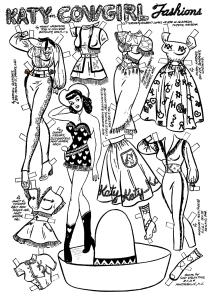
Granted, this was a childhood dream, so I’m not sure it should count. Still, I thought I should mention it because I still love fashion, even if I can’t sew for shit. I used to really enjoy playing Barbies (as many girls did). Oddly enough, I didn’t make mine get married and have kids. I made mine get jobs and share apartments with their friends. And my character, no matter if I picked a blond or the elusive (light) brunette, was invariably a fashion designer. I’d always find a Barbie-sized sash and wrap it around in an artful way to create a dress for my character. I also used to collect Katy Keene comics and I would always cut out her Paper Doll page. I think I even sent some designs to Archie Comics once for consideration (Ms. Keene’s schtick was that she wore clothes designed by the readers). In grade 6, I walked into Betty Rubin, a “designer” store in Moncton’s Champlain Mall. I told the saleslady that I wanted to be a fashion designer and how I’d love to be like Betty Rubin some day. So the saleslady immediately arranged a meeting with Betty herself, and her husband, who turns out to be the real designer of the pair. Both were very nice about it. Betty even asked me to return to the store and show her some of my designs. I did. I never heard back, but damn, what a lovely couple. So willing to humour a child, and to do it with such grace.

6. Doing a Master’s

I really did enjoy university. I love learning. I’m a smarty-pants and proud of it. Earning my degree in English, and the process of doing it, is something I remember fondly. But I’ll be honest. I’ve had the chance to return and do my Master’s about 3 times, and each time, I quit on the very day school is about to start. I just can’t go through with it. I don’t know why just yet. Maybe if I figure it out, it’ll pave the way towards going back. But I figure if I’m not chasing it that badly, maybe I don’t really want it.

+++

Do I have any regrets about not going through with Plan A? I would if I could keep up. Which is why I think Plan A was Plan C all along. And Plan B, writing, is probably more Plan A than any of the above shortlisters. It’s the only thing I’ve ever done seriously, whether as a career or creatively. It’s the constant. It’s also the thing I want to commit to the most. Come to think of it, that’s probably what a Plan A should be.

Was it good for you?

In one of my least favourite episodes of Sex and the City, Carrie Bradshaw wonders how we know whether or not we’re any good in bed. She then dates a recovering alcoholic, who thinks she’s the best lay ever. But when he can’t get enough, she realizes he’s just addicted to being addicted.

This is more or less the point: how do we know if we’re good at anything? And who’s going to tell us if we’re not?

You’ve seen American Idol, Dancing with the Stars, and all those other train wrecks. There are tons of people out there who think they rock, when they mostly rot. Why hasn’t anyone told them?

Sure, you’re supposed to go through life feeling confident. Dr. Phil has all sorts of neat tricks to boost your self-esteem (which involve tolerating his non-arguments leading to non-conclusions), but is there such a thing as too much esteem? When does confidence become arrogance, or worse, delusion?

This isn’t where I start naming off people I think should have been told they’re not any good. This is where I worry that I’m not actually good at doing something that I thought was a talent, and that I haven’t been for a long time. This is where I wonder what it is, who knew, and why they didn’t tell me. And I only hope it’s not something that’s gotten me any jobs. Don’t get me wrong, I can live with not being good at everything (and I know I’m not: sewing, for example…just terrible). I just hope I’m not actually awful at something I think I excel at.

Oh, alright. Just one: David Caruso. You suck.